Romance · Adventure · Drama
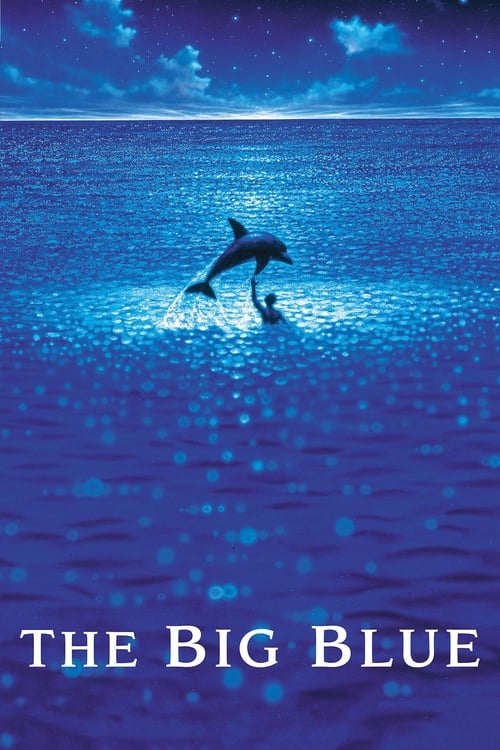
The Big Blue
French (Le Grand Bleu)
1988 · Directed by Luc Besson · 168 min


Romance · Adventure · Drama
French (Le Grand Bleu)
1988 · Directed by Luc Besson · 168 min








Meaning, unpacked
Central idea
The film can be read as a study of two ways of loving: one tied to people and the surface world, the other to a silence that feels like home. It asks whether a calling can be reconciled with ordinary life.
What it means
Two boys share a bond and a loss. Years later, Jacques and Enzo are men who are still pulled toward the sea, and that pull becomes a rivalry. It ends with Jacques choosing the water over Johana and the life she offers on land. The film is really about what sits underneath that plot: two ways of loving. One is tied to people and the surface world. The other is tied to a silence that feels like home.
Its big question is whether a calling can ever be reconciled with ordinary life. Jacques is at peace only underwater, and every relationship that tries to hold him on land runs up against that. The rivalry with Enzo is how the two men show devotion: neither can say it, so they dive deeper instead. Breath, heartbeat and silence do the work that dialogue usually does, and the dolphins draw Jacques as strongly as any person. The film never argues that Jacques is right. It only lets you feel how quiet that water is.
Why it mattered
Released in 1988 as the opening film at Cannes, it was met coldly by many critics, who found it long, shallow and sentimental. Audiences disagreed. In France and Italy they embraced it in huge numbers, and it became one of the biggest French hits of the decade. It stands among the most successful French films of the 1980s and a landmark of the French cinéma du look generation.
What was new was its feeling for water. Long, smooth underwater shots, hushed sound and soft light make the sea look inviting, not threatening, and put you into the divers' state of calm. Much of this used real divers and real dolphins, not effects. Éric Serra's synthesizer score became nearly as famous as the images. The loose, episodic structure let mood build, though it also frustrated critics who wanted tighter storytelling.
Before anyone tells you what to think: what did you make of it?
Log in to rate it and leave commentsIt takes one click with Google or an email link. You come straight back here.
Rate it, keep your notes, and find the next film.
Free, no ads. Your journal, your lists, a Cine Guide that remembers you.
Create your free spaceThe film helped bring freediving to a mass audience, and many freedivers name it as the image that first drew them in. It shaped later ocean-set films and advertising built on stillness and blue light. For Besson, it set the mix of romance, spectacle and international scale that carried into Léon and The Fifth Element, which are the natural next watches. In France especially, a "Grand Bleu generation" kept rewatching it on television and video.
Its reputation has softened and grown. What was dismissed as indulgent is now often seen as a sincere, visually distinctive romance, with a devoted following in France, Italy and the diving community. If you can, watch the extended cut, which is generally considered the preferred version. The ending remains one of the most debated in French cinema: a tragedy to some, a homecoming to others.
What happens
Enzo dies after diving too deep, and Jacques carries him down and releases him. Jacques then tries to stay with Johana, who is pregnant, but the sea wins. She lets him go, and he descends and does not return.
The last image
Jacques sinks into the open blue beside a dolphin, growing smaller until the water has him.
Two readings
What it says
The film never says Jacques is right. It asks whether a calling can live alongside ordinary love, and it ends by letting you feel the pull of the quiet water against everything holding him on land.
Or follow an idea from this film


Continue the director
Léon: The Professional (1994)
Besson's most famous film shows how his love of stylised romance and Jean Reno's screen presence evolved from the sea to the city.
See what influenced it
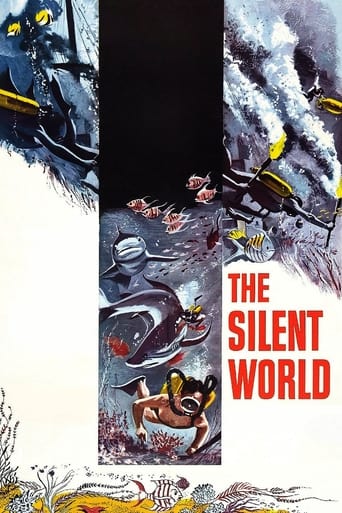
The Silent World (1956)
Cousteau's Palme d'Or-winning documentary is the earliest great underwater film and shows the real wonder Besson's film tries to capture in fiction.
Jump forward
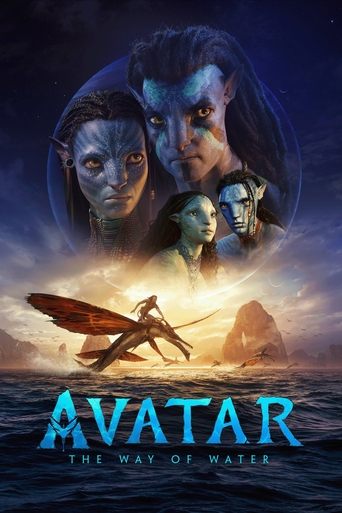
Avatar: The Way of Water (2022)
A modern blockbuster that also treats the ocean as a spiritual space and uses underwater breath-holding as a central spectacle.
Explore the era or movement
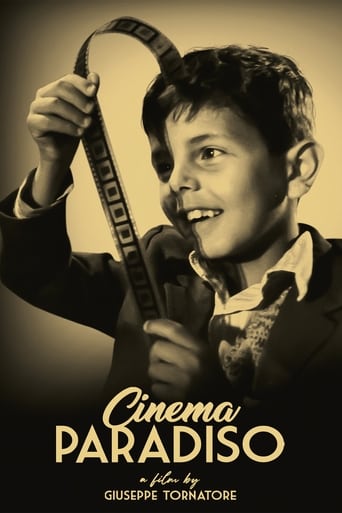
Cinema Paradiso (1988)
Released the same year, it is another European film with a sweeping, sentimental romanticism and a famous score, found in a very different setting.