Drama
The Ballad of Narayama
Japanese (楢山節考)
1983 · Directed by Shōhei Imamura · 130 min


Drama
Japanese (楢山節考)
1983 · Directed by Shōhei Imamura · 130 min









Meaning, unpacked
Central idea
The film can be read as an inquiry into how a poor community turns necessity into morality. It asks whether a custom that looks cruel is also a form of love, and whether the two can be separated at all.
What it means
Orin is old, and in her village that means she must climb the mountain to die, so there is one less mouth to feed. Underneath is a hard question: how does a poor community turn necessity into morality? The village rules exist because food is scarce. Over time, scarcity hardens into tradition, and tradition into something close to religion. Can a custom that looks cruel also be a form of love, and can the two ever be pulled apart?
Orin prepares calmly, even cheerfully, arranging her family's future. Her readiness can be read as dignity, as conditioning, or as a mother's last act of care. The film lets all three stand. The same villagers who keep their customs so piously punish a family that threatens their food, and they do it harshly, together. Piety and cruelty grow from the same fear of hunger. Imamura keeps cutting to snakes and insects, placing these people among animals, where appetite and instinct drive everyone and custom is only a thin layer on top.
Why it mattered
In 1983 Imamura's film won the Palme d'Or at Cannes and brought him to a wide Western audience. It was also a deliberate step away from the past. Shichiro Fukazawa's novel had already been filmed in 1958 by Keisuke Kinoshita, with theatrical sets and kabuki-style devices. Imamura wanted something rawer: real locations, mud, cramped huts, weather. The poverty is physical and unglamorous.
He also told the story differently. The film follows the seasons in episodes of village life rather than a tightly plotted drama, which gives the ending its weight. On the mountain he slows right down, letting silence, wind and landscape carry the feeling and avoiding melodrama. It offered a very different Japanese cinema from the refined, restrained classics of the 1950s: earthy, physical and unsentimental.
Before anyone tells you what to think: what did you make of it?
Log in to rate it and leave commentsIt takes one click with Google or an email link. You come straight back here.
Rate it, keep your notes, and find the next film.
Free, no ads. Your journal, your lists, a Cine Guide that remembers you.
Create your free spaceThe film strengthened the international profile of Japanese cinema beyond the tradition of Ozu and Kurosawa. Its mix of folk tale, naturalism and an unsentimental look at old age fed into later films about ageing and death. Imamura would win a second Palme d'Or in 1997, for The Eel. In Japan, the story is often invoked in talk of elder care, family duty and an ageing population, with Orin's choice to go alone as a reference point.
Some critics found its violence and frankness hard to take, but many admired the performances and its unsparing view of village life. Today it is seen as one of Imamura's central works. People still argue over whether it is a cold anthropological study or a deeply moving elegy, and many viewers find it both. Perhaps that is the point, and perhaps the snow is the only answer the film will give.
What happens
Orin makes sure her family is provided for, then has her son Tatsuhei carry her up Narayama. At the summit he breaks the rule of silence to tell her it is snowing, and leaves her sitting calmly in the snow.
The last image
Orin sits motionless and calm in the falling snow on the mountain, while her son goes back down alone.
Three readings
What it says
The ending refuses to settle whether the custom is cruelty or love, because the film suggests it is both. The silence and the snow lift a harsh necessity toward something consoling, while the film still offers no verdict.
Or follow an idea from this film

Compare another approach
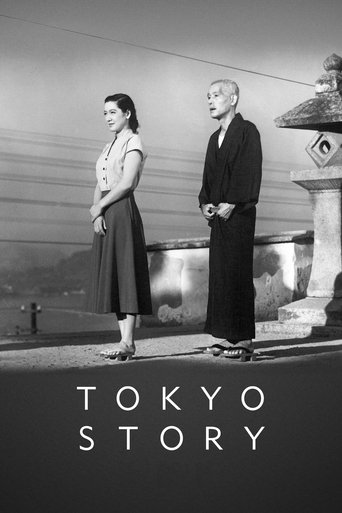
Tokyo Story (1953)
A refined, quiet Japanese film about aging parents and family duty. Together the two show opposite ways of treating the old and the young.
Explore the era or movement
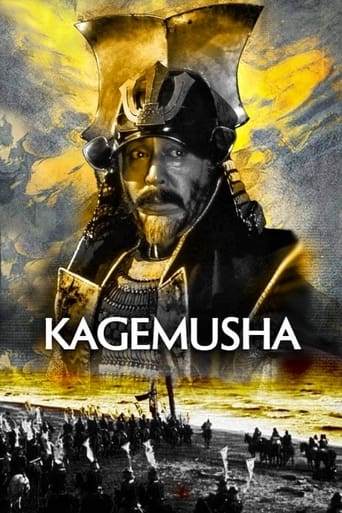
Kagemusha (1980)
Kurosawa's late-career epic shows the other Japanese cinema of the same period, large-scale and formal, in contrast with Imamura's earthy intimacy.

Follow the idea
Harakiri (1962)
Another Japanese film about a society's code demanding human sacrifice, and about how ritual can hide cruelty.
Follow the idea
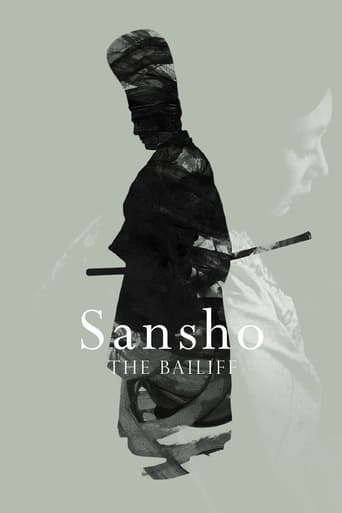
Sansho the Bailiff (1954)
Mizoguchi's film also sets family love against brutal social structures, from the earlier, more lyrical Japanese tradition.
Compare another approach
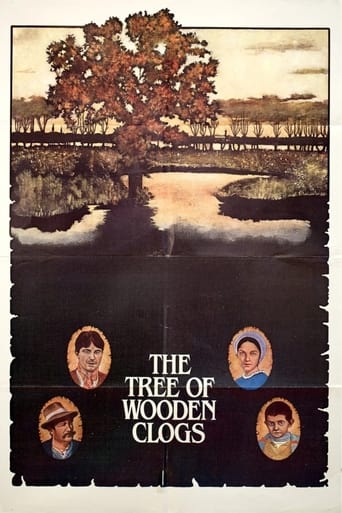
The Tree of Wooden Clogs (1978)
An Italian film that watches peasant life with similar patience and attention to ritual and hardship, but with more tenderness.