Drama
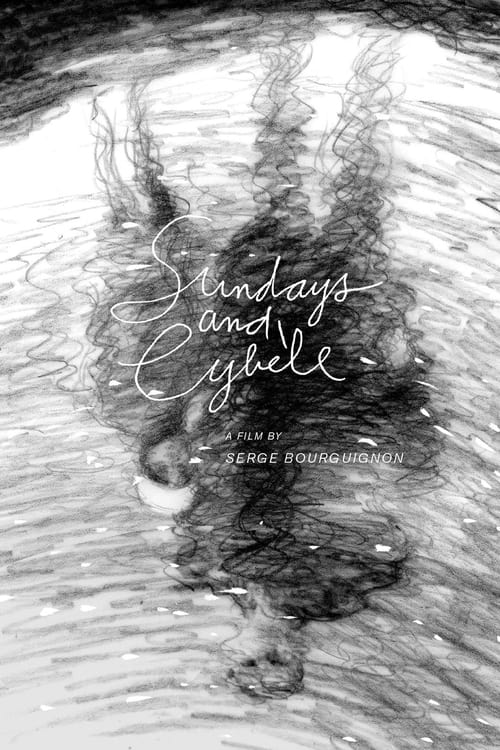
Sundays and Cybele
French (Cybèle ou les dimanches de ville d'Avray)
1962 · Directed by Serge Bourguignon · 110 min


Drama
French (Cybèle ou les dimanches de ville d'Avray)
1962 · Directed by Serge Bourguignon · 110 min









Meaning, unpacked
Central idea
The film can be read as a study of two people who have been left without a place in the adult world: a man with no secure past and a child with no secure family. They invent a private language of affection that the surrounding society cannot understand or tolerate.
What it means
Sundays and Cybele is about belonging. Pierre, a war veteran who cannot remember his past, watches a father leave his daughter at a boarding school, and he begins to meet the girl on Sundays as her father. Both have been left without a place in the adult world. He has no secure past, and she has no secure family. So they build a private language of affection that the society around them cannot understand or tolerate. It ends badly on Christmas Eve.
The film is also about how fragile identity is without people who belong to you. Her name is invented, and his history is missing. Together they give each other something to stand on. Ritual helps: the games, the gifts and the Sunday routine give them a structure the adult world lacks, so when the pattern breaks, you feel it as a loss. Pierre's trauma is treated as a lasting condition, not a plot device, and the film never hands you a neat diagnosis.
Why it mattered
Serge Bourguignon's film was admired around the world for its lyricism, its photography and its performances, and it was a notable success in art houses in several countries. It won the Academy Award for Best Foreign Language Film, which was a real achievement for a French drama that was not part of the New Wave. It belongs to the poetic, humanist strain of French cinema that ran alongside the New Wave.
What made it distinctive was its look and its outlook. Henri Decaë's black-and-white images turn an ordinary suburb into mist, reflections and bare winter trees, so everyday places feel dreamlike. Maurice Jarre's score is lyrical but restrained. And the film takes a child's inner world and private rituals as seriously as the adults around her. Not every critic was convinced: some found the final movement overly sentimental or schematic, though the child's performance and Decaë's images were widely praised.
Before anyone tells you what to think: what did you make of it?
Log in to rate it and leave commentsIt takes one click with Google or an email link. You come straight back here.
Rate it, keep your notes, and find the next film.
Free, no ads. Your journal, your lists, a Cine Guide that remembers you.
Create your free spaceThe film helped set the template for the poetic art film about an unlikely bond between a damaged adult and a child. Later European and American dramas revisited that idea, with varying degrees of sentimentality and realism.
Today its reputation is respected but quieter. The New Wave often overshadows it, yet it is still valued for its images, its score and its unusual subject. The ending still divides viewers. It is also read with more unease now than in 1962. A friendship between a troubled man and a young girl is seen differently, and the film is sometimes used to show how screen attitudes to adult and child bonds have changed. You may well feel both things at once: the tenderness is real, and so is the discomfort. Perhaps that is the film's lasting question. When two lonely people find each other, who gets to decide what that means?
What happens
Pierre waits for Cybele in the park on Christmas Eve, carrying a knife. Alarmed, Madeleine and Carlos call the police, who shoot him in the dark in front of her. His gift was innocent; the adults saw only danger.
The last image
Cybele is left alone, as abandoned as she was when we first met her.
What it says
The ending shows how a gentle bond can be destroyed by suspicion, and the child pays the price. Both of them were left without a place in the adult world, so the film returns her to exactly where she began.
Or follow an idea from this film


Compare another approach
Forbidden Games (1952)
Another French film told largely from a child's perspective, in which innocence meets the pressures of the adult world. A useful comparison of tone and resolution.

Explore the era or movement
The 400 Blows (1959)
Truffaut's New Wave landmark, also shot by Henri Decaë, offers a more raw and autobiographical view of childhood in France.
Follow the idea
Hiroshima Mon Amour (1959)
A French film about memory, trauma and the aftermath of war, treated in a far more experimental form.

Compare another approach
The Red Balloon (1956)
A short, almost wordless French film built around a child's imaginative bond with an unlikely companion, with a similar lyrical view of Paris.