Drama · Comedy
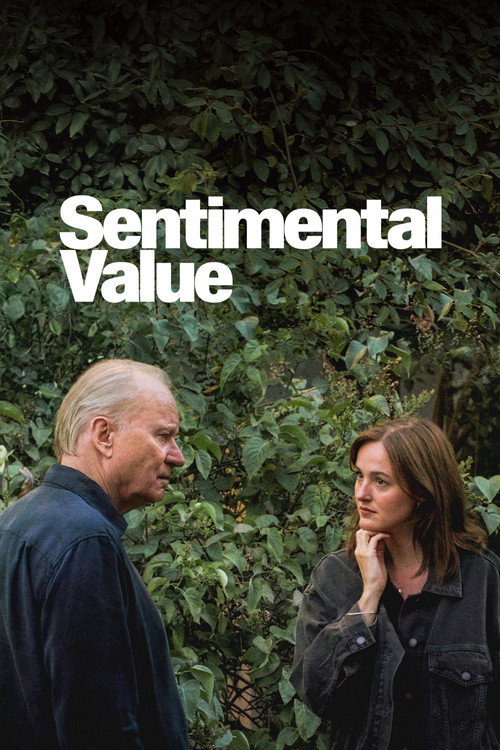
Sentimental Value
Norwegian (Affeksjonsverdi)
2025 · Directed by Joachim Trier · 133 min


Drama · Comedy
Norwegian (Affeksjonsverdi)
2025 · Directed by Joachim Trier · 133 min









Meaning, unpacked
Central idea
The film is about whether art can do the work of love, and what it costs the people turned into material. It can be read as an argument between telling a story and living with it, with the family house as the place where that argument plays out.
What it means
A father writes a script about his family's pain, then asks his daughter Nora to star in it. She says no. A Hollywood actor steps in, and the film he makes becomes a second stage for everything the family never said. The film asks whether art can do the work of love, and what it costs the people who get turned into material. You can read it as an argument between telling a story and living with it.
The title, Affeksjonsverdi, is a Norwegian insurance term for the value an object holds for its owner beyond its market price. Joachim Trier applies it to the family house in Oslo and to a whole family history. Nobody fully states what the house holds; the rooms, the objects and the light do it for them. The hinge is Gustav offering Nora the role. He reaches his daughter through work, too late and clumsily, and the film never lets him off easily, yet never condemns him either. It treats the attempt itself as meaningful. A story can't promise to heal anyone, but the wish to make one can still be a way of reaching for somebody.
Why it mattered
Sentimental Value belongs to the Scandinavian tradition of chamber family drama, running from Bergman to the present. What it shows is how that tradition now works through international co-production and a global film industry. It is a late entry, and a modern endpoint for the European family drama.
Its craft is quiet but deliberate. Trier lets performances breathe, with pauses and half-finished sentences, so much of the feeling comes from what characters hold back. Comedy and grief share the same scenes, and awkward social moments are not relief from the hurt but how the hurt shows itself. The house is shot almost like a character, with framing that links one room to the next. Hania Rani's spare, piano-led score supports the mood without telling you how to react. The film-within-a-film, co-written with Eskil Vogt, makes personal and professional conflict mirror each other.
Before anyone tells you what to think: what did you make of it?
Log in to rate it and leave commentsIt takes one click with Google or an email link. You come straight back here.
Rate it, keep your notes, and find the next film.
Free, no ads. Your journal, your lists, a Cine Guide that remembers you.
Create your free spaceThe film premiered in competition at Cannes in 2025 to a long standing ovation and strong reviews. Critics praised Skarsgård, Reinsve and Lilleaas, and admired its balance of comedy and sorrow and its compassion for difficult people. It won the Grand Prix, the festival's second-highest prize, and was nominated for several Academy Awards, including Best Picture, Best Director, Best Actress and Best International Feature Film.
It is too recent for a settled verdict. Still, many see it as one of the strongest European dramas of its year and a high point in Trier's career. It is often discussed alongside Bergman, and as a late-career role for Skarsgård. Its influence is still forming, but it confirms Trier among leading European auteurs and shows that quiet, performance-led family drama can still reach large audiences and awards attention. It has no wide afterlife of memes or quotations yet; it mostly comes up when people talk about estranged parents and children, and about art as a way to say what families cannot say aloud.
What happens
Rachel leaves the project, and Nora takes the part her father wrote for her. The film is shot in the family home, and the sisters and their father are forced to see each other through the work.
The last image
The film closes on the family home, where the making of the film has now left its mark.
Two readings
What it says
Art can't promise to heal anyone, and the film doesn't claim it does. It ends on the attempt itself: Gustav's late, clumsy reach toward his daughters still counts as a way of loving them.
Or follow an idea from this film


Continue the director
The Worst Person in the World (2021)
Trier's earlier film with Renate Reinsve and Eskil Vogt. It shares Oslo, a wry tone and a character wrestling with direction in life.

See what influenced it
Wild Strawberries (1957)
Bergman's journey through memory and family regret shows the Nordic tradition this film inherits.
Follow the idea
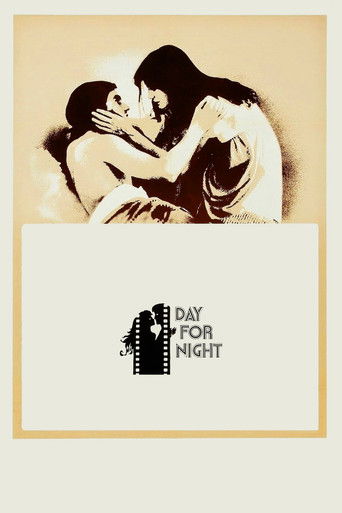
Day for Night (1973)
Truffaut's film about making a film shows how the process of creating can mirror and reshape the lives of those involved.

Compare another approach
Toni Erdmann (2016)
Another contemporary European film about a difficult father trying to reach his adult daughter, mixing comedy with real emotional risk.
Explore the era or movement
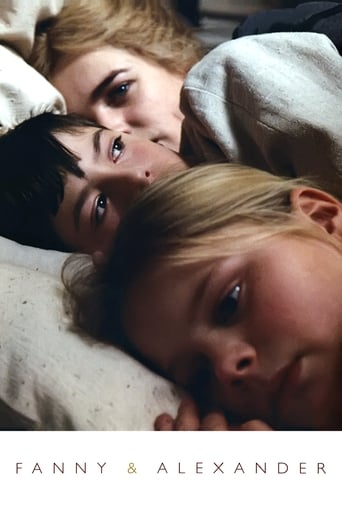
Fanny and Alexander (1982)
A larger-scale Bergman portrait of a family, theatre and memory, useful for seeing how Scandinavian drama frames home and performance.