Drama
Roma
Mexican
2018 · Directed by Alfonso Cuarón · 135 min


Drama
Mexican
2018 · Directed by Alfonso Cuarón · 135 min






Meaning, unpacked
Central idea
Roma can be read as an act of remembrance and gratitude: Cuarón recreates his childhood home to see the woman who held it together, and to acknowledge the class and racial lines that shaped her place in it.
What it means
Roma is a film about seeing someone. Alfonso Cuarón rebuilds his childhood home in Mexico City and places at its centre Cleo, the domestic worker who held the household together. We follow a year in the early nineteen seventies, as a family falls apart and her work never stops.
It is remembrance and gratitude at once, based on Cuarón's upbringing and on Libo Rodríguez, who worked for his family. But it doesn't simply flatter. The family loves Cleo, and also depends on her and directs her, and the class and racial lines of that house are never hidden. Cleo and Sofía sit in very different positions, yet both are left behind by the men in their lives, and a quiet solidarity grows between them.
Why it mattered
The film is built from a child's memory, so small sensory moments sit beside huge events. Cuarón shot it himself in sharp digital black and white, with wide frames that keep people and events in the same space, a slow, distant camera, and no traditional score. The opening shot, soapy water on a tiled driveway, sets the rhythm: labour, reflection, routine.
Its boldest choice comes when the Corpus Christi massacre breaks out in a street Cleo is passing through. The camera doesn't change its language. History simply arrives, as it would for a child looking on. In this film, politics and private life share the frame.
Before anyone tells you what to think: what did you make of it?
Log in to rate it and leave commentsIt takes one click with Google or an email link. You come straight back here.
Rate it, keep your notes, and find the next film.
Free, no ads. Your journal, your lists, a Cine Guide that remembers you.
Create your free spaceRoma premiered at Venice in 2018 and won the Golden Lion, then took ten Oscar nominations and three wins, including Best Director. It helped establish streaming as a serious patron of auteur cinema, though some cinema owners objected to Netflix's limited release. It also renewed interest in memory-based filmmaking and in stories about domestic workers.
Beyond cinema, Yalitza Aparicio became the first Indigenous woman nominated for Best Actress, and her fame sparked talk about racism in Mexico. The film joined debate over domestic workers' pay and protection. Today it is seen as a key film of the 2010s, and the conversation has moved from technique to who gets to tell these stories, including whether it romanticises the family's bond with Cleo.
What happens
Back home after the beach, Cleo has said aloud what she carried: she hadn't wanted her baby. The family has held her. Now she returns to her chores, a house changed by Antonio's absence, and climbs toward the roof.
The last image
Cleo climbs the stairs to the roof, and the camera tilts up from her to the sky and a passing plane.
What it says
The film ends where it began, with work and a plane overhead. Cleo's life goes on, but the camera looks up with her, giving her the whole frame. It is quiet gratitude, not a neat resolution.
Or follow an idea from this film


See what influenced it
Amarcord (1973)
Fellini's comic, nostalgic version of a childhood memory film. Compare how each director rebuilds a lost world from detail and atmosphere.
Explore the era or movement
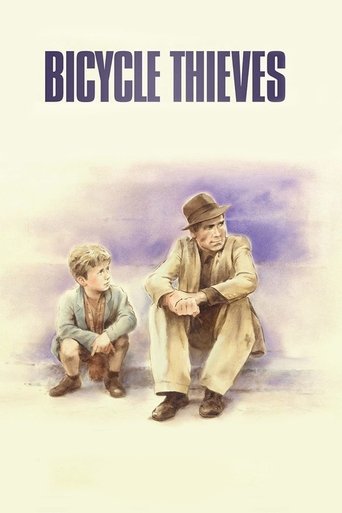
Bicycle Thieves (1948)
A foundational neorealist film about ordinary working people, filmed on real streets with non-professional actors.
Compare another approach
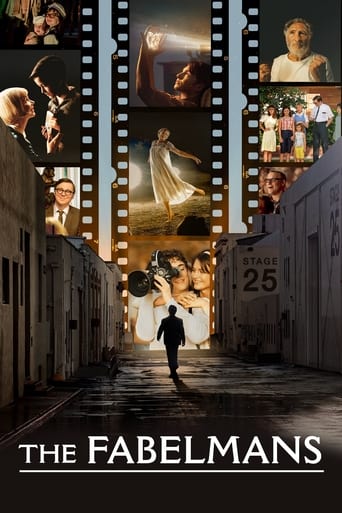
The Fabelmans (2022)
Another recent autobiographical film from a major director. It makes a good contrast between a family drama told from the director's own point of view and one told through a servant's.

Follow the idea
Shoplifters (2018)
Released the same year, it also looks at class, unofficial families and care at the margins of society, with similar warmth and restraint.
Jump forward
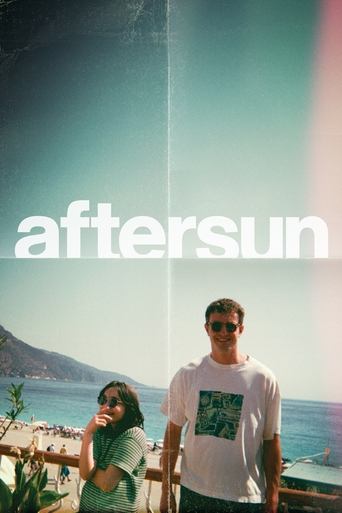
Aftersun (2022)
A recent, fragmentary memory film. It shows how quiet, observational filmmaking and subjective recollection have continued to develop.