Adventure · Action · Science Fiction
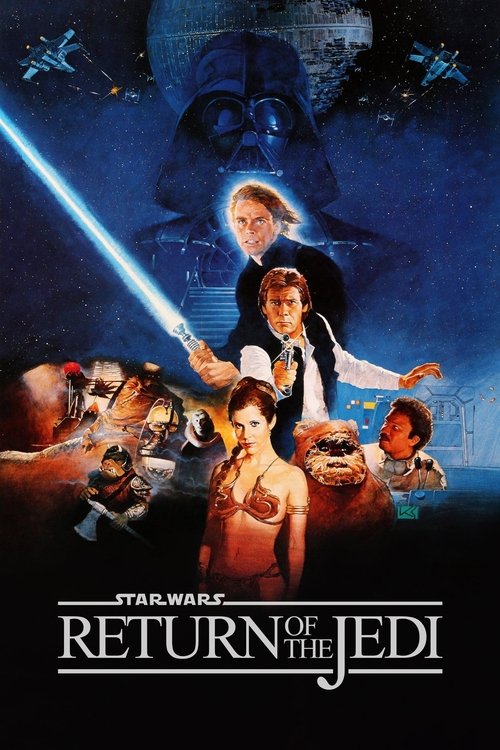
Return of the Jedi
American
1983 · Directed by Richard Marquand · 132 min


Adventure · Action · Science Fiction
American
1983 · Directed by Richard Marquand · 132 min






Meaning, unpacked
Central idea
The film can be read as a story about whether a hero can win by refusing the methods of his enemy. Its large battles surround a smaller argument about loyalty, fear, family and the possibility of redemption.
What it means
Return of the Jedi asks a simple question inside a very big movie: can a hero win by refusing the methods of his enemy? The battles are enormous, but they surround a smaller argument about loyalty, fear, family, and whether anyone is beyond redemption.
At its heart is the idea that a person is not fixed by their worst actions, and that family can reopen a future that looked closed. Luke's growth is measured by what he chooses not to do. The Emperor offers him power and feeds his anger, the very things the earlier films warned against. Luke is also on his own now, with no mentors to tell him what to do, so he has to act on belief and judgment. The film puts the same idea in the climax: the strongest move can be putting the weapon down.
Why it mattered
In 1983 this was the close of the trilogy that made merchandising, sequels and effects-led spectacle central to how Hollywood made and sold big films. It is also the high point of effects done by hand. Industrial Light & Magic layered miniatures, motion-control photography, matte paintings and optical printing into the space battle, planning on a scale few films had tried before digital effects.
It also showed what physical creatures could give a film. Jabba was a large puppet worked by a team handling his tail, face and arms, and actors played among creature suits, so they had something real to react to. The finale is cut by rhythm rather than geography: a space battle, a ground assault and a duel play side by side, and a beat in one place changes how the others land.
Before anyone tells you what to think: what did you make of it?
Log in to rate it and leave commentsIt takes one click with Google or an email link. You come straight back here.
Rate it, keep your notes, and find the next film.
Free, no ads. Your journal, your lists, a Cine Guide that remembers you.
Create your free spaceThe film confirmed the model of the effects-heavy franchise film, the connected trilogy and the merchandised creature. Its story, and Anakin's arc, became the foundation for the prequels, sequels and television series that followed, from The Mandalorian onwards. It left marks on popular culture too: Leia's metal bikini became a cosplay staple and a lasting debate about how women are treated in science fiction, Admiral Ackbar's "It's a trap!" became an internet joke, and "Jabba" and "Ewok" entered everyday speech.
Audiences came in large numbers, and it was one of the highest-grossing films of 1983. Critics were more divided than for the first two films. Many praised the effects and the emotional payoff, while others found the Ewoks and the tone too cute. It earned four Oscar nominations and a Special Achievement Award for visual effects. Its standing has risen over time, helped by the later films that gave its emotional story more weight, though people still argue about the Ewoks and how it compares with The Empire Strikes Back.
What happens
Vader turns on the Emperor and throws him down a shaft, saving Luke at the cost of his own life. The Death Star is destroyed, the Empire collapses, and Luke burns his father's body on a pyre.
The last image
As the galaxy celebrates, Luke looks across the Endor celebration and sees the Force spirits of Obi-Wan, Yoda and a smiling Anakin Skywalker watching over him.
What it says
Luke wins by refusing to kill, and Vader is redeemed by a son's faith in him. The film ends with the family made whole because the story was never really about the battle. It was about whether anyone is beyond saving.
Or follow an idea from this film

See what influenced it
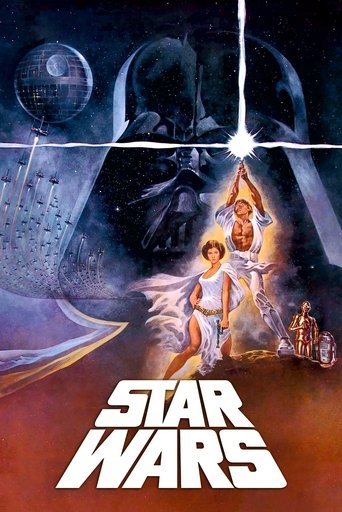
Star Wars (1977)
If the earlier films are not fresh in memory, the original shows the simple adventure structure and the world this film concludes.
Explore the era or movement
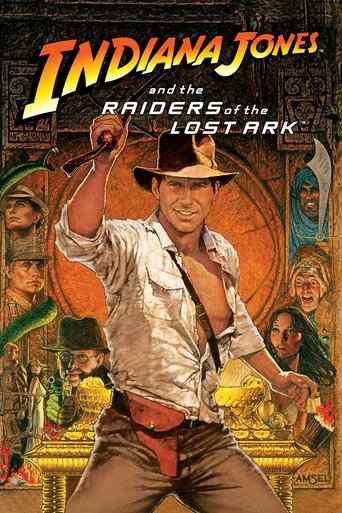
Raiders of the Lost Ark (1981)
Another Lucas-produced adventure of the period, with the same serial inspiration, but built around stunts and a single hero rather than space opera.
Compare another approach
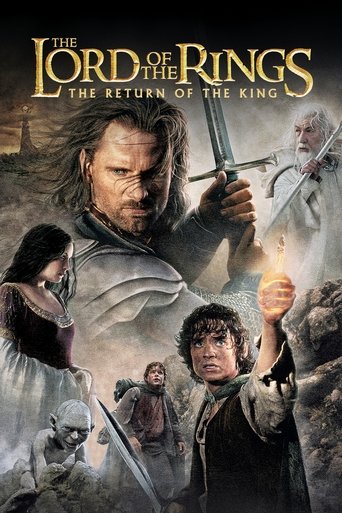
The Lord of the Rings: The Return of the King (2003)
A comparable third chapter of a fantasy trilogy that mixes a large-scale battle with a small personal journey.
Follow the idea
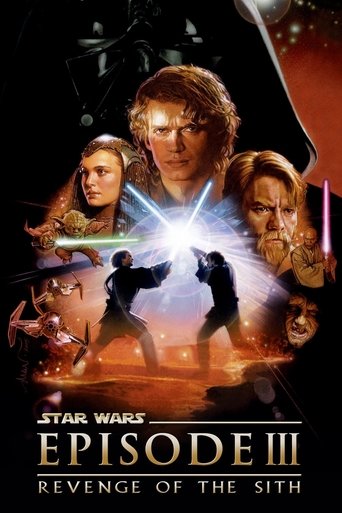
Star Wars: Episode III - Revenge of the Sith (2005)
It tells the backstory of this film's central relationship, and shows how the saga's ideas of fall and redemption were developed.
Jump forward
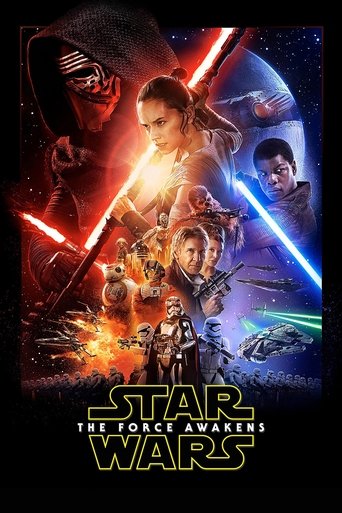
Star Wars: The Force Awakens (2015)
A return to the saga that deliberately echoes the original trilogy's look and practical effects while introducing new characters.