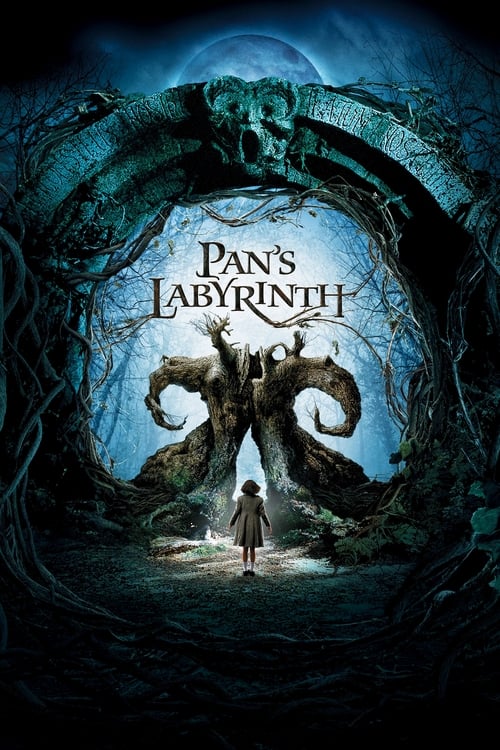
Fantasy · Drama · War
Pan's Labyrinth
Mexican (El laberinto del fauno)
2006 · Directed by Guillermo del Toro · 118 min


Fantasy · Drama · War
Mexican (El laberinto del fauno)
2006 · Directed by Guillermo del Toro · 118 min












Meaning, unpacked
Central idea
The film explores disobedience as moral courage. Set in Francoist Spain, it contrasts a regime built on obedience with a child whose imagination keeps her capable of mercy. The fantasy can be read as her way of making sense of a world of cruelty, or as a real parallel kingdom.
What it means
A little girl is told to obey, and the whole film turns on the moment she doesn't. That is the heart of Pan's Labyrinth: disobedience as moral courage. Ofelia, in Spain in nineteen forty-four, is caught between a cruel Captain and a faun who sets her tasks. At the end she refuses to hand over her baby brother, and it costs her everything.
Set under Franco, the film pits a system built on obedience against a child whose imagination keeps her capable of mercy. Captain Vidal demands order for its own sake. Look at his watch, his rituals of control and his fixation on bloodline. He is the true monster, more frightening than any creature. The faun's tasks seem to demand obedience too, but his final test shows what the labyrinth was really asking: not whether she could follow orders, but whether she knew when to refuse. Mercedes, a servant and rebel spy, shows a quieter, less magical courage. And was Ofelia's kingdom real? Perhaps it doesn't have to be. Her choice was real.
Why it mattered
In its time, Pan's Labyrinth showed that fantasy could carry real political weight. It treated the magical world neither as an escape from the war plot nor as decoration, but as a story that answers it. Del Toro cross-cuts the rebel plot with the fairy-tale tasks, so each comments on the other and both rise toward the same pressure point. It was an adult fairy tale, rated R in the United States, and it used a child's point of view to heighten violence rather than soften it.
Before anyone tells you what to think: what did you make of it?
Log in to rate it and leave commentsIt takes one click with Google or an email link. You come straight back here.
Rate it, keep your notes, and find the next film.
Free, no ads. Your journal, your lists, a Cine Guide that remembers you.
Create your free spaceIt also stood in a Spanish-language tradition of using ghosts and fairy tales to speak about the Civil War and Franco's dictatorship, a companion to del Toro's earlier The Devil's Backbone. Its look mattered too. Guillermo Navarro shot the fantasy in amber and gold and the soldiers' world in steel blue. Doug Jones's work inside the Faun and Pale Man costumes, with prosthetics and animatronics, gave the creatures a physical weight that digital effects rarely match.
The film premiered at Cannes in two thousand six, where it reportedly drew a long standing ovation. It won three Oscars, for cinematography, art direction and makeup, and was also nominated for Best Foreign Language Film, score and original screenplay. It was a strong foreign-language hit in the United States, though some viewers found its violence disturbing.
Its influence is large. It helped make dark, adult fantasy a common idea and paved the way for del Toro's The Shape of Water, which won Best Picture in twenty seventeen. Today it is generally seen as del Toro's finest film and one of the best fantasy films of its decade, often cited as proof that dark fantasy can be serious cinema. The Pale Man is a Halloween favourite, the lullaby is still covered online, and the question of whether Ofelia's world is real remains a favourite debate.
What happens
Ofelia refuses to give the faun her baby brother, and Vidal shoots her. The rebels kill him. As she dies, she is welcomed into the underground kingdom, where her father says her refusal was the final test.
The last image
Ofelia sits on a throne in the underground kingdom, welcomed by her parents, while above ground a flower blooms on the withered tree.
Two readings
What it says
The faun's tasks only seemed to demand obedience. The real test was whether Ofelia would refuse to harm an innocent, even at the cost of her life. The film ends on her choice, which is real either way.
Or follow an idea from this film

Compare another approach
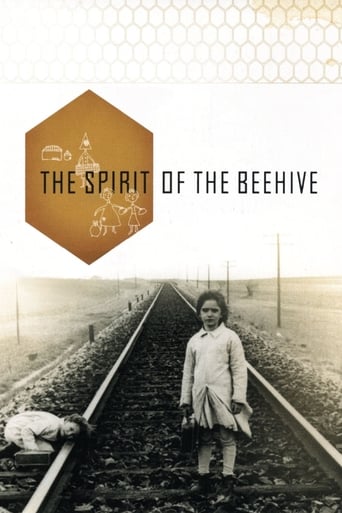
The Spirit of the Beehive (1973)
The Spanish classic that views the Franco era through a girl's fascination with a monster. It is quieter and more elusive, and helps show what del Toro inherited.
Follow the idea
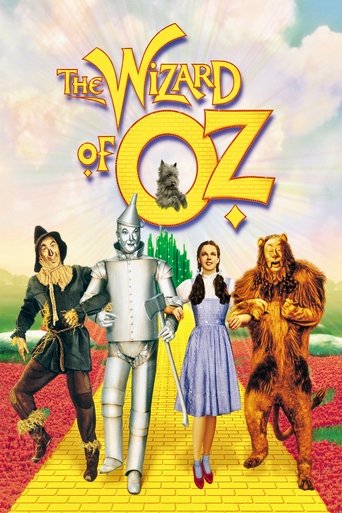
The Wizard of Oz (1939)
The classic child-enters-another-world story. Compare its reassuring dream logic with del Toro's darker, ambiguous version.
Continue the director
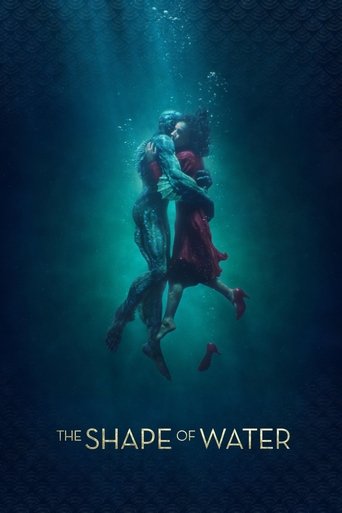
The Shape of Water (2017)
Del Toro's later fantasy about an outsider heroine, a creature and a hostile state, with a Cold War setting in place of the Spanish one.

Explore the era or movement
Children of Men (2006)
Released the same year and also directed by a Mexican filmmaker, Alfonso Cuarón. It reaches a similar mix of political despair and fragile hope in a very different genre.
Follow the idea
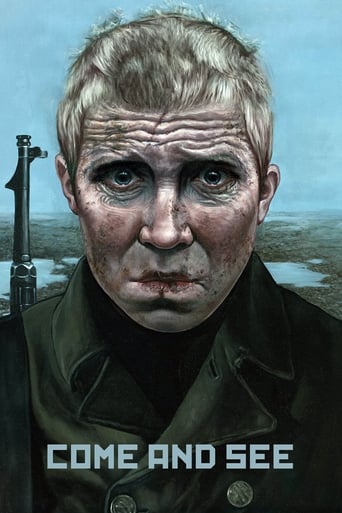
Come and See (1985)
A war film seen through a child's eyes, with nightmarish intensity. It shows the real horror that del Toro's fairy tale reflects.