Animation · Comedy · Music
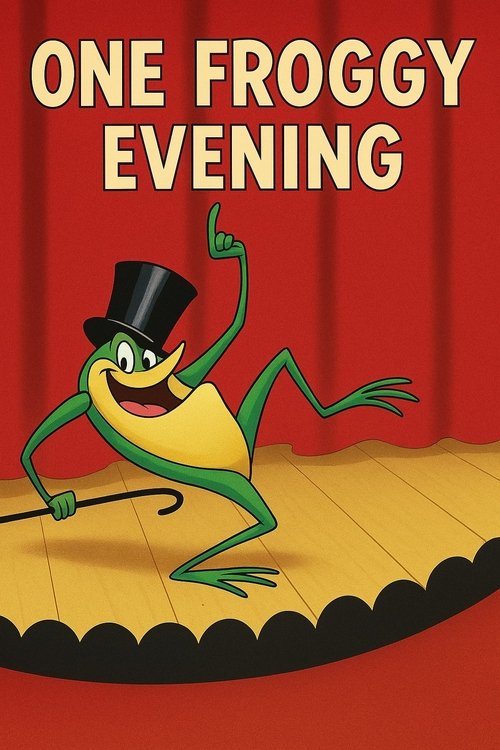
One Froggy Evening
American
1955 · Directed by Chuck Jones · 7 min


Animation · Comedy · Music
American
1955 · Directed by Chuck Jones · 7 min
Meaning, unpacked
Central idea
The film can be read as a comic fable about greed and the gap between a private wonder and a public success: a man who has a miracle in his hands cannot turn it into money, and the pursuit ruins him.
What it means
A man finds a frog that sings and dances, but only for him. He tries to turn that miracle into a fortune, and it ruins him. The film reads as a comic fable about greed and the gap between a private wonder and a public success. Notice how fast his astonishment turns to calculation. Nobody lectures him about ambition. The film just shows what it costs, which is everything.
Underneath is a second idea: some marvels can't be shared, or even explained, as anyone who has described something wonderful to people who weren't there will know. Agents, theatres and marquees appear as machinery for turning talent into fortune, and the film is amused by that machinery, and bleak about how rarely it works. The jump to the future turns one man's story into a cycle. The frog never stops being wonderful. We're the ones who can't stop wanting to cash it in.
Why it mattered
It came out in 1955 as one of the regular Merrie Melodies shorts, shown before feature films. It did not draw the critical attention features did. But it shows what Chuck Jones and his writer Michael Maltese could do once they dropped the usual star-vehicle format for a one-off fable.
It also showed how much a short can carry without words. The man never speaks, so the team leaned on gesture and timing, as silent comedy had done. Music became the film's real dialogue, with songs moving between ragtime, popular song and opera. Its dark humour and tight structure gave seven minutes the shape of a complete story.
Before anyone tells you what to think: what did you make of it?
Log in to rate it and leave commentsIt takes one click with Google or an email link. You come straight back here.
Rate it, keep your notes, and find the next film.
Free, no ads. Your journal, your lists, a Cine Guide that remembers you.
Create your free spaceIts reputation grew over the following decades, as animation historians and filmmakers rediscovered the Warner Bros. shorts. It became a touchstone for wordless animated storytelling, and for the idea that cartoons can carry a bleak, adult fable. It is often screened in animation and film courses, where students study how timing, music and pantomime build a story.
Its reach went well beyond the classroom. The frog became the mascot of the WB television network from 1995, introducing him to a new generation. The premise, a treasure that performs only for its owner, became a common metaphor for a windfall nobody will believe in. Today it is regularly counted among the finest American animated shorts, and often taught as Chuck Jones's most complete work.
What happens
Ruined and shabby, the man hides the frog in the cornerstone of a new building. The film jumps to 2056, where another worker opens the box and the frog starts to sing for him. It reveals the cycle will repeat.
The last image
In 2056, a demolition worker opens the box and the frog, top hat and cane in place, bursts into song for him alone.
What it says
The ending turns one man's ruin into a pattern. The frog never stops being wonderful; we simply can't stop wanting to cash it in. Greed isn't one person's flaw, it repeats, and that gives a dark joke the weight of a fable.
Or follow an idea from this film


Continue the director
Duck Amuck (1953)
Another Jones masterpiece, in which a cartoon star is tormented by the animator. It shows the same precision and a sharper, more self-aware comic mind.
Continue the director
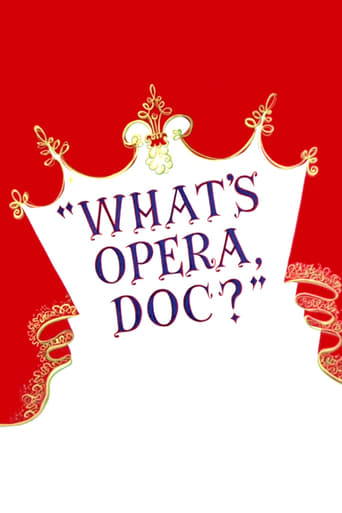
What's Opera, Doc? (1957)
Jones's operatic parody puts Elmer Fudd and Bugs in a Wagnerian spoof, and shows how closely he tied music to animation.

Follow the idea
The Red Balloon (1956)
A near-wordless story about a child and an object with a mind of its own, told through gesture and image, and a gentler contrast to Jones's comic bitterness.
Compare another approach
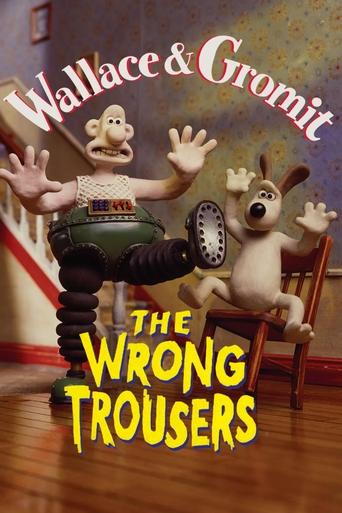
The Wrong Trousers (1993)
A later short that uses pantomime and meticulous comic timing in a small, wordless world, with a dark undertone beneath the charm.
Explore the era or movement
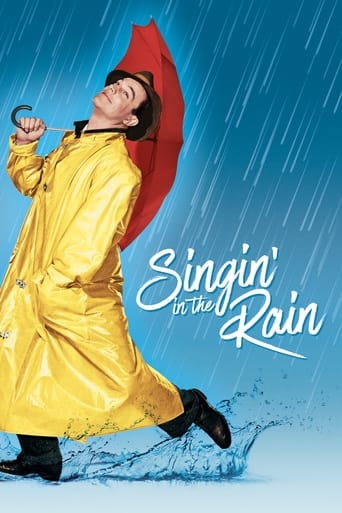
Singin' in the Rain (1952)
A feature from the same decade that also lampoons show business and relies on musical numbers, with affection instead of bite.