Action · History · War
No Man's Land
Bosnian
2001 · Directed by Danis Tanović · 98 min


Action · History · War
Bosnian
2001 · Directed by Danis Tanović · 98 min









Meaning, unpacked
Central idea
The film can be read as a study of how a war's causes become impossible to settle once each side holds a self-serving story, and how the institutions meant to help prefer appearances to solutions.
What it means
Two soldiers, one Bosniak and one Serb, are stranded in a trench between the lines. One of them cannot move without setting off a mine. That simple trap holds the film's big idea: a war's causes become impossible to settle once each side holds a story that flatters itself.
You see it in the long argument between Ciki and Nino. Each treats history as a weapon, and each can honestly believe the opposite of the other. Comedy and menace take turns, and the power shifts with whoever holds the gun. Yet the two men also slide from hatred into mockery and even brief fellowship, because they are so alike. Then the UN and the press arrive, and a human crisis becomes an administrative and media event. Nobody is a pantomime villain. Rules, ranks and orders just keep running, even when they make no sense. That is where the humour comes from, and the horror too.
Why it mattered
The film shows how much a small production can do with very little. Almost everything happens in one tight space, yet blocking, eyelines and depth keep the trench from ever feeling the same twice. The screenplay won the prize at Cannes in 2001, and its dialogue, with jokes, accusations and history overlapping, feels theatrical but moves like cinema. Danis Tanović has said he wanted a simple physical situation that could hold the big arguments of the war.
It also mattered as a landmark for Bosnia. It won the Oscar for Best Foreign Language Film, beating the favoured French film Amélie, and it was the country's first win in that category. Tanović had worked with a film crew during the siege of Sarajevo and shot many hours of war footage, so the uniforms and procedures feel credible. But the story is fictional, invented to dramatise broader truths.
Before anyone tells you what to think: what did you make of it?
Log in to rate it and leave commentsIt takes one click with Google or an email link. You come straight back here.
Rate it, keep your notes, and find the next film.
Free, no ads. Your journal, your lists, a Cine Guide that remembers you.
Create your free spaceThe film helped establish Bosnian cinema internationally and encouraged filmmakers in the region to approach the war through dark humour and compact stories. Later war and political dramas have borrowed its single-location model. Teachers still use it as an accessible, darkly comic way into a conflict whose causes are hard to explain, and its picture of a hamstrung UN and a press chasing a story fed wider debate.
Critics praised it widely after Cannes, and audiences across Europe and beyond responded to its anger and humour. In the former Yugoslavia, reactions were mixed, but it was seen as a rare and honest attempt to face the conflict. Today it is regarded as one of the most important post-Yugoslav films. It has aged well because it rests on a simple, adaptable situation, not topical detail. Its last shot, a soldier left on a mine after the cameras have gone, is often read as a metaphor for the international community's failure in Bosnia.
What happens
Ciki and Nino shoot each other, and Marchand kills Ciki. The mine under Cera cannot be defused. To avoid embarrassment, the UN declares the problem solved and withdraws, leaving Cera alive and alone on it.
The last image
The cameras and soldiers have gone, and Cera lies on the spring-loaded mine in the empty trench, still alive.
What it says
The ending shows that official attention is temporary and the consequences are not. The UN cares more about appearances than about the man in the ground, which many read as a metaphor for the world's failure in Bosnia.
Or follow an idea from this film
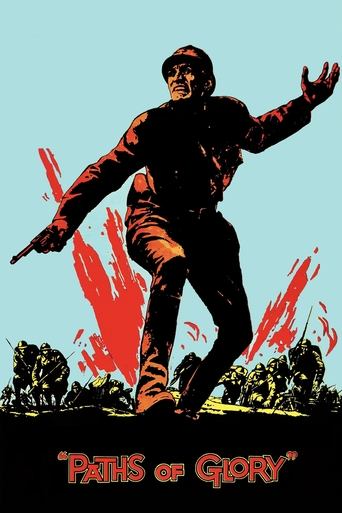

Follow the idea
Paths of Glory (1957)
Kubrick's film also examines how military and political institutions treat the individuals inside them, with the same moral anger.
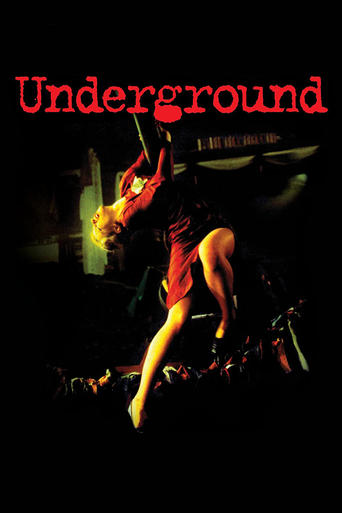
Compare another approach
Underground (1995)
Another Balkan film on the Yugoslav story, much larger and more surreal, with a similar mix of comedy and tragedy.
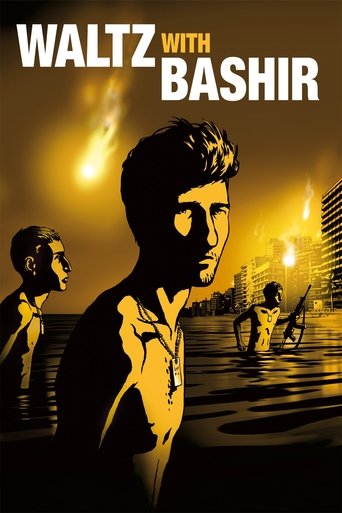
Explore the era or movement
Waltz with Bashir (2008)
A later look at a modern war that asks how it is remembered and told, using animation.
See what influenced it
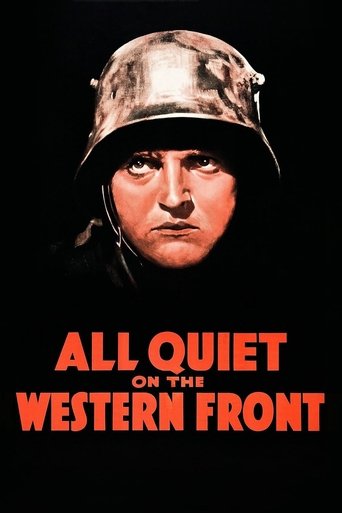
All Quiet on the Western Front (1930)
An early model of the anti-war film that sees enemy soldiers as fellow human beings.
Compare another approach
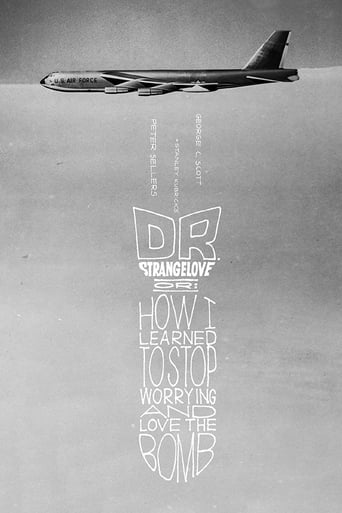
Dr. Strangelove (1964)
Satire is used here, too, to expose the absurdity of institutions that govern war.