Drama · Comedy · Music
Nashville
American
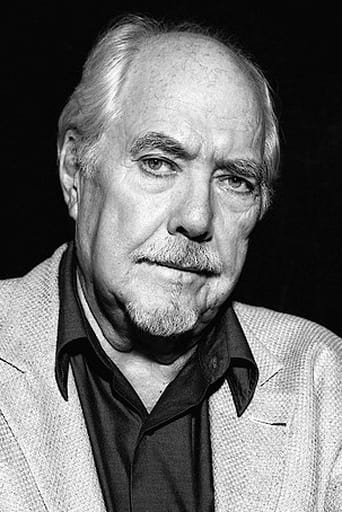
1975 · Directed by Robert Altman · 160 min


Drama · Comedy · Music
American
1975 · Directed by Robert Altman · 160 min







Meaning, unpacked
Central idea
The film can be read as a portrait of America as a stage: a country of performers, fans and promoters who fuse entertainment, religion, politics and personal ambition, and who gather around spectacle even when their private lives are fraying.
What it means
Nashville is a film about a country that loves to watch itself. Over a few days, singers, fans, promoters and campaign workers drift through the city and in and out of each other's lives. It ends with a shooting at a political rally, but the film is not really about what happens. It is about what it all adds up to.
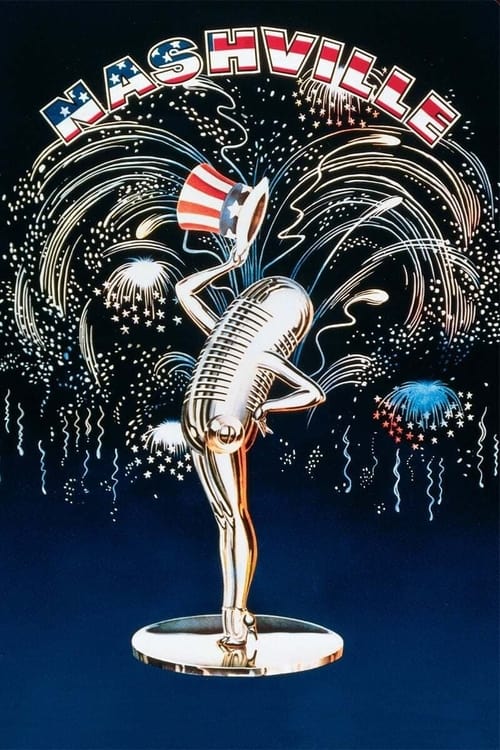
The central idea is America as a stage. Entertainment, religion, politics and ambition blur into one thing, and nearly everyone is performing, on stage or off. The candidate is never seen; only his slogan van rolls through town, like another act on the bill. Everyone is in a crowd, yet almost nobody connects. After the shooting, a singer takes the microphone and the crowd sings. Is that resilience, or a way of looking away? The film will not say.
Why it mattered
In 1975, Nashville gave American cinema a new shape. Joan Tewkesbury's screenplay has no central hero. Its many strands cross by chance, so you get a social map of a place rather than a conventional plot. Altman recorded on multiple tracks and used radio mics, so dialogue overlaps and you seem to overhear it. Nobody tells you whom to listen to. The camera does the same, with wide frames and slow zooms, drifting and discovering.
The timing mattered too. It came out a year before the Bicentennial, after Watergate, and its flags, patriotic songs and campaign slogans were aimed at an uneasy, reflective nation. Critics gave it some of the strongest American reviews of the year, though some found it cynical or condescending, and parts of Nashville itself disliked the portrait. It earned five Oscar nominations, including Best Picture and Best Director, and won Best Original Song for "I'm Easy."
Before anyone tells you what to think: what did you make of it?
Log in to rate it and leave commentsIt takes one click with Google or an email link. You come straight back here.
Rate it, keep your notes, and find the next film.
Free, no ads. Your journal, your lists, a Cine Guide that remembers you.
Create your free spaceNashville made the large interlocking ensemble a recognised form. You can follow that line through Altman's later work and into directors such as Paul Thomas Anderson. Its overlapping sound and its refusal to single out one character spread widely through American independent cinema and television.
Today it is widely seen as Altman's signature film and one of the central works of 1970s American cinema. What once looked loose now reads as precise craft, and many people find the satire warmer than it first seemed. The last refrain, "It Don't Worry Me," may be its sharpest joke: a crowd sings that nothing worries it, just after it has seen something terrible.
What happens
At the Parthenon rally, Kenny, a young man who has drifted unnoticed through the story, shoots Barbara Jean dead. Albuquerque grabs the microphone and the crowd sings. The film shows how quickly a tragedy is absorbed into a show.
The last image
The crowd, still gathered at the Parthenon, sings 'It Don't Worry Me' as the film closes on the singing.
Two readings
What it says
The film sees America as a stage where everything becomes spectacle, even a killing. The song is its sharpest joke: a crowd sings that nothing worries it, moments after seeing something terrible. The film won't say whether that is strength or avoidance.
Or follow an idea from this film

Compare another approach
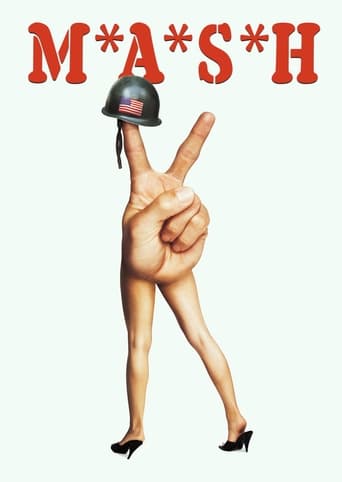
M*A*S*H (1970)
Altman's breakthrough shows the origins of his ensemble style and overlapping sound in a more compact, comic form.
See what influenced it
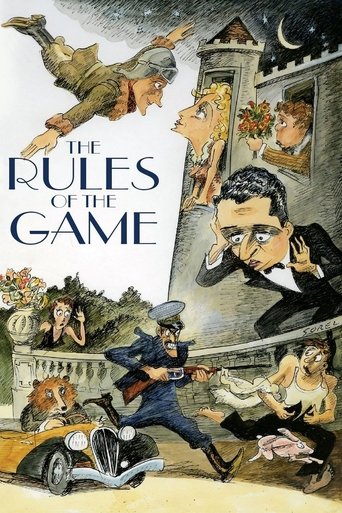
The Rules of the Game (1939)
Renoir's party of intersecting lives, comic on the surface and bleak underneath, is a clear precursor to Altman's social mosaic.
Jump forward
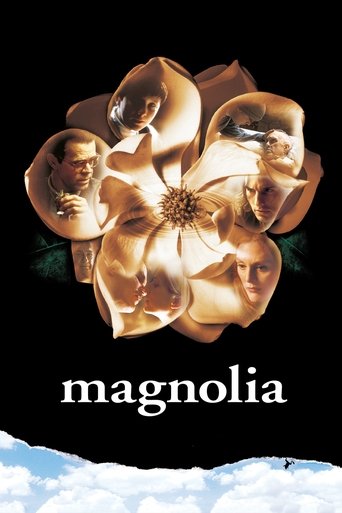
Magnolia (1999)
A direct descendant: intertwined lives, a shared emotional climax and music used as structure, from a director who admired Altman.
Explore the era or movement
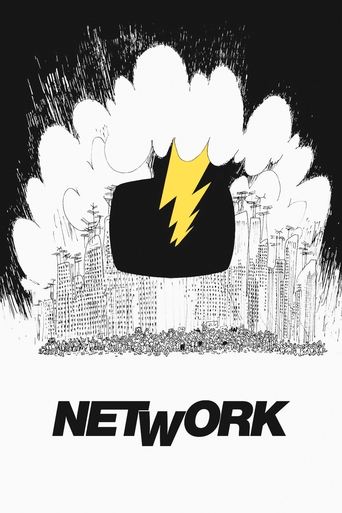
Network (1976)
Another sharp 1970s American satire about media, spectacle and a country losing its bearings, though far more pointed and verbal.
Continue the director
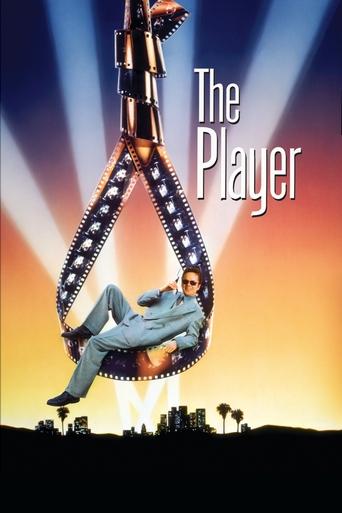
The Player (1992)
Altman's return to prominence in the 1990s, a satirical ensemble about Hollywood that shows his style applied to the industry itself.