Crime · Drama
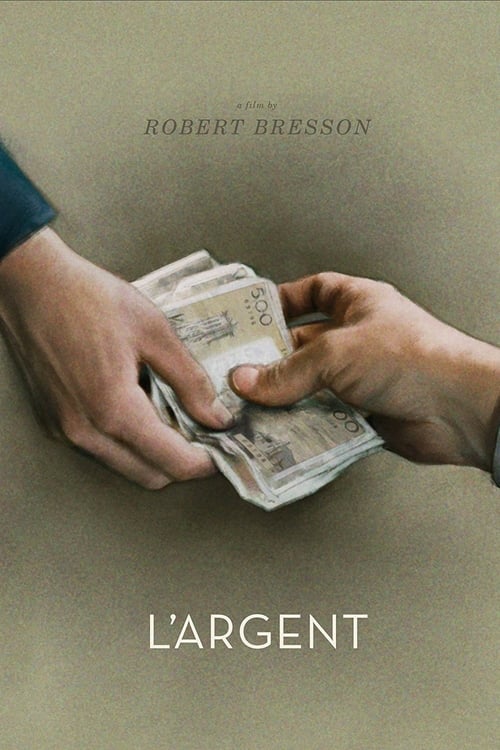
L'Argent
French
1983 · Directed by Robert Bresson · 85 min


Crime · Drama
French
1983 · Directed by Robert Bresson · 85 min




Meaning, unpacked
Central idea
The film can be read as a study of how evil and suffering spread through ordinary exchange. Money passes from hand to hand without conscience, and Bresson asks what happens to the people who cannot act within that system.
What it means
A forged banknote has no intentions. It cannot hate, or plan, or want anything, and yet in L'Argent it spreads harm from one life to the next. Money passes from hand to hand without a conscience, and Bresson asks what becomes of the people who cannot act within that system.
It starts with a trivial argument between privileged teenagers and a parent, and nobody treats the fake note as serious. That is the point: the first step carries almost no moral weight, and the last steps carry an enormous amount. Those who suffer most are often the least guilty, while those who started the chain walk away. Bresson, a religious artist, also leaves open whether grace can exist at all. The brief kindness of the elderly woman meets a bleak outcome, and the film will not tell you whether goodness can survive in a world ruled by transaction.
Why it mattered
Bresson, in his eighties, made this on a tight budget with a largely non-professional cast. He called them models and repeated takes until gestures turned mechanical, stripping away theatrical display. What is left is behaviour, and you supply the feeling. The flat acting was never an accident.
He built the film from parts: hands, doors and objects, cut together so you see cause and effect in the sequence of shots, not in any explanation. There is no score, so keys, footsteps and cell doors become the rhythm, and sound often announces something before the image does. Violence is told through reflections and off-screen sound, because Bresson believed cinema should not imitate theatre. It is more disturbing than any direct view.
Before anyone tells you what to think: what did you make of it?
Log in to rate it and leave commentsIt takes one click with Google or an email link. You come straight back here.
Rate it, keep your notes, and find the next film.
Free, no ads. Your journal, your lists, a Cine Guide that remembers you.
Create your free spaceAt Cannes in 1983 the film shared the prize for outstanding artistic contribution with Andrei Tarkovsky's Nostalghia, and was nominated for the Palme d'Or. The reaction was mixed, with some admiration and some hostility. Critics recognised its rigour even when audiences found it cold, and it reached a small art-house public.
Time has been kind to it. It is now seen as one of Bresson's most formally accomplished films and a fitting last work, and its fragmentary editing and use of sound are widely studied. Its way of breaking bodies and objects into pieces, and its sound in place of music, shaped later directors of spare, morally serious cinema, including the Dardenne brothers and Aki Kaurismäki. Its footprint is mostly in teaching and cinephile culture, but its bleak view of money seems sharper than ever.
What happens
Yvon, hardened by prison and betrayal, kills the kind old woman who sheltered him, along with her family, and takes their money. He then walks into a café, calmly confesses, and is arrested. The chain that began with a forged note ends here.
The last image
Yvon is taken away by the police, and the film simply stops, as the people in the café watch him go.
What it says
The ending shows what a chain of small, careless acts can do to a person. Yvon's guilt is real, yet the film points back to those who started it and walked free. Bresson leaves you to feel that, with no comfort and no sermon.
Or follow an idea from this film


See what influenced it
Au Hasard Balthazar (1966)
Another Bresson film in which an innocent is passed from owner to owner. It shows the same moral design in a different register.

Continue the director
Under the Sun of Satan (1987)
Another study of sin, grace and spiritual struggle, by a different director with a related religious seriousness.
Follow the idea
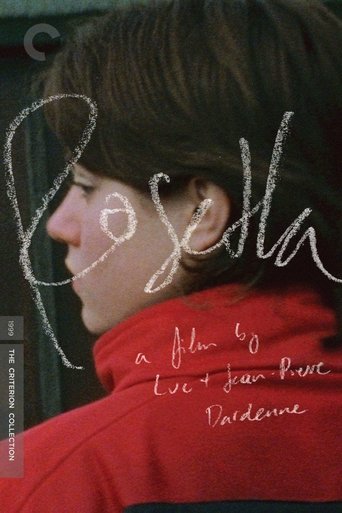
Rosetta (1999)
The Dardennes follow a young woman under economic pressure with a handheld, unadorned style that owes something to Bresson.
Compare another approach
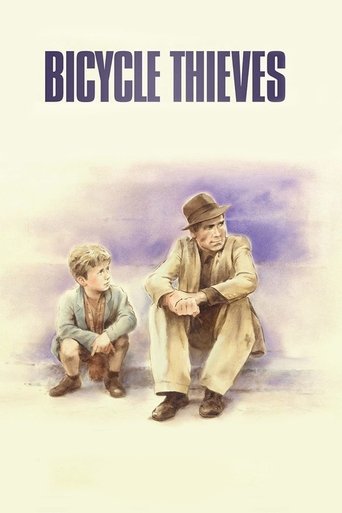
Bicycle Thieves (1948)
Here a small material loss causes a family's ruin, but with warmer, more emotional neorealist treatment.