Drama
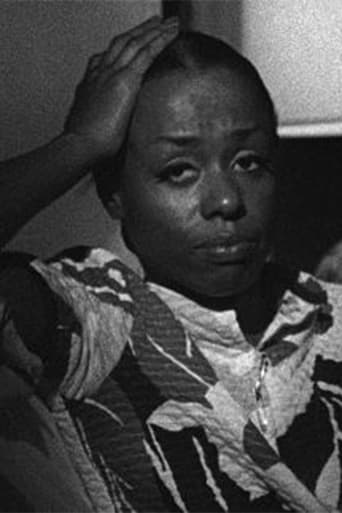
Killer of Sheep
American
1977 · Directed by Charles Burnett · 80 min


Drama
American
1977 · Directed by Charles Burnett · 80 min
Meaning, unpacked
Central idea
The film can be read as a study of how a person endures when work, poverty and routine hollow out feeling. It asks what remains for the family, friendships and children when survival leaves little room for hope or pleasure.
What it means
Killer of Sheep follows Stan, a man who works in a slaughterhouse. He comes home exhausted and can barely feel anything, while the neighbourhood around him goes on living. The film is a study of endurance: how a person carries on when work, poverty and routine hollow out feeling, and what is left for family, friends and children when survival leaves so little room for hope or pleasure.
The film never explains Stan's job or turns it into drama. You see its toll in his tiredness and withdrawal, and the sparse slaughterhouse images give the title its force without a speech. He and his wife share real affection, yet struggle to reach each other. In the slow dance to Dinah Washington's "This Bitter Earth," tenderness seems possible, then distance and frustration take over. The film is not bleak, though. Children leap across rooftops and wander the lots, and songs, neighbours and shared jokes bring warmth. Its gift is finding a quiet, stubborn grace in tired people in a hard place.
Why it mattered
Charles Burnett made the film as his master's thesis at UCLA, shooting mostly on weekends with friends and neighbours as cast and crew in the Watts district he knew. He was drawn to Italian neorealism and to Third World filmmakers, who showed that a film could be built from real places and people rather than Hollywood formula. Here the roughness of a low-budget student film became part of its truthfulness.
It also arrived in the blaxploitation era with a different picture of Black urban life: ordinary working-class family life, without crime melodrama or heroic stereotypes. Instead of plot, it uses loosely linked vignettes, with rhythm and repetition carrying the emotion. Burnett shot it himself in black and white, using natural light and deep shadows, so it feels like a documentary but is often beautiful. It showed that a personal film could be made outside the industry.
Before anyone tells you what to think: what did you make of it?
Log in to rate it and leave commentsIt takes one click with Google or an email link. You come straight back here.
Rate it, keep your notes, and find the next film.
Free, no ads. Your journal, your lists, a Cine Guide that remembers you.
Create your free spaceFor years almost nobody saw it. It is not a documentary, and it was never a hit; it reached few people, mostly at festivals and specialist screenings, where critics noticed its poetic realism. Unlicensed recordings, including music by Dinah Washington and Paul Robeson, kept it from commercial release for about thirty years, until a UCLA restoration and a 2007 release. Reviews were then widely and warmly enthusiastic.
Its reputation has grown from obscure student film to canonical American independent work. It is often seen as the defining work of the L.A. Rebellion, the group of Black UCLA film students in the 1970s, and its rediscovery drew fresh attention to that movement and its other filmmakers. You can feel its influence in Daughters of the Dust and in the work of filmmakers such as Barry Jenkins. Today it is widely taught as a model of low-budget, community-based filmmaking and as a central text of Black American cinema.
What happens
Nothing is settled. Stan is not rescued or broken; the film ends on small gestures of affection and on sheep being led to slaughter. His life goes on much as before, and the film shows you that continuing.
The last image
Sheep are herded toward slaughter, set against the small tendernesses that close the film.
What it says
The film was never about a plot that could resolve. It asks how a person endures when work and poverty hollow out feeling, so it ends mid-life. The quiet affection beside the sheep suggests that carrying on, and holding onto each other, is the point.
Or follow an idea from this film

See what influenced it
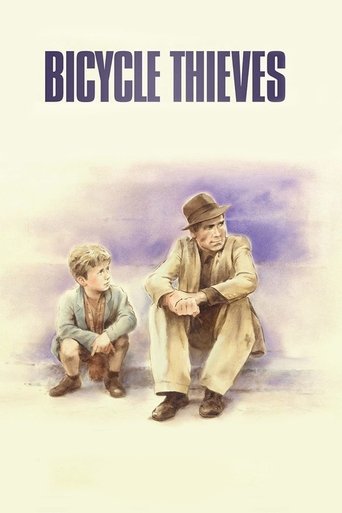
Bicycle Thieves (1948)
The neorealist model for Burnett's approach: a working man, a real city, and a small material problem that carries great emotional weight.

Explore the era or movement
Daughters of the Dust (1991)
Another key film of Black independent cinema and the L.A. Rebellion, with a very different, lyrical and historical subject.
Jump forward
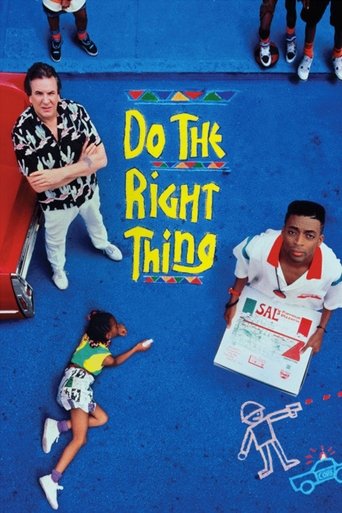
Do the Right Thing (1989)
Spike Lee brings a Black neighbourhood to the screen in a louder, more stylised way, which shows how the independent tradition developed.

Compare another approach
Mean Streets (1973)
A near-contemporary American portrait of a neighbourhood and its friendships, made on a small budget, with a very different energy and different outcomes.

See its influence
Moonlight (2016)
Shows how the intimate, music-led, observational treatment of Black life has continued into recent cinema.