Adventure · Drama · Science Fiction
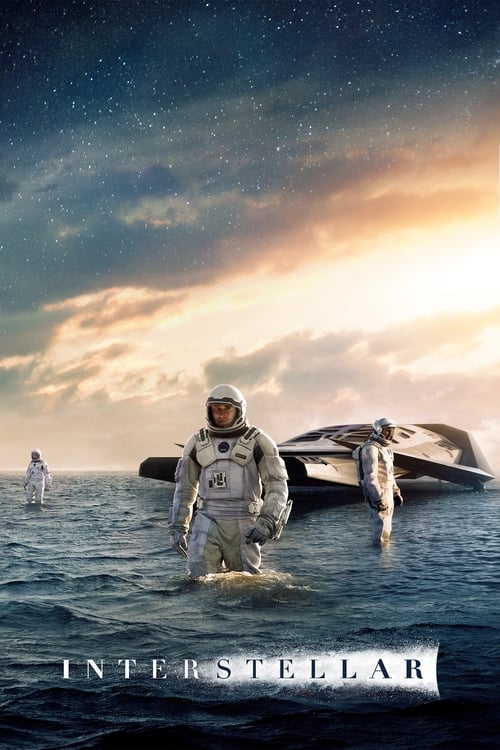
Interstellar
American
2014 · Directed by Christopher Nolan · 169 min


Adventure · Drama · Science Fiction
American
2014 · Directed by Christopher Nolan · 169 min











Meaning, unpacked
Central idea
The film can be read as an argument that love is a force that survives distance, and perhaps a kind of information, set against a cosmos that is indifferent but navigable. It tests whether survival is a matter of calculation or of connection.
What it means
A father makes a promise to his daughter, then leaves Earth through a wormhole to find humanity a future. The rest of Interstellar is about what that promise costs.
Its central idea is bold: love is a force that survives distance, perhaps even a kind of information, in a cosmos that is indifferent but just about navigable. Relativity turns time into something you can spend, so every decision carries a price in years you can't get back. The film measures every cosmic event by what it does to one parent and one child. On the water planet, the enormous waves and the ticking clock make that price physical. Then Cooper watches his messages, in a long close-up on one face carrying years of lost time. That's the proof that the real subject is human cost, not spectacle. The film also asks whether saving the species can excuse betraying the individuals in it.
Why it mattered
Interstellar revived the serious, awe-driven space epic, in the tradition of 2001, for a mass audience. It was a rare blockbuster built on an original idea rather than a franchise, and it helped keep large-format film shooting alive.
It also tried to make physics feel personal. Physicist Kip Thorne was consultant and executive producer, and his equations guided how the black hole Gargantua was rendered. Hoyte van Hoytema shot on 35mm and IMAX 70mm, and the image grows at the moments of greatest awe. Instead of green screens, huge projected images surrounded the sets, so actors responded to real light.
Before anyone tells you what to think: what did you make of it?
Log in to rate it and leave commentsIt takes one click with Google or an email link. You come straight back here.
Rate it, keep your notes, and find the next film.
Free, no ads. Your journal, your lists, a Cine Guide that remembers you.
Create your free spaceThe film helped normalise serious science consultation in big-budget science fiction, and it reinforced the case for large-format shooting, which Nolan carried on in Dunkirk and Oppenheimer. Its black hole imagery became a visual reference point, and the results Thorne got from the simulation fed into published scientific work. It also brought Dylan Thomas's poem "Do not go gentle into that good night" to a wide new audience.
Reviews were generally strong, and it earned well over 600 million dollars worldwide. It won the Oscar for Best Visual Effects. Critics split on the final act: its faith in love is sentimental to some and brave to others. Some viewers also found the loud sound mix made dialogue hard to follow. Once seen as flawed but impressive, it's now often counted among the defining science-fiction films of its decade, and the debate about its ending continues.
What happens
Cooper falls into the black hole and finds a space behind Murph's bookshelf where time is a place. He realises he was the ghost all along and sends her the data through gravity. She solves it, humanity escapes, and he wakes near Saturn.
The last image
Cooper, reunited with his elderly daughter, sets off in a ship to find Amelia, alone on the third planet.
What it says
Love is the force that crosses distance, and here it works as information. The film ends on reunion and a new journey because its question was never only whether humanity survives, but what we would give up for the people we cannot reach.
Or follow an idea from this film

See what influenced it
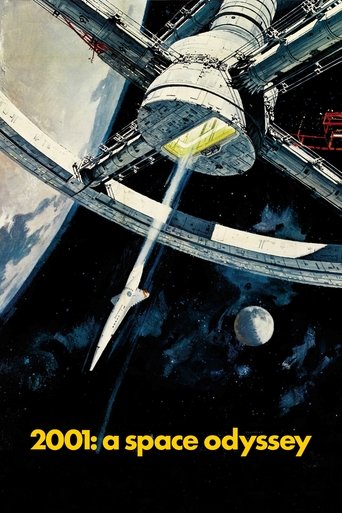
2001: A Space Odyssey (1968)
The great ancestor. Compare Kubrick's cold, wordless mystery with Nolan's warmer, more sentimental tone.

Continue the director
Inception (2010)
Nolan's earlier large-scale idea film, built on time, memory and a parent's longing to get home.
Compare another approach
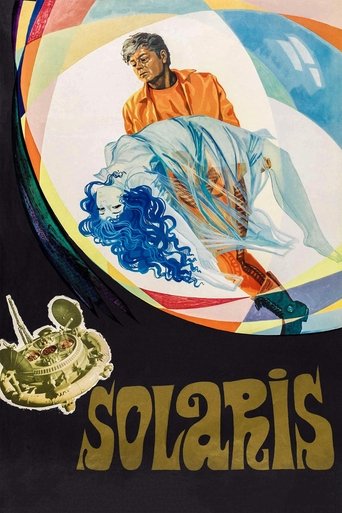
Solaris (1972)
A slower, more philosophical story of space travel, where the deep space journey is really about human grief.
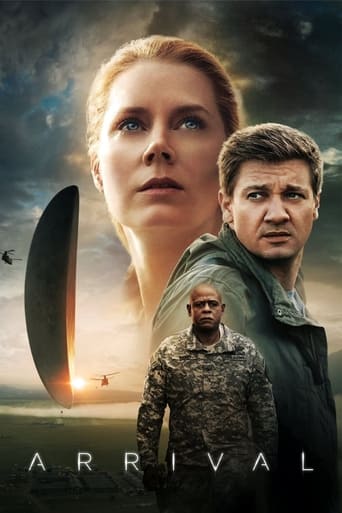
Follow the idea
Arrival (2016)
Another mainstream film that makes time and a parent-child bond the heart of its science-fiction premise.
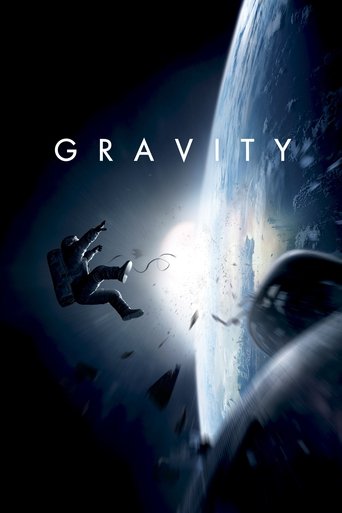
Explore the era or movement
Gravity (2013)
Released a year earlier, it shows the survival-thriller approach to space and the technical possibilities of the period.