Drama · Thriller · War
Inglourious Basterds
American
2009 · Directed by Quentin Tarantino · 153 min


Drama · Thriller · War
American
2009 · Directed by Quentin Tarantino · 153 min
Meaning, unpacked
Central idea
The film can be read as a story about the power of cinema and storytelling: who controls a narrative, who performs an identity, and how images and language can be used to dominate, deceive or strike back.
What it means
Inglourious Basterds is about the power of cinema and storytelling: who controls a narrative, who gets to perform an identity, and how images and language can be used to dominate, deceive or strike back. Nearly every major character plays a role, with borrowed accents and false names. Survival depends on how convincingly they do it, and being found out means death. Language is part of the disguise. Fluency in German, French, English and Italian decides who earns trust and who is exposed, and Hans Landa uses language like a weapon, amused by his own power.
The film also deals with revenge. It clearly enjoys its avengers, yet it keeps showing how brutal vengeance is, and it leaves your own enjoyment under a little scrutiny. When you cheered, what exactly were you cheering? It doesn't answer that for you. Propaganda films, critics, projectionists and a cinema all matter to the plot, and in the burning cinema, film becomes both the setting and the weapon.
Why it mattered
Tarantino built the film from dialogue. Scenes work like long fuses, with polite small talk covering a threat and each one hanging on a single piece of withheld information. The farmhouse interrogation and the basement tavern show how much dread can come from courtesy, a switch of language, a gesture or an accent. Robert Richardson's camera and Sally Menke's editing add pressure through close-ups, slow pushes and carefully timed cuts.
Before anyone tells you what to think: what did you make of it?
Log in to rate it and leave commentsIt takes one click with Google or an email link. You come straight back here.
Rate it, keep your notes, and find the next film.
Free, no ads. Your journal, your lists, a Cine Guide that remembers you.
Create your free spaceIt also broke with convention by letting characters speak their own languages, rather than English-speaking Nazis, which shaped a casting pool of German, French and Austrian actors. Five titled chapters give it the feel of a novel, and existing music, including spaghetti western pieces by Ennio Morricone, signals genre shifts. The result is a western transplanted to occupied Europe, and an open fantasy of cinematic justice.
It confirmed the appeal of playful, genre-driven historical films and led Tarantino on to Django Unchained and Once Upon a Time in Hollywood, which also reimagine the past through genre. Christoph Waltz's career as a refined, talkative screen villain grew from it. Landa's "That's a bingo!" became shorthand for the polite, theatrical villain, and the farmhouse scene is used in film, screenwriting and language classes. Its ending still fuels debate about Holocaust revenge fantasy and how far films may rewrite history.
Reviews were largely strong after Cannes, with special praise for Waltz and the opening chapter, though some critics were uneasy about its treatment of Nazi violence and its freewheeling approach to history. It earned eight Oscar nominations, including Best Picture, and Waltz won Best Supporting Actor. Today it is generally counted among Tarantino's strongest films, admired for its craft and for Waltz's performance, even as the ethics of its vengeance remain argued over.
What happens
Shosanna's cinema burns with Hitler and the Nazi leadership inside, and the Basterds shoot Hitler and Goebbels before the building explodes. The war is ended by a revenge plot, not by history. Landa defects, but Aldo carves a swastika into his forehead.
The last image
Aldo, having carved a swastika into Landa's forehead, studies his work with satisfaction.
What it says
The ending is an open fantasy of cinematic justice: film itself becomes the weapon that destroys evil. Landa's mark means he can never hide, and the film asks you to notice how good that felt.
Or follow an idea from this film
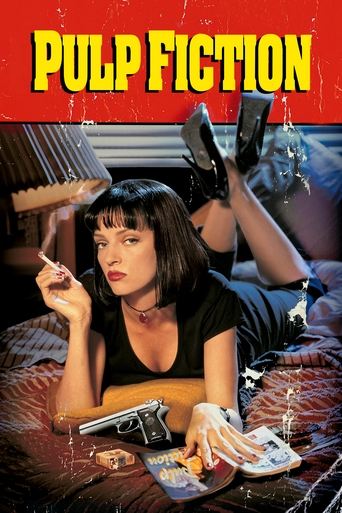

Continue the director
Pulp Fiction (1994)
Tarantino's breakthrough shows where his dialogue-driven scenes, chapter structure and love of pop culture began.
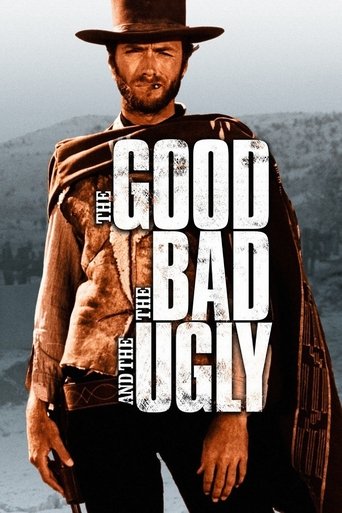
See what influenced it
The Good, the Bad and the Ugly (1966)
Leone's tense standoffs and Morricone's music are the clearest source for the film's pacing and sense of ritual.
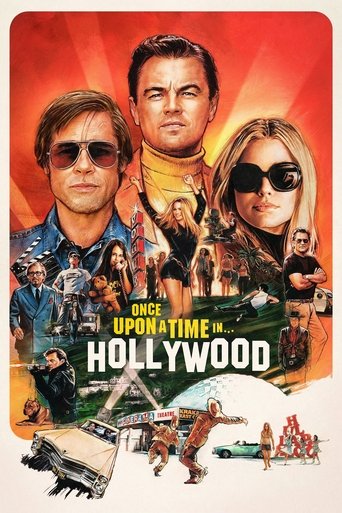
Follow the idea
Once Upon a Time... in Hollywood (2019)
Tarantino again uses cinema and genre to play with a real historical setting, so it is a natural companion piece.
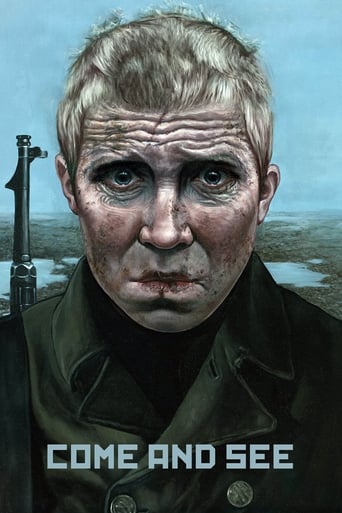
Compare another approach
Come and See (1985)
A Second World War film at the opposite extreme, with no stylisation or playfulness, that shows what the Tarantino approach chooses not to do.
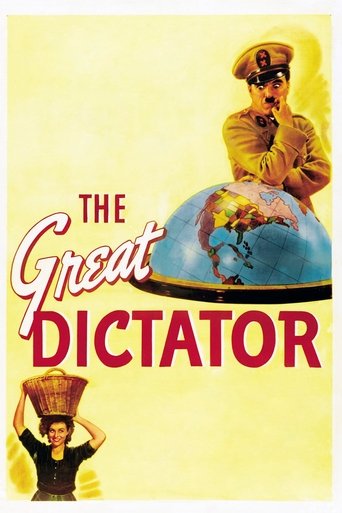
Explore the era or movement
The Great Dictator (1940)
Chaplin made a comedy about Nazism while the war was still on, an early example of using popular entertainment to confront the regime.