Drama · History · Romance
Hiroshima Mon Amour
French
1959 · Directed by Alain Resnais · 92 min


Drama · History · Romance
French
1959 · Directed by Alain Resnais · 92 min


Meaning, unpacked
Central idea
The film explores the gap between knowing and feeling: how far memory, language and images can carry a catastrophe to someone who did not live through it, and how personal grief and public history become tangled together.
What it means
A French woman and a Japanese man spend one night together in Hiroshima. She tells him about a young love in Nevers and what it cost her. By morning, they have traded their names for the names of their cities. That is all the story there is, and it is not really the point.
The film is about the gap between knowing and feeling. She says she has seen everything in Hiroshima. He says she has seen nothing. The film takes both claims seriously and sides with neither. You can visit the museum and still not feel what happened. The cellar confession is the emotional core, where the past breaks into the present before she is ready, and telling becomes both a liberation and a betrayal. Forgetting is a mercy and a betrayal too. When the two become Hiroshima and Nevers, people turn into places, and private grief can no longer be separated from public history.
Why it mattered
In 1959 this was a formal breakthrough. Resnais cuts by association, not chronology: a hand, a skin texture or a phrase can pull the film into another time, so you feel memory's intrusions from the inside. Sacha Vierny's long, trance-like tracking shots make the sudden cuts into the past feel more violent.
It also treated words as a force of their own. Marguerite Duras's script is closer to a prose poem than a screenplay, full of repetition and litany, often arguing with the pictures. Resnais, first asked to make a documentary, felt he could not repeat what he had done in Night and Fog, so he asked Duras for a fiction. The result mixes documentary-style hospital and museum material into a love story, and treats memory as the very structure of a film.
Before anyone tells you what to think: what did you make of it?
Log in to rate it and leave commentsIt takes one click with Google or an email link. You come straight back here.
Rate it, keep your notes, and find the next film.
Free, no ads. Your journal, your lists, a Cine Guide that remembers you.
Create your free spaceIts fusion of memory, fragmentary editing and literary voiceover shaped Resnais's own Last Year at Marienbad and the wider modernist wave of the sixties. Later films that wrestle with witness and trauma, from Chris Marker to Claude Lanzmann's Shoah, extend its questions. Its Nevers flashback, in which a young woman is shamed and has her head shaved for loving a German soldier, brought a little-discussed episode of postwar France into view. Duras's text was also published and read as literature, and the refrain about seeing nothing in Hiroshima became shorthand for the limits of witness.
Critics received it as a landmark, though some viewers found it abstract and difficult. Today it stands as one of the central films of postwar European modernism, studied for its treatment of trauma and memory. Its style can feel demanding, but its questions about witnessing and representation have only grown more pressing.
What happens
He and she do not agree to stay together; she is due to fly home. Instead they give each other the names of their places: he becomes Hiroshima, she becomes Nevers. Two lovers turn into two histories.
The last image
Having traded names, the two stay apart, each now carrying the name of a place of loss.
What it says
The ending says private grief and public history cannot be separated. She cannot truly know Hiroshima, and he cannot know Nevers, so they carry each other's loss as names. The film ends there because it will not pretend that remembering can be finished.
Or follow an idea from this film


Continue the director
Night and Fog (1956)
Resnais's short documentary is the direct precursor and takes under an hour. It shows how he handles images of the past and the problem of memory.
Explore the era or movement
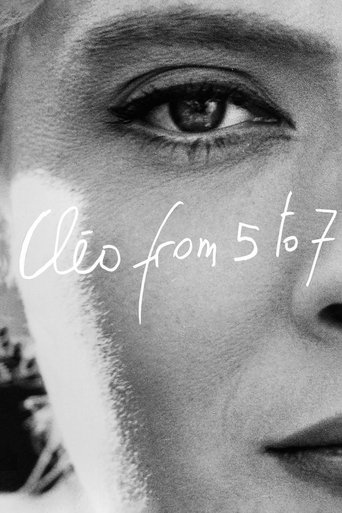
Cléo from 5 to 7 (1962)
Agnès Varda, a Left Bank filmmaker, offers a different formal experiment from the same moment, playing with time and subjectivity in Paris.
Follow the idea
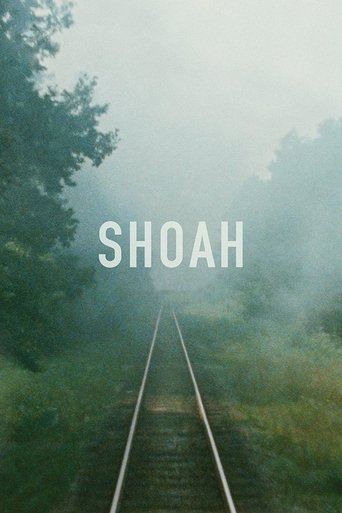
Shoah (1985)
Claude Lanzmann refuses archive images altogether and relies on testimony, pursuing the question of how an unimaginable event can be witnessed.
Jump forward
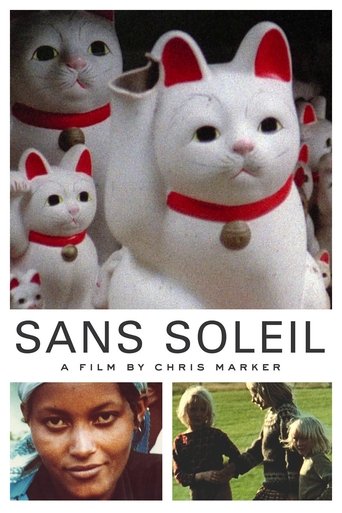
Sans Soleil (1983)
Chris Marker's essay film extends Resnais's blend of voice, images and memory across continents, including Japan.
Compare another approach
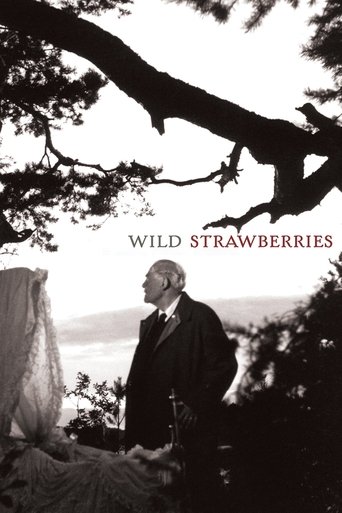
Wild Strawberries (1957)
Bergman also lets memory break into the present, but through a single old man's dreams, which makes a useful contrast with Resnais's collective, historical approach.