Drama · Fantasy
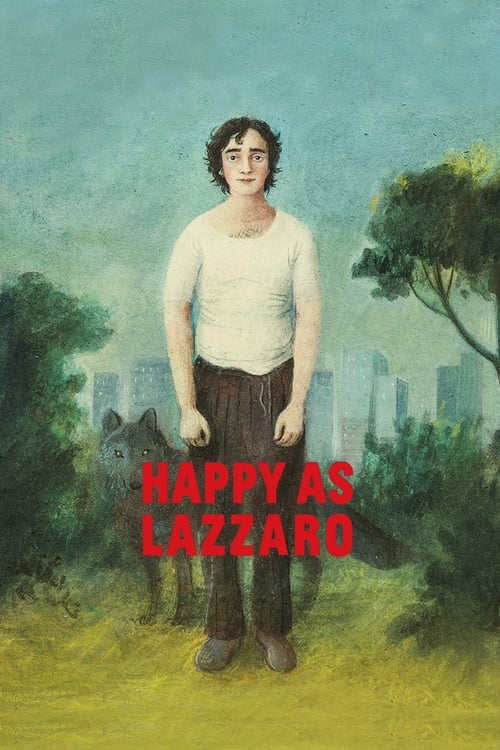
Happy as Lazzaro
Italian (Lazzaro felice)
2018 · Directed by Alice Rohrwacher · 128 min


Drama · Fantasy
Italian (Lazzaro felice)
2018 · Directed by Alice Rohrwacher · 128 min
Meaning, unpacked
Central idea
The film can be read as a modern parable about innocence in an exploitative world. It asks how a society treats a person of pure goodness, and whether that goodness exposes the systems around it more than it changes them.
What it means
Happy as Lazzaro is a parable dressed as realism, or realism dressed as a parable. Alice Rohrwacher never quite chooses, and that is the point. Its central question is simple and uncomfortable: how does a society treat a person of pure goodness, and does that goodness change the systems around him, or only expose them?
On the estate, a marchesa keeps her workers dependent through debt and ignorance. It looks like care. It works as control. After a fall, Lazzaro wakes in a modern world where the poverty has followed him, freedom exists in name but security does not, and the old exploitation has simply changed form. Lazzaro never judges, bargains or resents. His name recalls Lazarus and he echoes the holy fool of Italian tradition, yet the story stays in plain, material terms. The sacred never leaves the ground. And Lazzaro never changes. Everything around him does.
Why it mattered
The film was in competition at Cannes in 2018 and won Best Screenplay, shared with Jafar Panahi's Three Faces. Critics praised its tone, Adriano Tardiolo's performance, and its mix of realism and parable, though some found its two-part structure elusive. It brought Rohrwacher far wider international attention.
Its way of working was distinctive. With cinematographer Hélène Louvart, she shot on 16mm, and the grain and softer colours make the film feel like a physical object from another time. She built the cast around non-professional faces, and sound, voices, animals and folk-like music create a communal feel that often places Lazzaro among people better than dialogue could. It carries neorealism's subjects, the land, poverty and exploitation, into the present with a freer, more poetic imagination.
Before anyone tells you what to think: what did you make of it?
Log in to rate it and leave commentsIt takes one click with Google or an email link. You come straight back here.
Rate it, keep your notes, and find the next film.
Free, no ads. Your journal, your lists, a Cine Guide that remembers you.
Create your free spaceThe film consolidated Rohrwacher as a leading voice in European art cinema and helped establish a model of rural, 16mm-based cinema that mixes social realism with the fabulous. Her later work, including La chimera, builds on this approach. The story, loosely inspired by a real Italian case of farm workers kept in feudal-like conditions long after sharecropping ended, is often cited in discussions of hidden rural exploitation and Italy's unresolved class divisions.
Today it is regarded as one of the defining works of recent Italian cinema. Its jump from a feudal-style estate to a modern city is often used as shorthand for how exploitation persists in new forms, and it is a common choice for festival programmes and for teaching on contemporary Italian cinema and neorealism's legacy. Its reputation has grown because it refuses to make Lazzaro either a victim or a symbol alone. The question it leaves is what we would do if he walked into our world.
What happens
In a city bank, Lazzaro tries to help the former workers, but the staff and customers take his open kindness for a threat. They beat him and he dies. A wolf runs through the street as life goes on.
The last image
The wolf that has followed Lazzaro since his return runs into the street, and the city carries on around it.
Two readings
What it says
The ending shows how a society treats pure goodness: with suspicion, then violence. Lazzaro never changes while everything around him does, so his death exposes the system without changing it. The wolf leaves the question open.
Or follow an idea from this film

See what influenced it
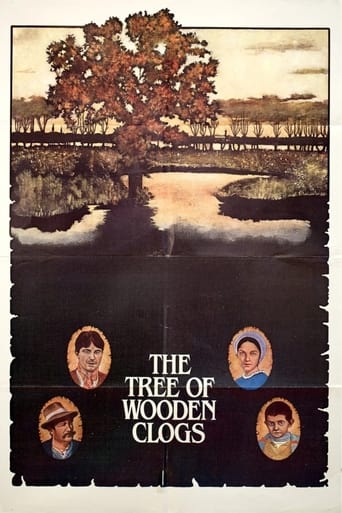
The Tree of Wooden Clogs (1978)
Olmi's film shows the Italian peasant-life tradition that Rohrwacher inherits, using real farm families and a patient, observational style.
Follow the idea
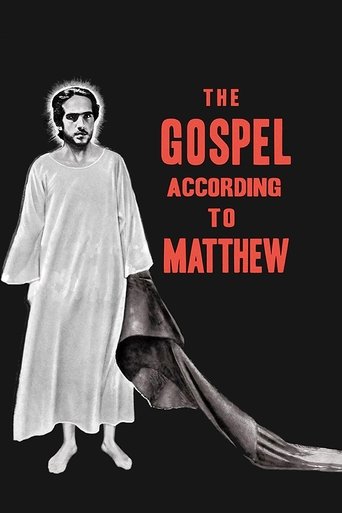
The Gospel According to St. Matthew (1965)
Pasolini turns the sacred into material, working-class cinema. It is a useful companion for the film's religious echoes and its use of non-professional faces.
Compare another approach
Au Hasard Balthazar (1966)
Bresson also follows a gentle, exploited figure through a world that uses him. It makes a strong comparison on innocence, suffering and spiritual meaning.
Explore the era or movement
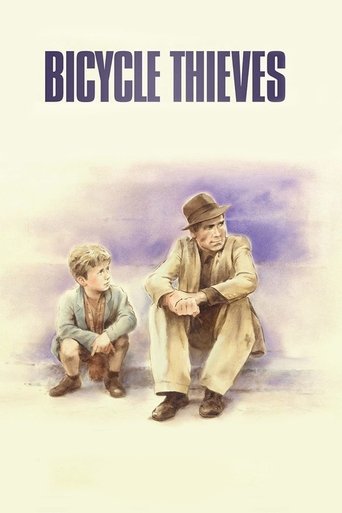
Bicycle Thieves (1948)
The classic of Italian neorealism, showing the tradition of poor characters, real locations and social critique from which Rohrwacher departs.