Romance · Fantasy · Comedy
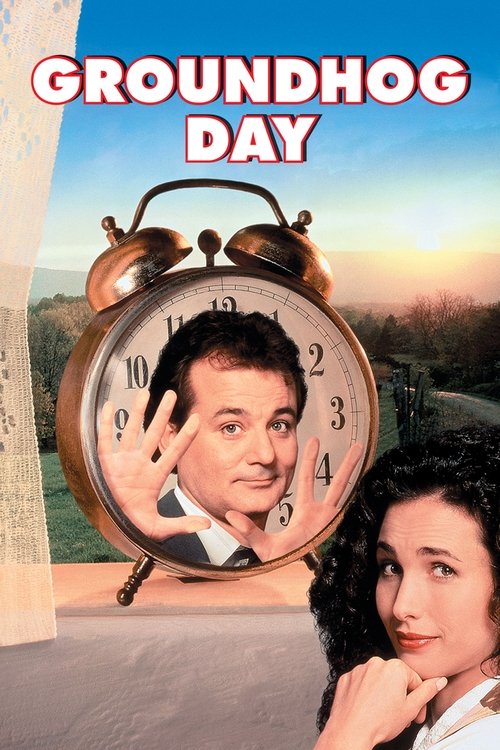
Groundhog Day
American
1993 · Directed by Harold Ramis · 101 min


Romance · Fantasy · Comedy
American
1993 · Directed by Harold Ramis · 101 min









Meaning, unpacked
Central idea
The film can be read as a comedy about what a person does with unlimited time and no consequences, and about what finally gives a life meaning. Its answer is practical, not mystical: attention, skill and care for other people.
What it means
Phil wakes to the same song, in the same town, on the same day. He tries pleasure, then manipulation, then despair, and in the end he escapes by becoming someone better. That is all the plot you need. The interesting part is what the film does with it.
At heart, Groundhog Day is a comedy about what a person does with unlimited time and no consequences. Its answer to what gives a life meaning is practical, not mystical: attention, skill and care for other people. Phil starts out treating everyone as an obstacle, and the loop tests whether that contempt can survive repetition. It can't. The turn comes when he stops trying to beat the day and learns piano, ice sculpture and poetry, first for their own sake and then for others. Punxsutawney shifts from a place to be endured to a community he knows closely. Is routine a trap, or material to work with? The film votes for material.
Why it mattered
Groundhog Day is a defining high-concept comedy of the early 1990s. It used a one-day loop as a way to change a character, and never explained the loop. Danny Rubin's original script never says why the day repeats, and Harold Ramis supported keeping it a mystery. That kept the film a character comedy and not a science-fiction puzzle.
It was also exact and economical. Repetition could have been tedious, but scenes come back with small shifts in dialogue, timing and mood. Skills are learned off-screen across countless days, and a few minutes of elliptical editing imply a huge span of time. One location, one day and a handful of characters turned out to be enough. Bill Murray's performance carries it all, moving from smirking contempt to panic, boredom and eventually warmth, with Andie MacDowell's calm steadiness to play against.
Before anyone tells you what to think: what did you make of it?
Log in to rate it and leave commentsIt takes one click with Google or an email link. You come straight back here.
Rate it, keep your notes, and find the next film.
Free, no ads. Your journal, your lists, a Cine Guide that remembers you.
Create your free spaceThe time loop became a standard form in film and television. Edge of Tomorrow, Happy Death Day, Palm Springs and Russian Doll all borrow its central device: a character trapped in repetition who grows because of it. It also inspired a stage musical with songs by Tim Minchin, which opened in London in 2016. The title entered everyday English as shorthand for monotonous repetition, often used by people who have never seen the film.
Critics were largely warm at release, and many singled out Murray. It was a solid commercial success, not a blockbuster. Its larger reputation grew through television, video and word of mouth, and it is now regularly named among the best American comedies. Buddhist, Jewish and Christian writers have read it as a parable of rebirth or growth, which surprised Ramis. A film about one day keeps getting watched again, and it keeps offering something new.
What happens
After a quiet night with Rita, Phil wakes and the day is finally February 3. Rita is beside him, and he asks to stay in Punxsutawney. The loop breaks once he has become someone worth releasing.
The last image
Phil and Rita stand together in the snow-covered town, free of the loop, with a new day beginning.
What it says
The loop is never explained, because it works as a test, not a puzzle. Phil escapes only when he stops trying to beat the day and starts caring for others. His choosing the town shows that routine can become a life worth living.
Or follow an idea from this film

See what influenced it
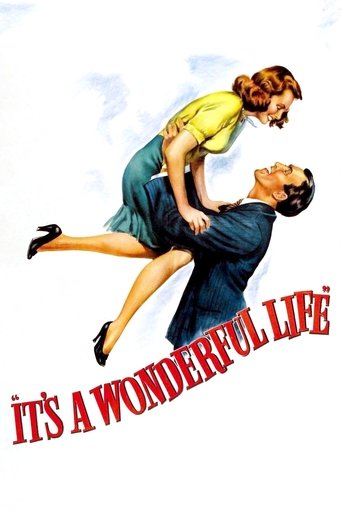
It's a Wonderful Life (1946)
A classic American fantasy in which a man is pushed to reassess his life in a small town. It is a useful comparison for what Groundhog Day keeps and what it changes.

Follow the idea
La Jetée (1962)
A short, almost wholly still-image film about time, memory and repetition. It approaches a looped structure from the opposite direction, as art cinema.
Compare another approach
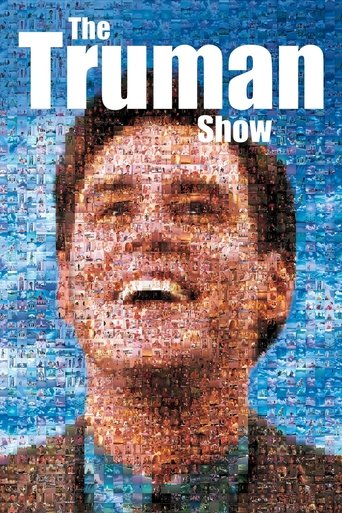
The Truman Show (1998)
Another high-concept comedy in which a man's daily life is shaped by forces he does not see, with a gentle tone that turns serious.
See its influence
Edge of Tomorrow (2014)
A major later film that turns the time loop into science-fiction action, and shows how the device can serve a different genre.
Coming soon