Drama · War
Full Metal Jacket
American
1987 · Directed by Stanley Kubrick · 117 min


Drama · War
American
1987 · Directed by Stanley Kubrick · 117 min


Meaning, unpacked
Central idea
The film can be read as an exploration of how institutions and media turn people into types: killers, jokers, heroes, victims. It asks what remains of the individual once identity is replaced by role.
What it means
Full Metal Jacket is a film in two halves, and the split is the whole argument. Its central idea is that institutions and media turn people into types: killers, jokers, heroes, victims. What is left of the individual once a role replaces an identity?
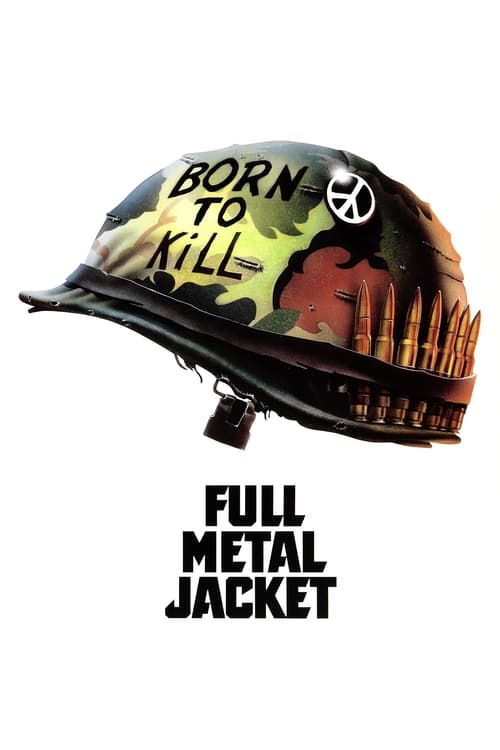
Training shows how it works. Recruits lose their names, voices and private selves, and become interchangeable units. Ermey's monologue sets out a system of control where language is the weapon. The latrine night breaks the pressure: the system has produced the outcome it cannot tolerate. In the second half, war becomes performance, with Marines imitating movie tough guys. Joker's helmet, with Born to Kill beside a peace badge, holds the contradiction in one image. The film offers no comforting lesson.
Why it mattered
Kubrick replaced the jungle epic with a study of indoctrination and language, asking how soldiers are made rather than how battles are won. He refused the usual character arc, where someone is tested and comes out changed in a satisfying way. The two-part form, with training and combat mirroring each other, was the point. Many critics first saw the split as a flaw.
It looks different too. England stood in for Vietnam, with a derelict gasworks, imported palm trees and controlled sets. Symmetry, wide lenses and long Steadicam tracking shots make spaces feel designed and oppressive, so the barracks echo the ruined city. The result is artificial and strange, and it makes war feel constructed.
Before anyone tells you what to think: what did you make of it?
Log in to rate it and leave commentsIt takes one click with Google or an email link. You come straight back here.
Rate it, keep your notes, and find the next film.
Free, no ads. Your journal, your lists, a Cine Guide that remembers you.
Create your free spaceThe film's boot-camp sequence became a template for later military films, parodies and television. Its cold, formal approach to violence, and its reading of war as language, influenced later directors working on war and institutions. Ermey's Hartman became a pop-culture archetype, and Ermey later voiced Sarge in Toy Story. Lines of dialogue were sampled in 2 Live Crew's Me So Horny in 1989, bringing the film's words to people who had never seen it.
On release in 1987, critics praised its technical command, especially the first half, while some found the second half less cohesive. It followed Platoon and was compared with it directly. It was a commercial success and earned one Oscar nomination, for Best Adapted Screenplay. Its reputation has grown: the split is now often seen as deliberate, and the film is regarded as a cold, ironic counterpart to more emotional Vietnam films. Its ending, Marines marching through burning Huế singing the Mickey Mouse Club theme, is among the best known in war cinema.
What happens
Joker shoots the wounded teenage sniper, ending her pleas, after his rifle jams and she nearly kills him. Then the Marines march through burning Huế singing the Mickey Mouse Club song, and Joker says he is alive and unafraid.
The last image
Silhouetted against the fires of Huế, the platoon marches on, singing the Mickey Mouse Club song.
What it says
Joker's relief comes right after he kills. The cheerful song shows the Marines performing roles, not facing what they did. Kubrick denies you catharsis, so the film ends on survival, not wisdom.
Or follow an idea from this film

Continue the director
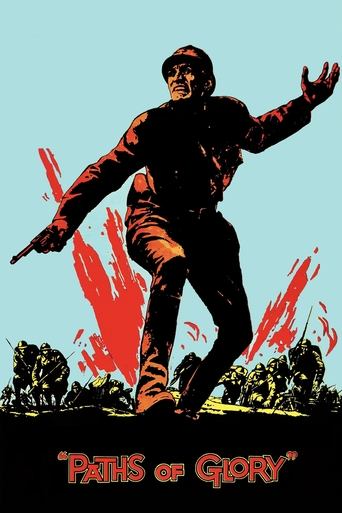
Paths of Glory (1957)
Kubrick's earlier war film shows his long concern with command, obedience and institutional injustice, in a more classical and compact form.
Compare another approach
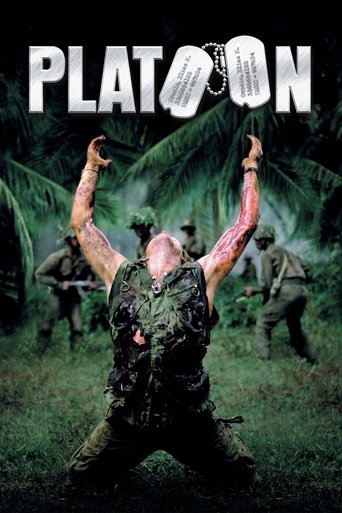
Platoon (1986)
Released a year earlier, it covers the same war with an emotional, first-hand approach that makes a useful contrast to Kubrick's detached one.
Explore the era or movement
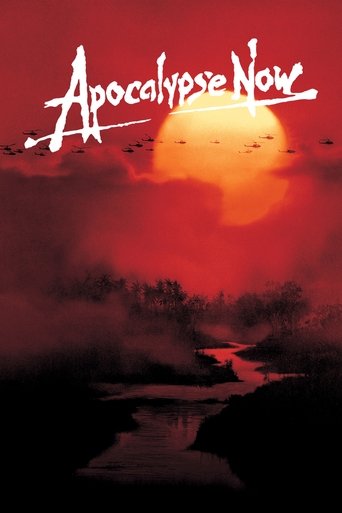
Apocalypse Now (1979)
Another major Vietnam film, hallucinatory and operatic, drawing on Michael Herr's language and offering a different answer to the war's absurdity.
Follow the idea
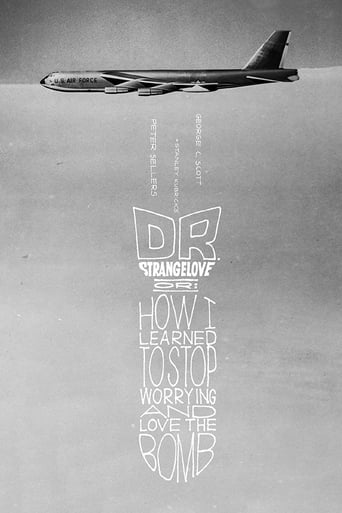
Dr. Strangelove (1964)
Kubrick's satire of military institutions and language shows the roots of this film's dark humour.
Compare another approach
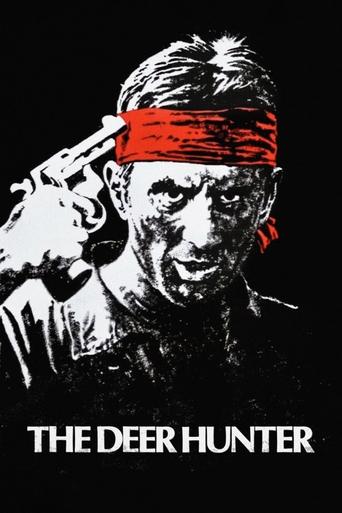
The Deer Hunter (1978)
A more character-driven and emotionally charged Vietnam film that shows another way of dealing with how war changes people.