Drama · War
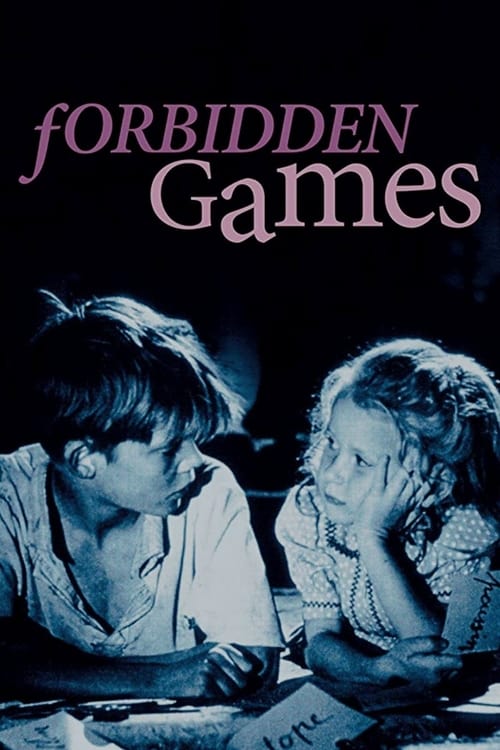
Forbidden Games
French (Jeux interdits)
1952 · Directed by René Clément · 87 min


Drama · War
French (Jeux interdits)
1952 · Directed by René Clément · 87 min






Meaning, unpacked
Central idea
The film can be read as a study of how death is made manageable. Adults use religion, ceremony and argument. The children, with no such tools, build their own rituals, and in doing so expose the adults' hypocrisy.
What it means
A little girl loses her parents on a country road, then goes looking for a way to bury what she has lost. That is the quiet heart of René Clément's film. Paulette is orphaned when a refugee column is strafed, and she is taken in by a peasant family, where she and the farm boy Michel build a secret cemetery for animals.
The film can be read as a study of how death is made manageable. Adults have religion, ceremony and argument. The children have none of those tools, so they build their own rituals, and the cemetery is not really a game: they organise, honour and protect their dead. Meanwhile two peasant families feud over trivial grievances, and religion looks more like show than comfort. So who is showing respect for the dead? Yet the children are not saints. Michel steals and lies, and innocence cannot protect anyone from the adult world. The film also asks who has the right to decide where a child with no family belongs, and it gives no comfortable answer.
Why it mattered
In 1952, the film took war and grief seriously through a child's eyes and refused easy sentiment. It shows the war once, in a few brutal, specific minutes at the start, and then never needs to show it again. Everything after is aftermath: dislocation, grief, and the authority that decides where a child belongs. The camera often stays at the children's height and treats their activities with seriousness, while the adults are seen from outside, which makes them look odd and sometimes ridiculous.
It was acclaimed in France and abroad. It won the Golden Lion at Venice, received an Academy honorary award for best foreign-language film, and François Boyer's story was nominated for an Oscar. Brigitte Fossey was about five years old, and Clément had to coax natural performances from her. Many of the most affecting scenes feel close to improvised, and that unstudied quality is central to the film's power. Some critics found the satire of the peasants harsh, but audiences responded strongly to the children.
Before anyone tells you what to think: what did you make of it?
Log in to rate it and leave commentsIt takes one click with Google or an email link. You come straight back here.
Rate it, keep your notes, and find the next film.
Free, no ads. Your journal, your lists, a Cine Guide that remembers you.
Create your free spaceIt helped establish the war story seen through a child's eyes, a mode later explored in films such as Come and See and Grave of the Fireflies. Its guitar theme, played by Narciso Yepes, travelled far beyond the film. Often called the Romance, it became a rite-of-passage piece for amateur guitarists, and its composer is still often listed as anonymous or traditional. Fossey became one of French cinema's best-known child actors and later played the mother in La Boum.
Its reputation has grown more complicated. In 1954, François Truffaut attacked the screenwriting of Jean Aurenche and Pierre Bost in his essay on the tradition of quality, and seen against that attack the film looks like a high point of the style the New Wave rebelled against. Yet it remains Clément's best-known film and a staple of postwar French cinema, and its performances and ending have kept their force. One myth is worth clearing up: because it is about children, people call it a family film, but it is not meant for them. Its ending is deliberately harsh.
What happens
At the station, the authorities hand Paulette over to the Red Cross. Michel has thrown away the crosses. Hearing a name that sounds like his, she runs into the crowd, crying for Michel, then for her mother. You see her lose both.
The last image
Paulette disappears into the station crowd, calling out for Michel and then her mother, and the film simply stops.
What it says
The ending shows that innocence cannot protect children from the adult world. Paulette made a place for her grief, and adults took it away. Clément offers no comfort, because the film asks who has the right to decide where she belongs.
Or follow an idea from this film

Continue the director
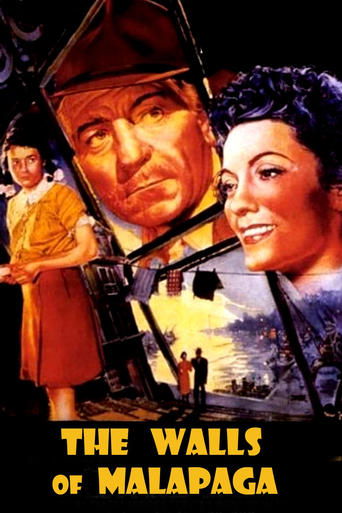
The Walls of Malapaga (1949)
Clément's earlier film pairs a fugitive with a child in postwar Genoa, and shows his neorealist influences.

Follow the idea
Grave of the Fireflies (1988)
Another war story told through children, and an even more devastating study of survival and loss.

Compare another approach
The 400 Blows (1959)
Truffaut's film is the New Wave's reply to the tradition Clément represents, with a boy who is also failed by adults.
See its influence
The Spirit of the Beehive (1973)
A quieter, more poetic film in which a child's response to death and fear shapes the whole story.
Explore the era or movement
Shoeshine (1946)
A neorealist film about boys in postwar Italy, showing what Clément drew on.