Drama · Romance
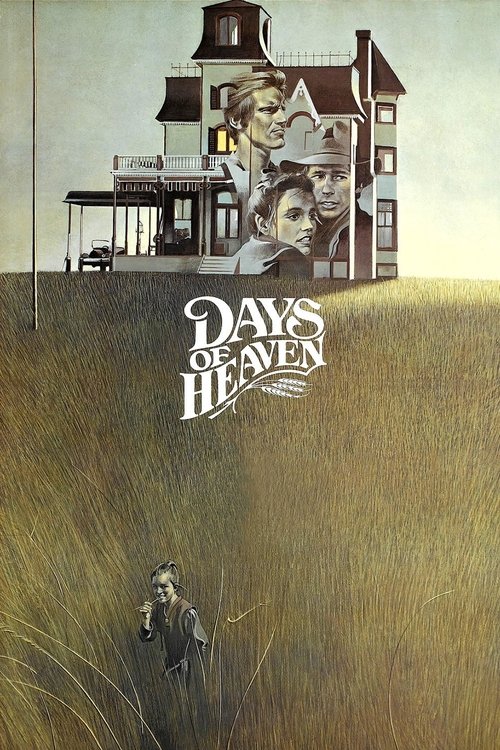
Days of Heaven
American
1978 · Directed by Terrence Malick · 94 min


Drama · Romance
American
1978 · Directed by Terrence Malick · 94 min





Meaning, unpacked
Central idea
The film can be read as a human drama set against a vast, indifferent natural world. Desire, deceit and ambition play out briefly beneath an enduring sky, seen through a young narrator's eyes. It is closer to a fable of lost paradise than a plot-driven romance.
What it means
Days of Heaven is about small people set against a world that is not. Migrant workers live at the edge of a rich man's estate. A deceit grows out of their need. Then comes fire, and a flight down a river. But Terrence Malick tells it less as a romance than as a fable of lost paradise. The title and the biblical imagery of plenty, plague and fire suggest a brief Eden, spoiled by human desire.
Malick keeps cutting away from the people, to animals, wind and sky. Wheat, locusts and fire dwarf everyone, so passion plays out briefly beneath an enduring, indifferent order. Money drives the choices, and the scheme comes from need, not wickedness for its own sake. It is all seen through a girl who notices more than she understands. Her partial view leaves moral judgement open and makes the story feel remembered, not reported. Work, seasons and relationships are all temporary, and the film lingers on moments already passing as they happen.
Why it mattered
In 1978, American cinema had enjoyed a decade of artistic freedom, and this film pushed that freedom toward pure image and mood. It took a pulpy triangle plot and told it as visual poetry, with sparse dialogue and an unusual child narrator. It showed how far American film could stretch toward art cinema.
Its methods were new for a film of this kind. Nestor Almendros favoured natural light and shot many scenes just after sunset, giving a soft, glowing look that became a benchmark. Malick shot far more than he needed and found the film in the edit, cutting from dialogue to images. Linda Manz's flat New York voice-over told the story sideways and deflated melodrama.
Before anyone tells you what to think: what did you make of it?
Log in to rate it and leave commentsIt takes one click with Google or an email link. You come straight back here.
Rate it, keep your notes, and find the next film.
Free, no ads. Your journal, your lists, a Cine Guide that remembers you.
Create your free spaceReactions at release were mixed. Many critics admired the photography but found the story thin, and it did not do well at the box office. Still, Malick won Best Director at Cannes, and the film earned four Oscar nominations. Almendros alone won, for cinematography. The film took years to be widely understood.
Today it is regarded as one of the most beautiful American films. What once looked slight is now read as masterful visual storytelling, and cinematographers cite it constantly. Its natural light and its elliptical, voice-led storytelling shaped Malick's later work, including The Thin Red Line and The Tree of Life, and many lyrical period dramas since. Malick himself stepped away after the troubled editing and made no feature until 1998, which fed his mystique as a reclusive filmmaker.
What happens
Bill kills the farmer, and the three flee down the river. Police shoot Bill dead on the bank. Abby leaves Linda at a boarding school and goes off with a friend. Linda walks away alone along the railway tracks.
The last image
Linda walks off along the railway tracks, on her own at last, to make her own way.
What it says
The film ends as it began, in Linda's remembering. The fall from paradise has no moral verdict, only loss. The grown-ups' schemes burn out, and the child who watched it all quietly walks on.
Or follow an idea from this film


Continue the director
Badlands (1973)
Malick's debut shows the same young narrator and detached view of violence, in a leaner, more road-movie form.

Follow the idea
The Tree of Life (2011)
Malick's later film pushes the memory-driven, nature-focused approach further, tracing a family drama against the history of the universe.
See what influenced it
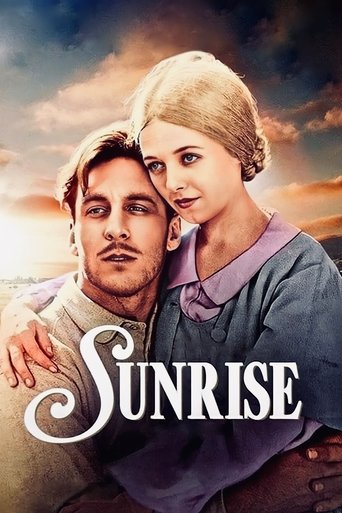
Sunrise (1927)
A silent rural triangle told almost entirely through light, movement and composition, a clear ancestor of Malick's visual storytelling.
Compare another approach
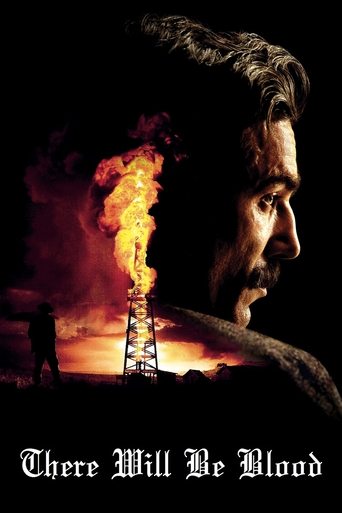
There Will Be Blood (2007)
Another story of land, ambition and ruin, but with a harder, more ferocious view of the American frontier.

Explore the era or movement
The Deer Hunter (1978)
Released the same year, it shows the other side of late New Hollywood: ambitious, large-scale and rooted in American working-class life.