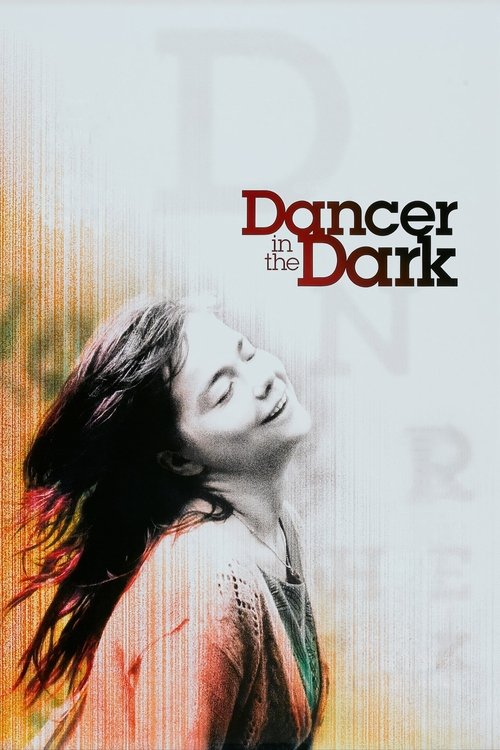
Drama · Crime
Dancer in the Dark
Danish
2000 · Directed by Lars von Trier · 140 min


Drama · Crime
Danish
2000 · Directed by Lars von Trier · 140 min









Meaning, unpacked
Central idea
The film can be read as a study of how imagination sustains a person under pressure, and of the cost of a purity that refuses compromise. Selma's songs protect her from despair, but the world around her answers with cruelty and indifference.
What it means
Selma is a poor immigrant going blind, and she keeps a private promise all the way to the scaffold. At the centre of the film is imagination. She hears rhythm in machines, trains and clicks, and her songs turn noise and fear into order. They are a private resistance, a place the world cannot reach.
But the film also asks what it costs to hold to a purity that will not compromise. The songs protect her from despair, while the world answers with cruelty and indifference. In the courtroom she will not give testimony, and her silence is both her strength and her tragedy. You are left to decide whether that is noble or senseless. The film also plays with blindness and sight: her eyes fail, yet she sees clearly what she values, while the people around her see plenty and understand little. And it casts a critical eye on a country that prizes opportunity but offers no safety net.
Why it mattered
Dancer in the Dark treated the musical as an inner process rather than a stage show. In the early factory and train numbers, the rhythm is already out there in the world, and Selma's mind draws it out. That made the musical harsh and serious, a genre usually tied to polish and studio artifice.
The making of it was just as striking. Robby Müller shot the everyday scenes on handheld digital cameras, with a documentary feel and bleak, uncorrected colour, so the songs arrive as a shock of vitality. For those numbers, around a hundred small digital cameras were placed around the set, letting Björk and the dancers perform each song whole, in a single take. It looks fluid and spontaneous because the performance really was.
Before anyone tells you what to think: what did you make of it?
Log in to rate it and leave commentsIt takes one click with Google or an email link. You come straight back here.
Rate it, keep your notes, and find the next film.
Free, no ads. Your journal, your lists, a Cine Guide that remembers you.
Create your free spaceThe film showed that a musical could be tough and serious, and it helped bring a rough digital look into prestige European cinema. Its idea of song as inner life rather than spectacle lives on in later films. Its Oscar-nominated song, "I've Seen It All", and Björk's swan dress at the 2001 ceremony became famous in their own right.
It won the Palme d'Or at Cannes in 2000, and Björk won Best Actress. Reactions were sharply divided then, and still are. Björk's performance and the music are widely admired, while the way the film piles suffering onto its heroine is still argued over. It is a common reference in talk of feel-bad cinema, the kind people admire but say they could not watch twice. Her 2017 account of harassment by an unnamed Danish director, which many took to mean von Trier, who denied it, has also affected how the film is discussed.
What happens
Selma is hanged after refusing to spend her savings on a retrial. Kathy tells her Gene's operation has been paid for, so her sacrifice has worked. The film ends the moment she dies, with no comfort added.
The last image
The film ends on the quiet, final moment after Selma's last song on the scaffold, with nothing to soften it.
Two readings
What it says
Imagination is what Selma has, and her last song shows what it is for, even though it cannot save her. The film refuses a rescue to leave you facing the cost of purity and a country with no safety net.
Or follow an idea from this film
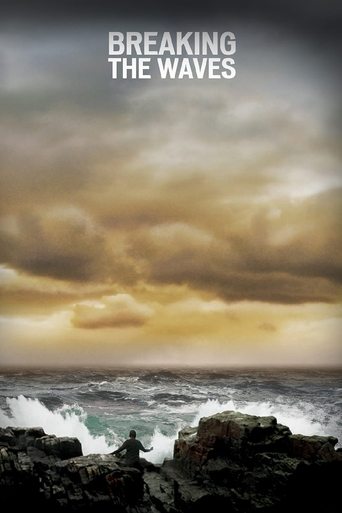

Continue the director
Breaking the Waves (1996)
Von Trier's earlier film makes a good companion piece. It has a similar emotional design and handheld style, so the two can be compared directly.
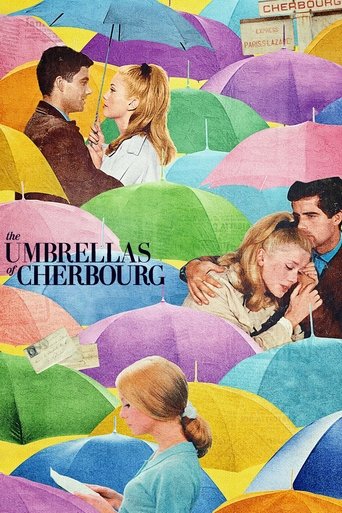
Compare another approach
The Umbrellas of Cherbourg (1964)
Another musical that tells a painful story, but with a stylized, colorful, fully sung form that contrasts strongly with von Trier's rough realism.
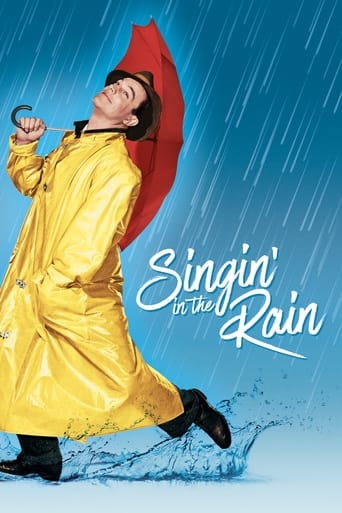
See what influenced it
Singin' in the Rain (1952)
A classic of the studio musical, where song and dance express joy. Seeing it shows the tradition that Dancer in the Dark both honors and darkens.
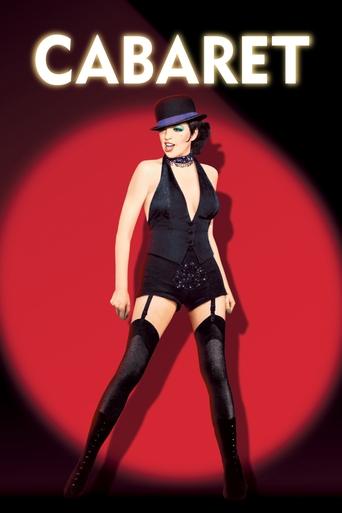
Compare another approach
Cabaret (1972)
A musical that confines its songs largely to stage performance and treats them with irony, and it features Joel Grey, who also appears here.
Explore the era or movement
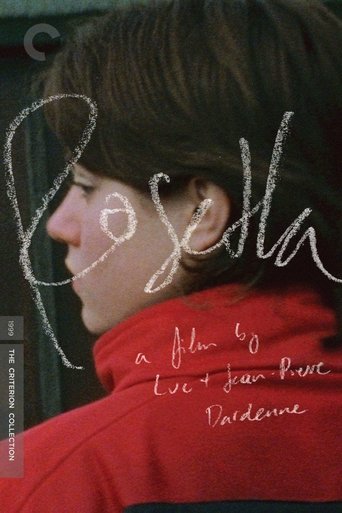
Rosetta (1999)
A contemporary handheld drama about a young woman's struggle for work and dignity, helpful for seeing the realism that surrounded this film.