Adventure · Drama · Action
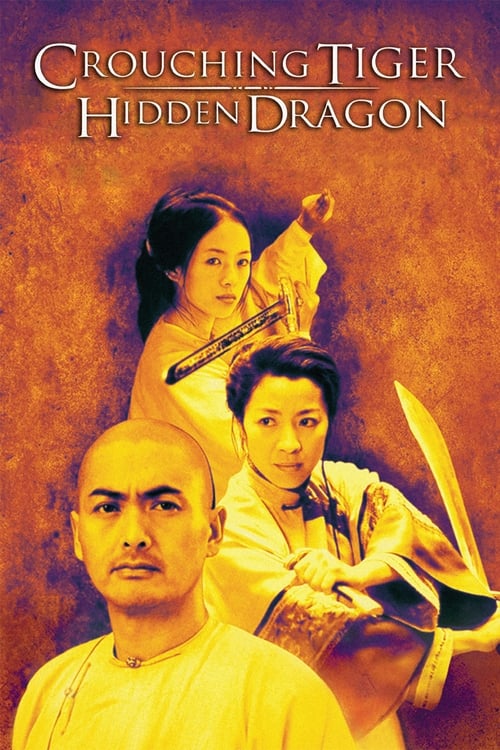
Crouching Tiger, Hidden Dragon
Hong Kong (卧虎藏龍)
2000 · Directed by Ang Lee · 120 min


Adventure · Drama · Action
Hong Kong (卧虎藏龍)
2000 · Directed by Ang Lee · 120 min





Meaning, unpacked
Central idea
The film can be read as a story about the tension between desire and duty. Its warriors have extraordinary freedom of body but remain bound by honour, convention and unspoken feeling, so the genre's physical grace becomes a way of showing emotional repression.
What it means
Crouching Tiger, Hidden Dragon is about what lies underneath. Its central idea is the tension between desire and duty. These warriors can float over rooftops and run across treetops, yet they are bound by honour, convention and feelings they cannot speak. The film's physical grace becomes a picture of emotional repression: the more freely a body moves, the more trapped the heart seems.
You can see it in the love story, which runs on restraint and missed chances, so that the delay itself becomes the ache. Shu Lien is disciplined and dutiful, Jen rebellious and hungry for a life of her own, and both push against the limits of a rigid society. The bamboo forest duel is more than a contest. It is a lesson, a test of will, and a clash over what Jen will become. Her leap from the final bridge leaves the cost of her choices open. Ang Lee called the film a fantasy of China, a place he knew only through imagination. It is a dream of a place, and a dream is always a little out of reach.
Why it mattered
In 2000, Ang Lee took the Chinese swordplay genre, wuxia, and gave it the weight of an intimate drama. The film's fights are designed as character study: Yuen Woo-ping used different weapons and styles to show you who each fighter is. The floating grace comes from wire work, a long-standing Hong Kong technique, with the rigging digitally removed. The skill lies in the training and choreography. Lee even uses dialogue and humour inside the teahouse fight.
Before anyone tells you what to think: what did you make of it?
Log in to rate it and leave commentsIt takes one click with Google or an email link. You come straight back here.
Rate it, keep your notes, and find the next film.
Free, no ads. Your journal, your lists, a Cine Guide that remembers you.
Create your free spaceIt also blurred the line between art cinema and blockbuster. Lee, known for quieter dramas, used genre scale to explore duty and repressed feeling. He and his writers shifted the story from Wang Dulu's novel toward the women, especially Jen. The film was a co-production between the US, Hong Kong, Taiwan and mainland China, and a key moment when Chinese-language genre cinema joined global mainstream film culture.
It was a major success in the United States, becoming one of the highest-grossing foreign-language films ever. It won four Oscars from ten nominations, including Best Foreign Language Film, and was nominated for Best Picture, which is unusual for a foreign-language film. It opened Western markets to Hero and House of Flying Daggers, and Hollywood borrowed its wire work, as in Kill Bill. Its title entered English as a phrase for hidden talent beneath a calm surface.
Today it is Ang Lee's most celebrated genre work and the best-known single wuxia film in the West, and for many viewers outside East Asia it was a first taste of the genre. Reactions in China were more mixed, with some viewers uneasy about the dialogue and accents, and debates continue about how far it was made for international audiences. If you want to go further, start with Come Drink with Me, then try Hero and House of Flying Daggers.
What happens
Li Mu Bai dies from Jade Fox's poisoned needle, having finally told Shu Lien he loves her. Jen returns the sword, and Lo asks her to make a wish. She leaps from the mountain bridge into the mist.
The last image
Jen drops from the mountain bridge and falls through the mist, and the film ends before we learn what becomes of her.
Three readings
What it says
Jen's leap completes the film's theme of freedom and its price. Li Mu Bai's confession comes only as he dies, while Jen jumps rather than live by others' rules. The film leaves her fate open so the cost stays unsettled.
Or follow an idea from this film

Continue the director
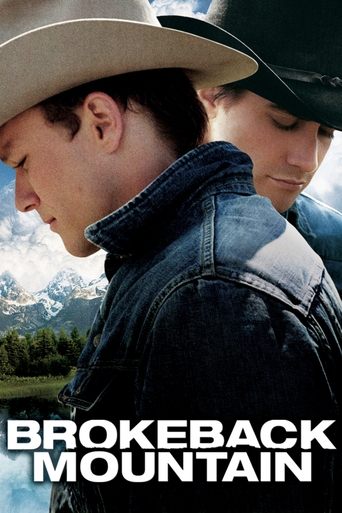
Brokeback Mountain (2005)
Ang Lee again builds a story around suppressed love and social constraint, with a very different setting and the same emotional restraint.

See what influenced it
Seven Samurai (1954)
A classic of the samurai tradition, this shows another culture's ideas of honour, swordsmanship and action, which Chinese swordplay films also explore.

Explore the era or movement
In the Mood for Love (2000)
Another Chinese-language film from the same year, it explores unspoken longing and restraint in a very different, quiet style.
Compare another approach
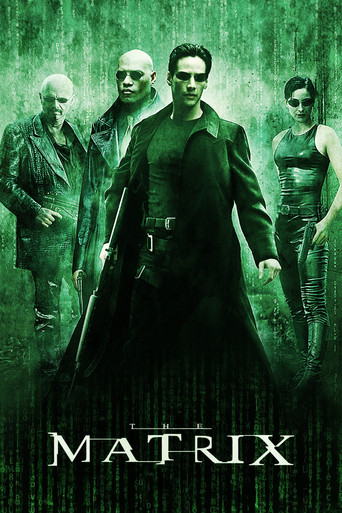
The Matrix (1999)
Yuen Woo-ping choreographed both. Compare how Hollywood used wire-fu for science fiction while Lee used it for romantic drama.
Follow the idea
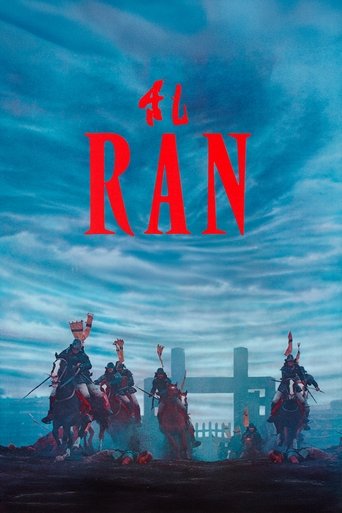
Ran (1985)
Kurosawa's epic shows how a period setting and large-scale action can carry a story of family, duty and tragedy.