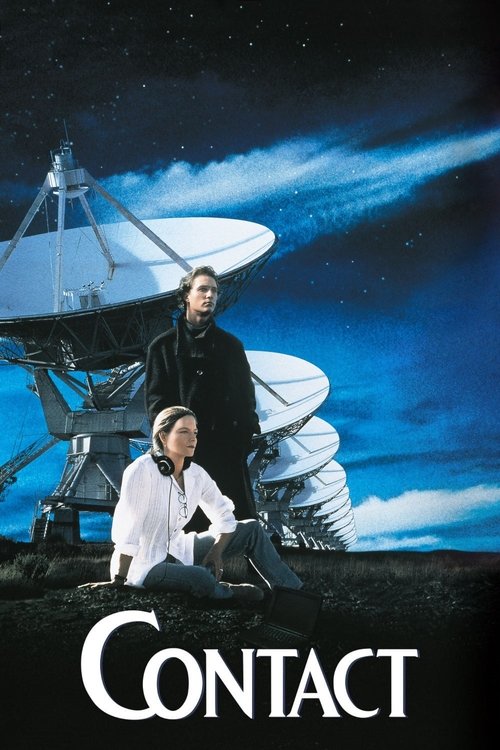
Drama · Science Fiction · Mystery
Contact
American
1997 · Directed by Robert Zemeckis · 150 min


Drama · Science Fiction · Mystery
American
1997 · Directed by Robert Zemeckis · 150 min






Meaning, unpacked
Central idea
The film can be read as a study of how humans decide what is true. It sets empirical proof against personal experience and asks whether a society can live with a question that science alone cannot close.
What it means
Ellie Arroway listens to the sky, hears an answer, and then has to persuade a world that she heard it. That is all the plot you need, because the film is really about something else: how we decide what is true, and whether a society can live with a question that science alone cannot close.
That is why Ellie and Palmer Joss matter. She demands evidence; he values belief. The film never makes either of them simply wrong. You may hear that it sides with religion, but it doesn't. Ellie keeps her scientific values to the end, yet accepts that some experience can't be proved. Underneath run other themes: her grief for her father echoing the cosmic question of whether anyone is out there, governments, corporations, the press and religious groups all fighting to own the meaning of the discovery, and her struggle for trust in a world that favours charming, well-connected men like David Drumlin. The hearing is the hinge. A panel demands proof of an event she cannot document, and the debate turns round and lands on her. Then, on the beach, spectacle delivers a personal revelation, and she must choose between certainty and trust in her own experience.
Why it mattered
Contact was a defining late-1990s example of thoughtful, adult science fiction, and a bridge between the cosmic wonder of 2001 and the more intellectual sci-fi of later decades. It treated the search for extraterrestrial intelligence as real work, with real politics and funding, and it was among the best-known big-studio films to take SETI seriously.
Zemeckis brought blockbuster craft to a philosophical question. He used long, gliding digital moves and seamless compositing to join small human moments to huge images, and he recut real news broadcasts, including footage of President Bill Clinton, so invented events seemed to happen in our world. Sound did a great deal of the work: static, pulses and silence made invisible things feel physical, and the film's one Oscar nomination was for Best Sound. Its suspense comes from method, not action: headphones, a desert, and a repeated test of what is real.
Before anyone tells you what to think: what did you make of it?
Log in to rate it and leave commentsIt takes one click with Google or an email link. You come straight back here.
Rate it, keep your notes, and find the next film.
Free, no ads. Your journal, your lists, a Cine Guide that remembers you.
Create your free spaceCritics praised Jodie Foster and the film's seriousness, though some found the last act sentimental or the religious debate a little schematic. Audiences came anyway: more than 100 million dollars in the United States and about 170 million worldwide. It also brought SETI to a mass audience. Ellie is widely linked to the astronomer Jill Tarter, and visitors still travel to the Very Large Array because of the film.
Its template of first contact as a human and institutional problem, not a battle, shaped later films like Arrival and Interstellar. Ellie is often cited as a rare, serious woman scientist in a Hollywood blockbuster, and her line about space being an awful waste if we are alone is still the one people quote. Its reputation has only grown, as people return to it as an intelligent alternative to action-driven science fiction. The film's real gift is that it lets you stay with a question you can't prove, and doesn't ask you to stop caring about the answer.
What happens
Ellie's journey leaves no evidence: her capsule only seems to fall through the machine, and her recording shows static. At the hearing she can only ask to be believed. The film hints that her recording ran eighteen hours.
The last image
Ellie sits among a group of children at the Very Large Array, answering their questions about what she experienced.
What it says
Ellie spent her life refusing to take things on faith, and now she must ask others to do so. The ending lets her keep her science while accepting that some true experiences cannot be proved.
Or follow an idea from this film
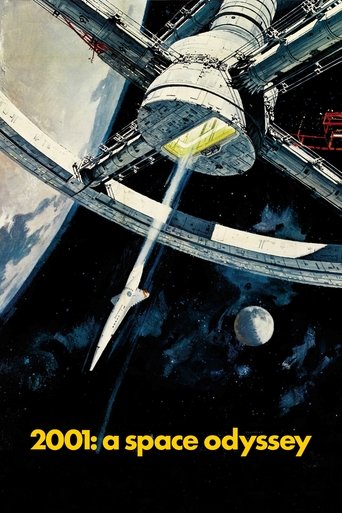

See what influenced it
2001: A Space Odyssey (1968)
The great precursor to Contact's treatment of cosmic intelligence. Compare Kubrick's cool abstraction with Zemeckis's warmer, character-driven approach.

Compare another approach
Close Encounters of the Third Kind (1977)
Another first-contact film built on awe and personal obsession. Compare how each film handles institutions, secrecy and the individual who is called.
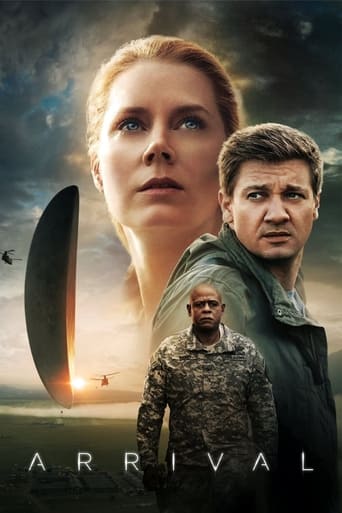
See its influence
Arrival (2016)
A later film that inherits Contact's focus on scientific interpretation and a woman at the centre of a global event.
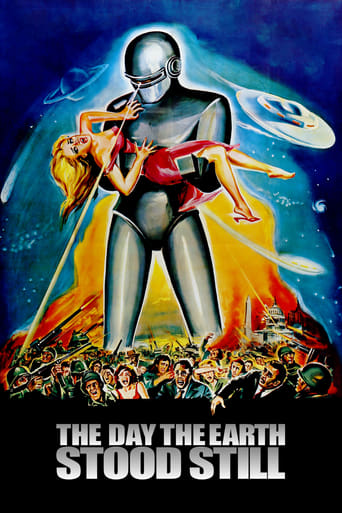
Follow the idea
The Day the Earth Stood Still (1951)
An early example of alien contact used to examine human politics, and a useful point of comparison for Contact's world reaction.
Continue the director
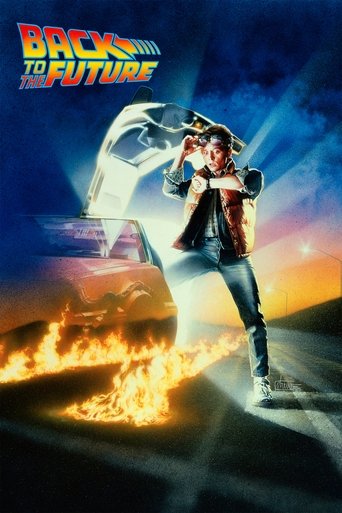
Back to the Future (1985)
Zemeckis in a more playful mode, showing the technical precision and storytelling discipline that also shape Contact.