Drama · Science Fiction
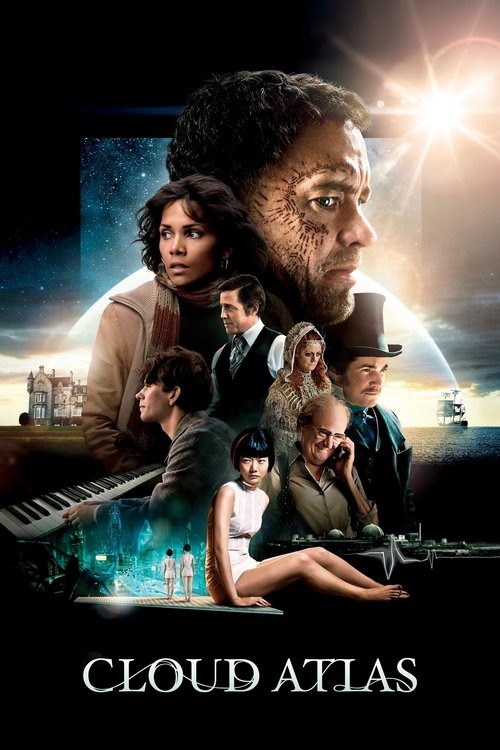
Cloud Atlas
American
2012 · Directed by Lilly Wachowski & Lana Wachowski & Tom Tykwer · 172 min


Drama · Science Fiction
American
2012 · Directed by Lilly Wachowski & Lana Wachowski & Tom Tykwer · 172 min





Meaning, unpacked
Central idea
The film can be read as an argument that individual lives are connected across time: small acts of courage or cruelty travel outward in ways nobody sees. It asks whether that chain gives life meaning, and whether freedom has to be chosen again each time.
What it means
Cloud Atlas tells six stories, from 1849 to a rough-hewn far future, and each one is touched by something the one before left behind: a letter, a recording, a book, a film, a piece of music. Its central idea is that individual lives are connected across time. Small acts of courage or cruelty travel outward in ways nobody sees. The film asks whether that chain gives life meaning, and whether freedom has to be chosen again each time. Its characters keep feeling like a drop in the ocean, and the film answers that an ocean is made of drops.
Underneath, two things run through every era. One is power: slavery, exploitation, corporate corruption, confinement and engineered servitude appear in different costumes, and the film treats them as one pattern, the strong consuming the weak. The other is love. Several love stories are cut short, yet the film suggests that affection outlasts the people who feel it. Perhaps that is its quiet point: a single act, however small, may be heard long after the person who made it is gone.
Why it mattered
Few films attempt anything like this. Three directors, six stories, six genres and one cast playing many roles. David Mitchell's 2004 novel stacks its narratives like a Russian doll, each one broken off at its midpoint and finished on the way back. The film did not copy that. It intercuts all six from start to finish, so you feel the echoes in real time, and editing becomes the main instrument. Cuts on matching movements, sounds, lines and compositions make the theme visible.
Before anyone tells you what to think: what did you make of it?
Log in to rate it and leave commentsIt takes one click with Google or an email link. You come straight back here.
Rate it, keep your notes, and find the next film.
Free, no ads. Your journal, your lists, a Cine Guide that remembers you.
Create your free spaceIt was also made in an unusual way. The Wachowskis and Tom Tykwer wrote the screenplay together, then split the directing between them, with the units often working in parallel. It was funded largely outside the Hollywood studio system, with German support and international backers, and it was among the most expensive independent productions of its time. In the final crosscutting sequence, all six strands reach their crises together, and the structure turns from a puzzle into an emotional statement.
Reaction was sharply divided from the start. After its Toronto premiere in 2012, many critics admired the scale and the risk, and praised the editing and the emotional pull of the final stretch. Others found the structure muddled and the makeup distracting or offensive. It performed modestly in the United States, though better abroad. Its influence shows in the Wachowskis' later series Sense8, which cross-cuts between far-flung lives in a similar way, and it stands as a reference point for recent genre-hopping, multi-strand films.
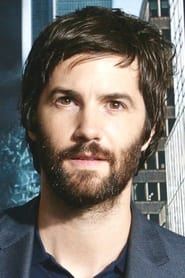
Today it is a cult favourite. Viewers trade theories about its recurring birthmark, and Sonmi's line "Our lives are not our own" circulates online in talk of reincarnation, karma and moral responsibility. But its most contested choice has aged badly. White actors, including Jim Sturgess, were made up to play Korean characters in the Neo Seoul story, Asian American groups protested, and that strand is now widely seen as a flaw. Admirers still call the film sincere and emotionally generous.
What happens
All six stories reach their crises together, and each hero's act of courage is completed. Zachry and Meronym send their signal and leave Earth. Years later, on another planet, they tell the story to children under the stars.
The last image
Zachry and Meronym sit with children on another world, watching the stars as they tell the story.
What it says
Each act, however small, echoes long after the person is gone, and the final crosscutting makes you feel it. Freedom and love are passed forward by testimony and art. That is why the ending is hopeful, even though many of these lives end in loss.
Or follow an idea from this film

Continue the director
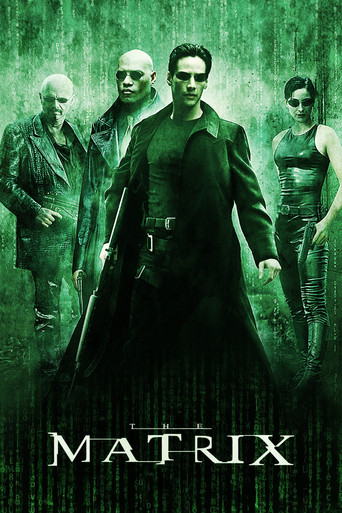
The Matrix (1999)
The Wachowskis' best-known film. Compare its tight, kinetic design with the sprawling form of Cloud Atlas, and note the shared interest in freedom and systems of control.
See what influenced it
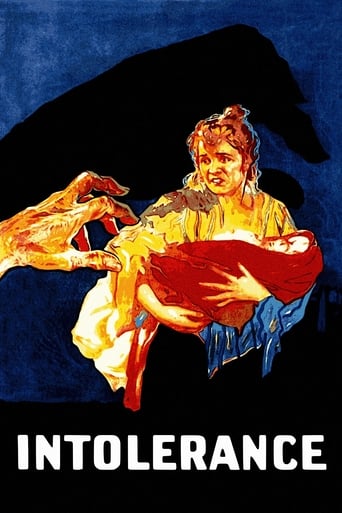
Intolerance: Love's Struggle Throughout the Ages (1916)
The silent ancestor of the multi-era structure. Griffith's cross-cutting between four ages shows how old the ambition is.
Follow the idea
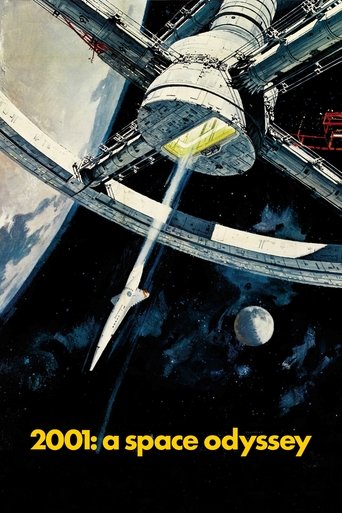
2001: A Space Odyssey (1968)
Another film that spans vast stretches of time and asks where humanity is heading, using image and music rather than plot to carry its ideas.
Jump forward
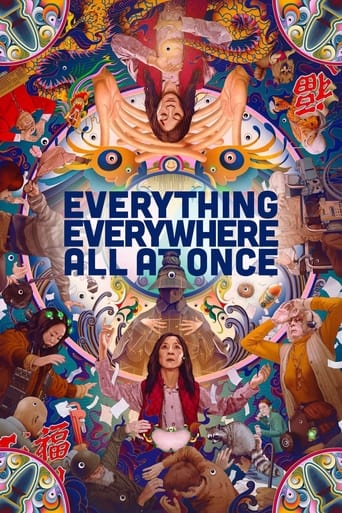
Everything Everywhere All at Once (2022)
A later genre-blending film that pairs a puzzle-like structure with a plainly emotional core.