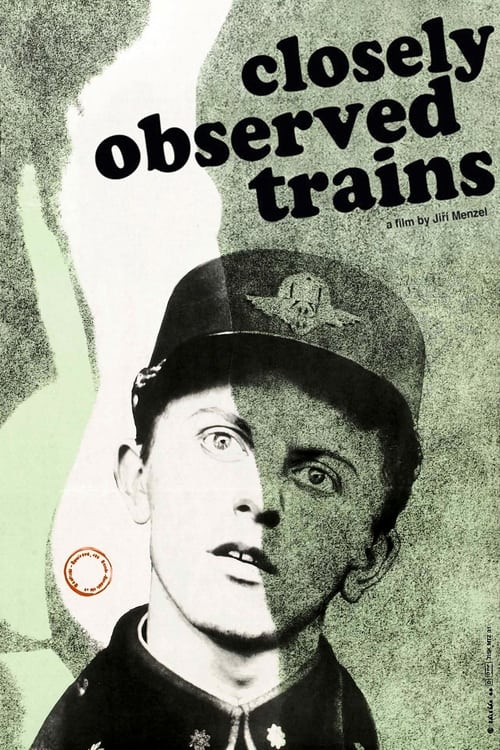
Comedy · Drama · War
Closely Watched Trains
Czech (Ostře sledované vlaky)
1966 · Directed by Jiří Menzel · 93 min


Comedy · Drama · War
Czech (Ostře sledované vlaky)
1966 · Directed by Jiří Menzel · 93 min





Meaning, unpacked
Central idea
The film can be read as a study of how large history is experienced by ordinary people as private, bodily and often comic concerns, until the moment history demands a reply. It asks what growing up means when the world around you is already in crisis.
What it means
A shy young man takes a job at a small railway station under the occupation. Miloš is far more worried about becoming a man than about the war. By the end, his private story and the resistance meet on a signal bridge, beside an ammunition train. That meeting is the heart of the film: huge events reach ordinary people as private, bodily and often comic worries, until history demands an answer.
The comedy lives in the gap between decorum and instinct. Everyone is surrounded by rules, uniforms and stamps, yet appetite keeps winning. The stationmaster's pigeons and the Nazi official's speeches are ridiculous, but the film shows that authority as ritual is also dangerous. Look at the telegraphist's stamping, a joke that later becomes a charge with real consequences. And look at the night with Viktoria Freie, where Miloš's worries are settled in tenderness. The film asks what growing up means when the world is already in crisis, and answers with a blank, anxious face. Courage here is not a pose. It is something an ordinary person finds, almost by accident, once the jokes have run out.
Why it mattered
This was a central film of the Czechoslovak New Wave, made in the brief thaw of the 1960s before the 1968 invasion. It showed that ironic, human-scaled storytelling could handle wartime history. It follows the old Czech tradition of Hašek and Hrabal, in which unheroic people get caught in great events, and it is unsentimental about both their pettiness and their courage.
Before anyone tells you what to think: what did you make of it?
Log in to rate it and leave commentsIt takes one click with Google or an email link. You come straight back here.
Rate it, keep your notes, and find the next film.
Free, no ads. Your journal, your lists, a Cine Guide that remembers you.
Create your free spaceIt also showed how much tone can do. Menzel keeps a level, affectionate distance and never signals a joke, so comedy and gravity can share a scene and the ending avoids melodrama. The story moves back and forth in time, as Hrabal's novella does, and the small station is shot as a closed world of platforms and signal posts. With no voice-over, timing, framing and understated dialogue carry the author's voice. The film is proof that adaptation can be pure cinema.
The film was a success at home and then abroad. It won the Academy Award for Best Foreign Language Film, presented in 1968, which brought international attention to Czechoslovak cinema. It helped establish the tragicomic war story told through ordinary lives, a mode later used in Czech and European cinema, and it confirmed Menzel and Hrabal as a lasting partnership.
For many Czechs it became a touchstone for a wry view of the occupation years, where ordinary people muddle through and heroism arrives by accident. Today it is seen as one of the high points of the New Wave and as Menzel's best-known film. Its frankness once seemed more shocking than it does now, but its reputation has held steady as a model of how comic restraint can carry historical weight. It is still screened in retrospectives and film courses.
What happens
Miloš climbs the signal bridge and drops the bomb as the ammunition train passes beneath him. A German soldier shoots him, and he falls onto the train as it explodes. The shy boy has become, almost by accident, a man who acts.
The last image
Miloš, shot on the bridge, falls onto the passing ammunition train as it explodes.
What it says
The ending says courage is not a pose but something ordinary people find once the jokes run out. After so much gentle comedy, the sudden blow shows what the humour was hiding, and that growing up can arrive in the middle of a war.
Or follow an idea from this film

Explore the era or movement
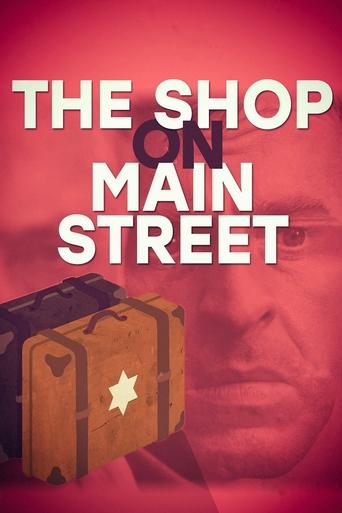
The Shop on Main Street (1965)
Another Czechoslovak occupation drama, a year earlier, which also won the Foreign Language Oscar. It uses small-town comedy that turns to tragedy, with a very different emphasis.
Compare another approach
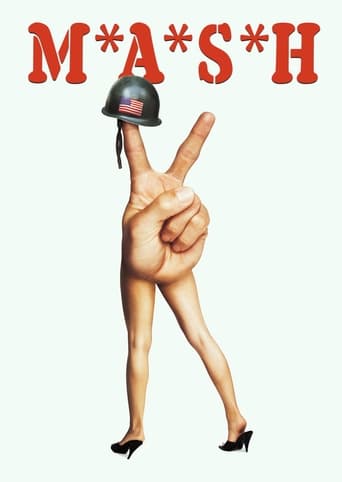
M*A*S*H (1970)
A comic war film that approaches conflict through irreverence, though in an American satirical mode. The comparison shows different ways of using comedy against war.
Jump forward
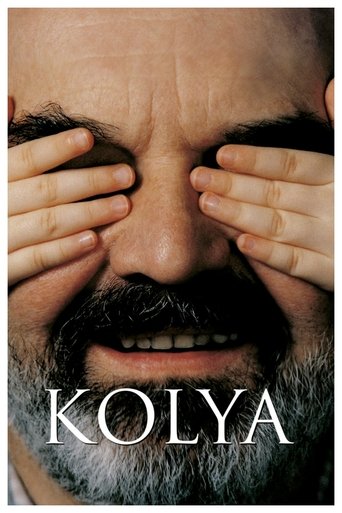
Kolya (1996)
A later Czech Oscar-winner that shares the gentle humour and the focus on ordinary people in history.

Follow the idea
The 400 Blows (1959)
Another coming-of-age film in which a young person's private world is treated with sympathy and a light touch, and which launched a new wave.

Continue the director
Larks on a String (1969)
Menzel's later Hrabal adaptation, held back by the authorities after 1968. It shows the same comic style under a heavier political shadow.