Science Fiction · Drama
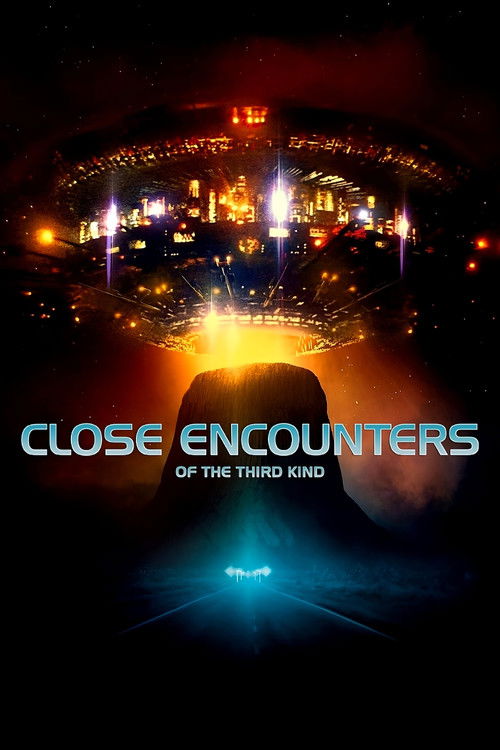
Close Encounters of the Third Kind
American
1977 · Directed by Steven Spielberg · 137 min


Science Fiction · Drama
American
1977 · Directed by Steven Spielberg · 137 min







Meaning, unpacked
Central idea
The film can be read as an exploration of the pull of wonder: what it means to feel called by something larger than ordinary life, and how communication might happen when words are not enough.
What it means
At its heart, Close Encounters of the Third Kind is about the pull of wonder. What does it mean to feel called by something larger than ordinary life? And how might we speak to something new when words are not enough? Roy Neary, a power linesman, sees a craft of lights pass over his truck and becomes consumed by a shape he cannot place. He sculpts it in shaving cream, in mashed potato, finally in a house filled with dirt. His wife leaves with their children. Jillian, whose son Barry was taken, draws the same shape: Devil's Tower. There, tones and lights become a conversation, and Roy is chosen to walk into the mothership.
The film sets wonder against domesticity and treats neither as trivial. The family scenes are messy, with overlapping talk and cluttered rooms, so the spectacle has something real to disturb. It asks whether obsession is madness or a calling, and leaves that judgement to you. Governments hide what they know while ordinary people piece the truth together from dreams and instinct. And the children meet the unknown with an openness the arguing adults lack.
Why it mattered
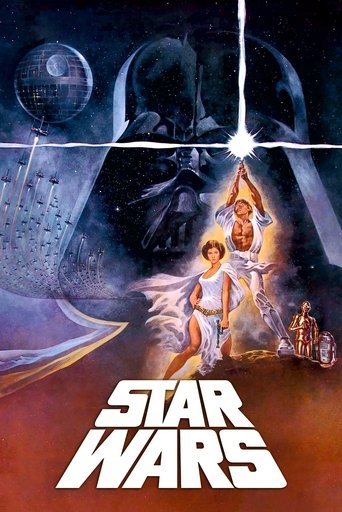
Released in November 1977, the film was a major commercial success with largely enthusiastic reviews. It came the same year as Star Wars, though it was not a reaction to it. The two were developed separately, and this was Spielberg's own long-gestating idea, the first original screenplay he wrote after Jaws. Together the two films remade big-budget science fiction.
Before anyone tells you what to think: what did you make of it?
Log in to rate it and leave commentsIt takes one click with Google or an email link. You come straight back here.
Rate it, keep your notes, and find the next film.
Free, no ads. Your journal, your lists, a Cine Guide that remembers you.
Create your free spaceIts way of making wonder was new. Vilmos Zsigmond's backlit shafts and silhouettes through smoke turned light into the main expression of the unknown, with characters looking toward it. Douglas Trumbull, who made the effects for 2001, used miniatures, optical work and cloud-like effects, which is why the visitors still look tangible. John Williams built a five-note figure into the plot itself, so music works as dialogue. The climax replaces the conflict audiences expect with a conversation.
Its mark is everywhere. The five-note signal became shorthand for first contact, and "close encounter", a term from astronomer J. Allen Hynek's classification, entered everyday speech. Devils Tower gained wide public recognition. In the age of the UFO boom, the film offered visitors who were wondrous rather than menacing, a lasting counterweight to invasion stories. It set a template for awe-led science fiction and shaped Spielberg's own E.T., as well as later films such as Contact and Arrival, which inherit its idea of contact as communication.
At the Oscars it earned eight nominations, including Best Director and Best Supporting Actress for Melinda Dillon. It won for cinematography, plus a Special Achievement Award for sound effects editing. Some critics found the family thinly drawn. Today many viewers find this the richer, stranger film, more ambivalent than its crowd-pleaser reputation suggests. It admires Roy's leap, yet never lets you forget what he leaves behind.
What happens
At Devil's Tower, the mothership lands and returns people taken over the decades, including Barry. Roy is chosen to go aboard, and he walks into the ship, leaving his family and his old life behind as Lacombe watches him go.
The last image
The mothership rises into the night sky, its lights glowing, carrying Roy away.
What it says
The ending treats Roy's obsession as a calling, not madness, and replaces the expected conflict with a conversation of tones and lights. It admires his leap, yet never lets you forget what he leaves behind.
Or follow an idea from this film

Continue the director
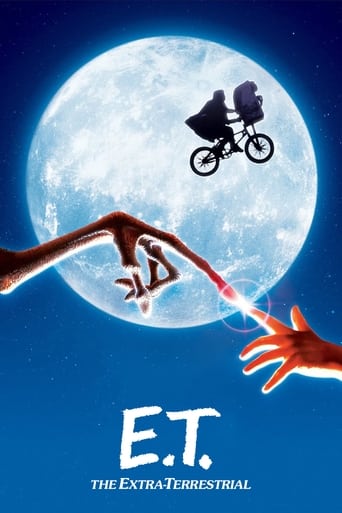
E.T. the Extra-Terrestrial (1982)
Spielberg returns to a visitor from space, this time through the eyes of a child in a suburban home. It shows how he reshaped the ideas of this film.
Explore the era or movement
Star Wars (1977)
Released the same year, it offers a very different vision of science fiction, built on adventure and myth rather than mystery and awe.
See what influenced it
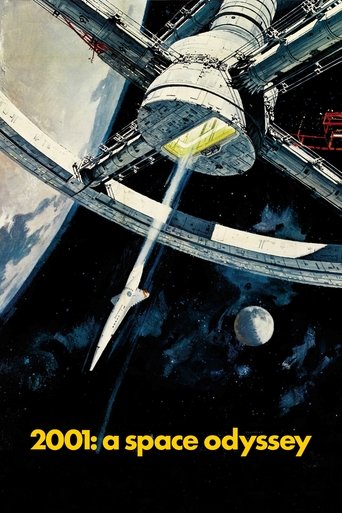
2001: A Space Odyssey (1968)
The earlier landmark of serious, visually driven science fiction, with similar interest in contact and perception, and with effects work by Douglas Trumbull.

Jump forward
Arrival (2016)
A modern first-contact film where understanding, language and emotion matter more than conflict, tracing the same themes of communication.
Compare another approach
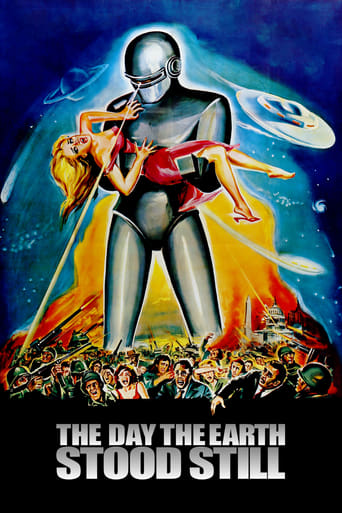
The Day the Earth Stood Still (1951)
A useful contrast: the 1950s Cold War approach to a visitation, against Spielberg's 1970s emphasis on private experience and wonder.