Mystery · Drama · Thriller
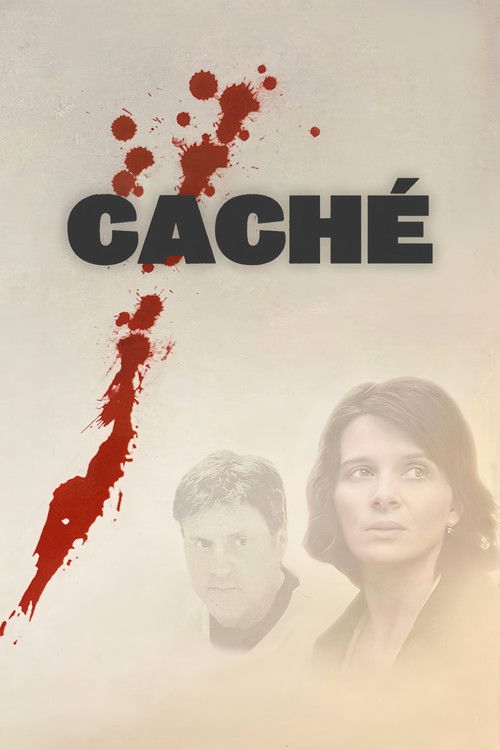
Caché
French
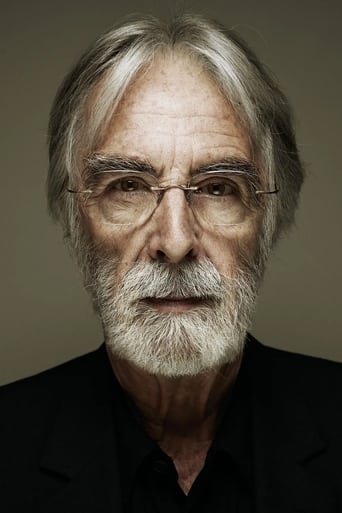
2005 · Directed by Michael Haneke · 118 min


Mystery · Drama · Thriller
French
2005 · Directed by Michael Haneke · 118 min




Meaning, unpacked
Central idea
The film can be read as a study of guilt that has been buried rather than resolved, both for one comfortable man and for a nation. It asks what happens when the past is recorded, sent back, and refuses to be filed away.
What it means
Caché follows a comfortable family who find anonymous videotapes on their doorstep, each a quiet recording of their own home. Georges suspects they are tied to a childhood betrayal of an Algerian boy named Majid. The tapes never explain themselves, and neither does Michael Haneke. That refusal is the point: this is a film about guilt that has been buried rather than resolved, in one man and in a nation.
Haneke links Georges's private lie to a public silence: the killing of Algerian demonstrators in Paris on the seventeenth of October, nineteen sixty-one, which France barely acknowledged for decades. A boy's lie echoing a country's forgetting is the film's central move. Class sits beside it, since the family's cultured life rests on advantages Georges never examines. And at home, his secrecy does more damage to the marriage than the tapes do.
Why it mattered
Haneke and cinematographer Christian Berger shot on high-definition video. The flat, neutral, almost documentary look lets staged scenes pass for surveillance footage, and fast-forwards and rewinds make the sender's tapes seem like Georges's own viewing. Often you cannot tell which level of reality you are watching, so you share his disorientation. Wide, locked-off shots hide key actions in the depth or edge of the frame, which turns watching into an active, uneasy job.
There is no score at all. Sound comes only from the world on screen, so you lose the cues a thriller normally gives you. Haneke gives you enough to build a mystery but withholds the usual reward. It showed that a suspense story could serve moral and political questions instead of escapism.
Before anyone tells you what to think: what did you make of it?
Log in to rate it and leave commentsIt takes one click with Google or an email link. You come straight back here.
Rate it, keep your notes, and find the next film.
Free, no ads. Your journal, your lists, a Cine Guide that remembers you.
Create your free spaceCaché premiered in competition at Cannes in two thousand five, was nominated for the Palme d'Or, and won Haneke Best Director. Critics praised its tension, control and political weight, though some viewers found it austere or cold, and the open ending sparked wide debate. It became one of his most widely seen films abroad, and it built the reputation that carried his later films The White Ribbon and Amour.
Today it counts as one of the key European films of the two thousands. It helped set a model for the unresolved art-house thriller, where surveillance, bourgeois discomfort and political memory replace plot mechanics. It is widely taught in film and memory studies, its final shot is a classroom standard for deliberate ambiguity, and it is often cited in talk of France's unfinished reckoning with its colonial past.
What happens
Majid kills himself in front of Georges, who still won't accept blame and retreats to bed. In the final shot, Pierrot and Majid's son meet briefly outside a school. The film never says who sent the tapes.
The last image
A wide, still shot of the school entrance, where Pierrot and Majid's son talk briefly among the crowd.
Three readings
What it says
Georges's guilt stays unresolved, so the film does too. Haneke cares less about who sent the tapes than about a man, and a country, who refuse to face the past. The open ending hands that question to you.
Or follow an idea from this film

Continue the director
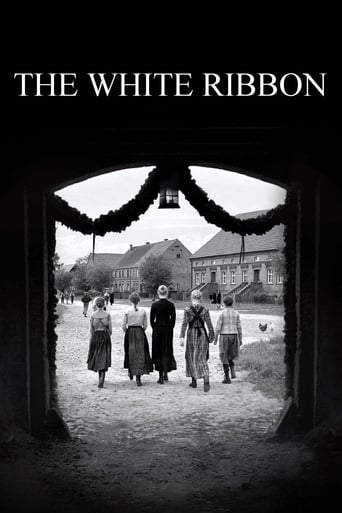
The White Ribbon (2009)
Haneke's next major film applies the same cold precision to a village before the First World War, asking how cruelty and silence take root.
Compare another approach
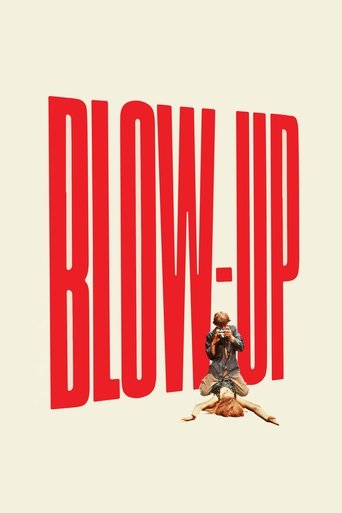
Blow-Up (1966)
A different mystery built on images that seem to contain evidence but never settle into a clear answer. Comparing them shows how each director treats looking.
Follow the idea
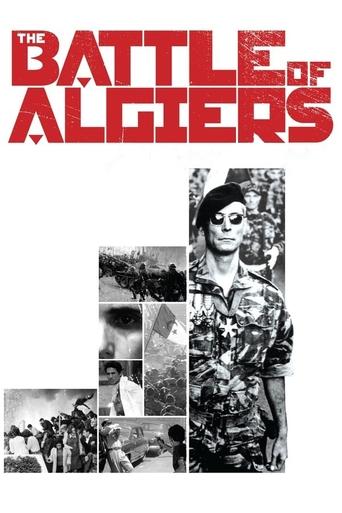
The Battle of Algiers (1966)
Provides the historical conflict behind the film's colonial background, shown from the Algerian struggle for independence in documentary-like style.
Compare another approach
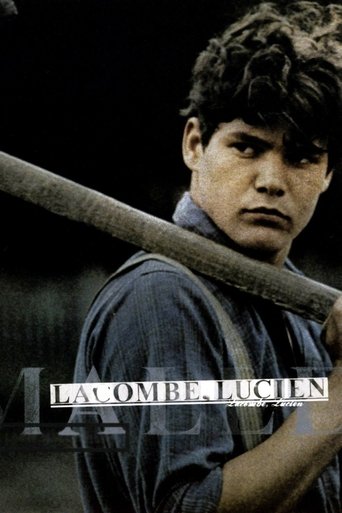
Lacombe, Lucien (1974)
Another French film that probes national guilt and moral evasion through an ordinary individual rather than a grand historical figure.
See what influenced it
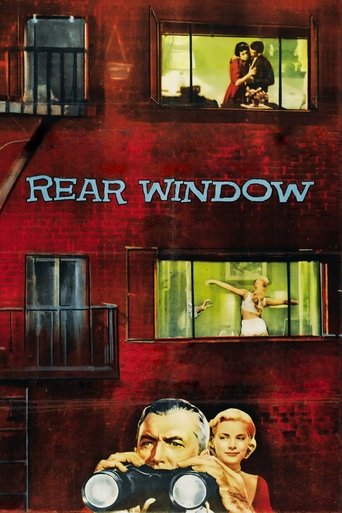
Rear Window (1954)
Hitchcock's thriller about a watcher drawn into what he sees is a classic point of departure for Caché's preoccupation with voyeurism.