Drama · Romance
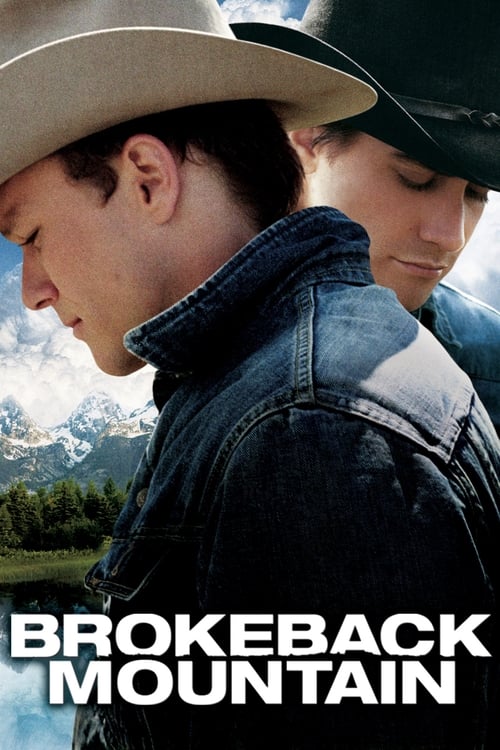
Brokeback Mountain
American
2005 · Directed by Ang Lee · 134 min


Drama · Romance
American
2005 · Directed by Ang Lee · 134 min








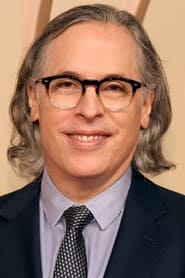


Meaning, unpacked
Central idea
The film is about the cost of a love that cannot be spoken. It can be read as a study of how social fear and inherited ideas of masculinity shrink lives, turning what might have been a whole life into brief, stolen intervals.
What it means
Brokeback Mountain is about the cost of a love that cannot be spoken. Two sheep herders meet on a Wyoming mountain and fall in love, marry other people, and spend some twenty years snatching brief reunions. Social fear and inherited ideas of masculinity shrink their lives, so what might have been a whole life together becomes a handful of stolen intervals.
You see it most clearly in Ennis. His silence is learned, from fear and from what he witnessed as a boy. Heath Ledger builds him with a low, swallowed voice and a hunched body that holds back what words can't. Jake Gyllenhaal's Jack is more open and hopeful, and that difference drives the tragedy. The film never makes villains of the wives, either. Alma and Lureen have real inner lives, and you see how concealment wounds them too. Even the ending turns on a small object in a closet, a pair of shirts hanging together, which says what dialogue never does. It is as close as Ennis ever comes to speaking.
Why it mattered
In 2005, this brought a love story between two men to a wide audience, with major stars and a studio-backed release. It did so using the visual language of the classical Western, a genre built on masculine myth. The characters aren't quite cowboys, as it happens: they are sheep herders and ranch hands, and Jack also rides rodeo. The film sits at the edge of that myth, not inside it.
It also showed how much a film can say through what its characters can't. Ang Lee, a Taiwanese-born director new to the American West, looked at its images with fresh attention. Rodrigo Prieto set wide, luminous mountain vistas against dim, boxed-in interiors, so freedom and constraint are felt in the light itself. Gustavo Santaolalla's sparse guitar score avoids swelling strings, and the editing lets the gaps between meetings weigh as much as the meetings.
Before anyone tells you what to think: what did you make of it?
Log in to rate it and leave commentsIt takes one click with Google or an email link. You come straight back here.
Rate it, keep your notes, and find the next film.
Free, no ads. Your journal, your lists, a Cine Guide that remembers you.
Create your free spaceThe film opened in limited release in December 2005, then expanded widely, with strong reviews and large box-office returns for a specialty release. It earned eight Oscar nominations and won three: Best Director, Best Adapted Screenplay and Best Original Score. It lost Best Picture to Crash. People often say Hollywood simply wasn't ready, but the reasons are debated, and no single explanation is established.
Its reach went far beyond awards. "Gay cowboy movie" became a joke label, sometimes affectionate and sometimes leaning on the stereotypes the film challenged. Ennis's line, "I wish I knew how to quit you," became shorthand for painful longing. It arrived during the American debate over same-sex marriage and made people rethink the Western itself. It opened the way for prestige dramas with major stars in LGBTQ stories, from Milk to Carol and Moonlight. Some later critics see its tragic framing as a limitation, yet it is widely taught and now regarded as a modern classic.
What happens
Ennis learns Jack is dead and visits his parents. In Jack's childhood room he finds two shirts, his own and Jack's, hung together. He takes them home, gives his daughter his blessing to marry, then whispers a promise to Jack.
The last image
Ennis stands alone in his trailer, looking at the two shirts hanging together in his closet.
Two readings
What it says
The ending says that love unspoken still lasts, and that silence has a price. Ennis can only speak through an object, and the film ends there to leave us holding what he lost, not to console us.
Or follow an idea from this film
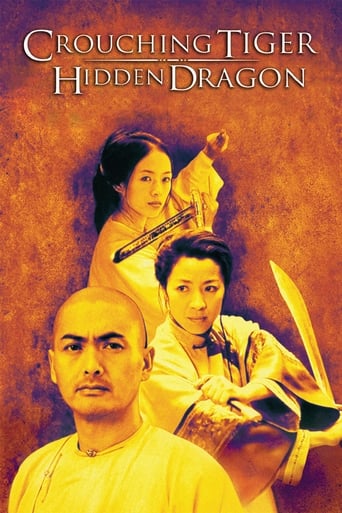

Continue the director
Crouching Tiger, Hidden Dragon (2000)
Lee's earlier international hit also centres on feelings that duty and convention prevent characters from expressing, in a very different genre.

Compare another approach
In the Mood for Love (2000)
Another story of love shaped by concealment and restraint, where a look or a gesture carries more than speech.
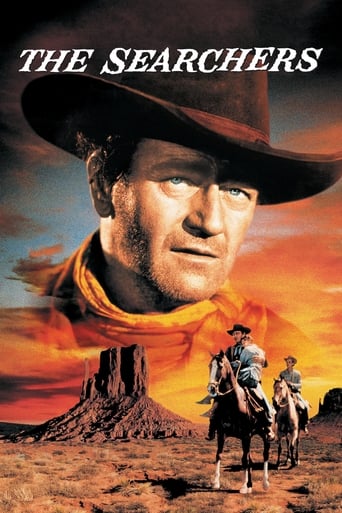
See what influenced it
The Searchers (1956)
A foundational Western with a haunted, isolated man at its centre, showing the myth of masculinity that Brokeback quietly dismantles.
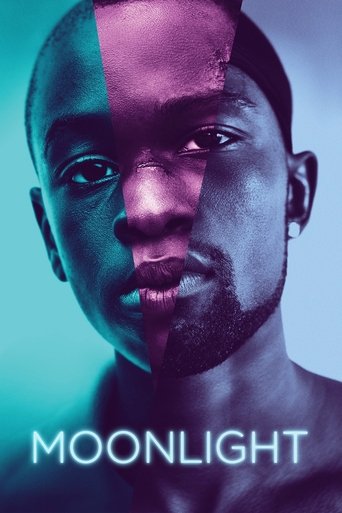
Jump forward
Moonlight (2016)
A later, intimate portrait of masculinity and desire that shows how far mainstream storytelling about gay lives travelled.
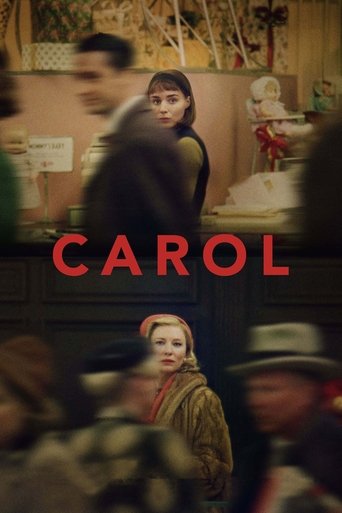
Compare another approach
Carol (2015)
Another restrained period romance about love that society refuses to allow.