Drama · Romance
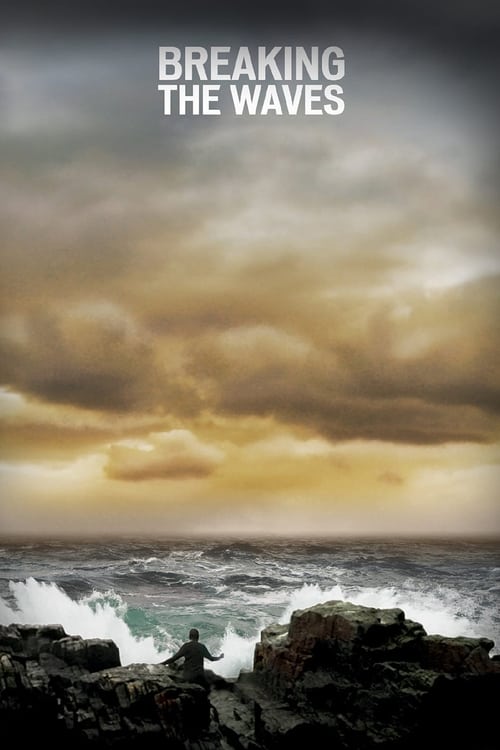
Breaking the Waves
Danish
1996 · Directed by Lars von Trier · 159 min


Drama · Romance
Danish
1996 · Directed by Lars von Trier · 159 min









Meaning, unpacked
Central idea
The film explores whether goodness and faith can be measured by the standards of a community, or whether they exist in a purer, more irrational form that institutions cannot recognise. It can be read as a modern saint's tale told without irony.
What it means
Bess is a young woman in a closed religious village. She loves Jan, and after his accident she comes to believe that her sacrifices can keep him alive. The elders cast her out for it, and the film ends with bells. Underneath sits one question: can goodness and faith be measured by a community's rules, or do they exist in a purer, more irrational form that institutions can't recognise? Von Trier tells it almost as a saint's tale, and he tells it without irony.
That's why Bess's conversations with God matter. She speaks both parts, in her own voice and in a stern, deeper one. Her faith is intimate and entirely self-made, which makes her choices sincere and also dangerous. The village stops being a backdrop and becomes the antagonist, valuing rules over compassion. When Jan asks her to take other lovers, love, manipulation and illness blur together. Is her limitless devotion virtue, delusion, or both? The film won't say. Notice, too, who decides about her body, mind and worth: doctors, clergy and elders, almost all men.
Why it mattered
Von Trier paired a documentary-like, unsteady camera with a story that is almost a fable about belief and love. Robby Müller shot largely handheld, zooming and chasing the action and often missing his mark, so you feel you're witnessing events rather than watching a staged drama. The film was transferred to video, processed and returned to film, leaving a muted, grainy surface with no picturesque gloss. The friction between those two modes is its signature.
Before anyone tells you what to think: what did you make of it?
Log in to rate it and leave commentsIt takes one click with Google or an email link. You come straight back here.
Rate it, keep your notes, and find the next film.
Free, no ads. Your journal, your lists, a Cine Guide that remembers you.
Create your free spaceIt showed that rough, handheld immediacy could serve emotional melodrama and not only austere realism. It premiered in competition at Cannes in 1996 and won the Grand Prix, made von Trier a name beyond Europe, and introduced Emily Watson, a fairly unknown stage actress, who earned an Academy Award nomination. Between chapters, painted landscapes by Per Kirkeby play over early 1970s songs in place of a conventional score, setting pop against the village's severity.
Its rough, emotionally exposed style fed into Dogme 95 and the wave of intimate European realism that followed. It isn't a Dogme film, though. It came before the rules were put into practice, and its pop songs and stylised interludes are exactly what Dogme forbids. Von Trier went on to extend his Golden Heart idea, about naive, selfless heroines, in The Idiots and Dancer in the Dark.
Its reputation is still argued over. Critics praised Watson and the film's emotional force, but some objected to how it treats its heroine, and audiences were divided. Bess is often named first in debates about von Trier's suffering heroines, and viewers still disagree over whether she is a holy fool, a saint, or a victim of rigid faith. It remains central to his career and to 1990s European cinema. So the question lingers: when someone gives everything away, do we call it holiness, or a failure of the people around her?
What happens
Bess dies after a brutal attack, and the church refuses her a burial. Jan, now able to walk, steals her body and buries it at sea. Bells then ring in the sky above the rig, as if her faith had been answered.
The last image
Great bells ring in the sky above the oil rig, an impossible sound that seems to answer Bess.
Two readings
What it says
The bells turn the story from realism into fable, and ask whether Bess's sacrifice was holiness or a failure of those around her. The elders deny her a burial, but the film honors her anyway, without irony.
Or follow an idea from this film

Continue the director
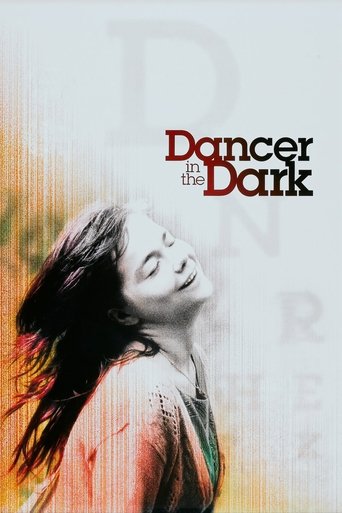
Dancer in the Dark (2000)
The third part of von Trier's Golden Heart trilogy, it shifts the same kind of melodrama into musical form.
See what influenced it
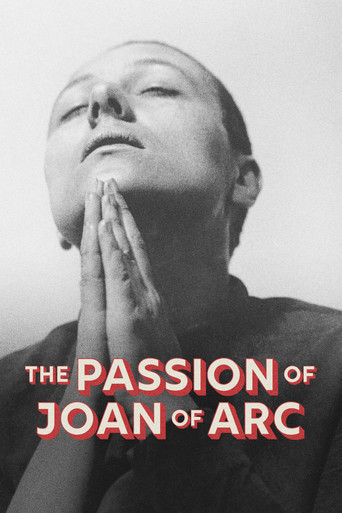
The Passion of Joan of Arc (1928)
Dreyer's silent classic shows the tradition of close-ups on a suffering woman of faith that von Trier draws on.
Follow the idea
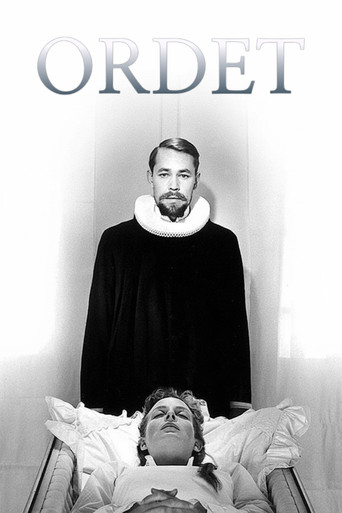
Ordet (1955)
Also a Danish film, Dreyer's work tackles faith, doubt and miracle in a rural community, and can be compared with the film's ending.
Compare another approach
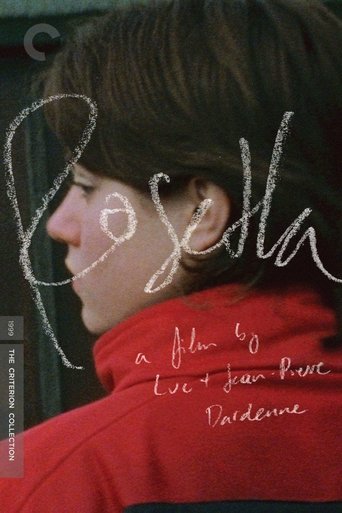
Rosetta (1999)
A handheld, close-following study of a young woman under pressure, offering a more secular version of the same immediacy.

Explore the era or movement
Secrets & Lies (1996)
Released the same year, Mike Leigh's film shows a different approach to British acting and emotional rawness, based on improvisation.