Drama · Mystery · Thriller
Blow-Up
British
1967 · Directed by Michelangelo Antonioni · 111 min


Drama · Mystery · Thriller
British
1967 · Directed by Michelangelo Antonioni · 111 min








Meaning, unpacked
Central idea
The film can be read as an inquiry into the limits of seeing. A photographer who treats the world as raw material for images finds that looking closely does not guarantee understanding, or any real connection to what he sees.
What it means
Blow-Up follows Thomas, a fashion photographer who takes pictures in a London park, enlarges the prints, and believes he has caught something sinister. The film never hands him the certainty he wants. It is an inquiry into the limits of seeing: looking closely does not guarantee understanding, or any real connection to what you see.
The enlargement sequence carries the argument. Thomas pins up prints and blows them up in near silence, and we see only what he sees. A photograph seems objective, but it depends on who looks, how closely, and what they already expect. Thomas himself moves through sex, fashion and fame with bored distance, and his observer's habit protects him from involvement. The film also treats Swinging London twice over: the glamour is real and seductive, yet emptiness sits behind the pleasures. At the end, mimes play tennis without a ball, and Thomas is drawn in. Reality may rest on shared belief rather than hard fact.
Why it mattered
Blow-Up was a key film of the 1960s art-house boom, when European auteurs were funded by Hollywood studios and modernist ideas reached mainstream audiences. Antonioni, after a run of Italian films about alienation, shot in London in 1966 for MGM, with producer Carlo Ponti arranging the deal. It was his first English-language film.
It avoided conventional cause and effect. Its core sequence works through rhythm and repeated looking, making you a co-investigator. Carlo Di Palma's colour made London vivid and strange, and sound did much of the work: Herbie Hancock's jazz score is used sparingly, while silence, wind and street noise create tension. With its brief nudity and sexual frankness, it was released in the United States without Production Code approval, through a separate MGM subsidiary. Its commercial success weakened the Code and encouraged the move to a ratings system the next year. It won the Palme d'Or at Cannes in 1967.
Before anyone tells you what to think: what did you make of it?
Log in to rate it and leave commentsIt takes one click with Google or an email link. You come straight back here.
Rate it, keep your notes, and find the next film.
Free, no ads. Your journal, your lists, a Cine Guide that remembers you.
Create your free spaceIts influence runs deep. It shaped the 1970s paranoid thriller, in which investigators of images and sounds doubt their own evidence, notably Coppola's The Conversation and De Palma's Blow Out. Italian giallo directors such as Dario Argento drew on its photographic investigation and stylish surfaces. Its mod-photographer image was spoofed in Austin Powers, which shows how recognizable it had become, and the closing mime tennis match became shorthand for doubt about perception.
Critics at the time were divided but intrigued: some admired its cool visual intelligence, others found it slow or cold. It was also a significant box-office success for an art film, and it earned Oscar nominations for director and screenplay without winning. Once seen as a fashionable portrait of Swinging London, it is now regarded as one of the central films of the 1960s, and more often read as a rigorous essay on perception, evidence and the unreliability of images.
What happens
Thomas returns to the park and finds the body gone, his photographs stolen. Mimes play a tennis match without a ball. He throws back their imaginary ball, hears the game, and vanishes from the frame.
The last image
Thomas disappears from the grass, leaving an empty green park as the sound of a tennis ball plays on.
Two readings
What it says
Thomas looked harder than anyone, yet ends up with no proof and no connection to what he saw. By closing on the sound of a ball that isn't there, the film suggests that seeing is never the same as knowing.
Or follow an idea from this film


Continue the director
L'Avventura (1960)
The film that made Antonioni internationally famous shows where his approach to mood, landscape and alienation began, and it gives Blow-Up a deeper context.
See its influence
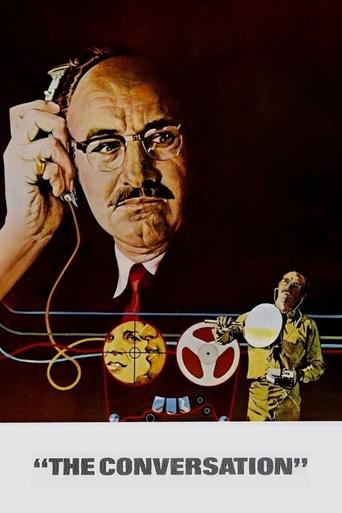
The Conversation (1974)
Coppola's paranoid thriller takes Blow-Up's central idea of an expert doubting his evidence and moves it from images to sound.
See what influenced it
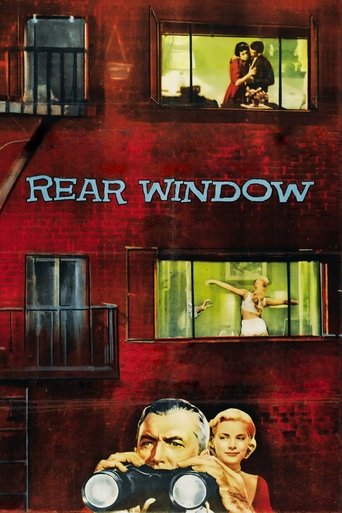
Rear Window (1954)
Hitchcock's film gives a very different, tighter treatment of a watcher in a world of images, and the two work well as a pair.
Explore the era or movement
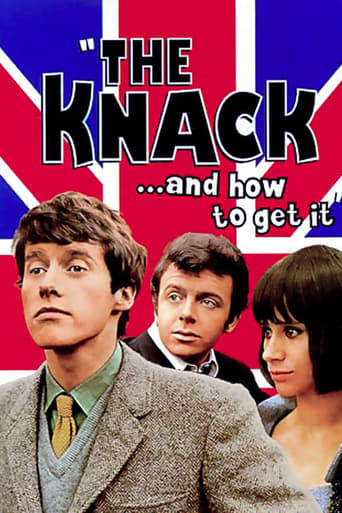
The Knack... and How to Get It (1965)
A lighter, comic view of London in the mid-1960s, which shows the youth culture and visual playfulness that Antonioni examines more coolly.