Science Fiction · Drama · Thriller
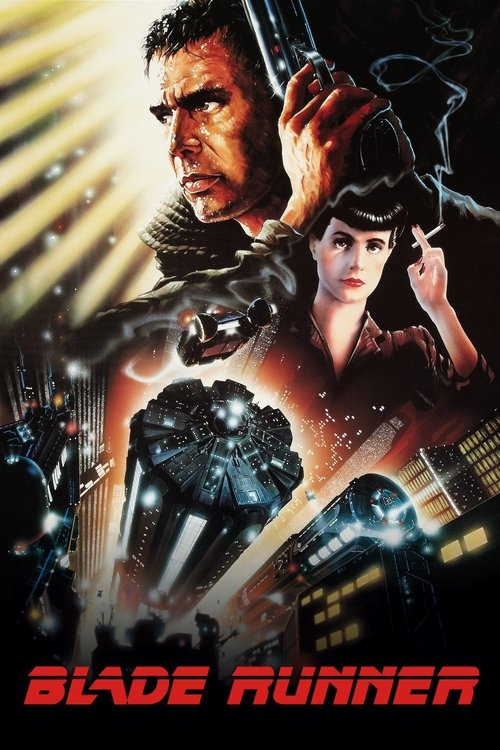
Blade Runner
American
1982 · Directed by Ridley Scott · 118 min


Science Fiction · Drama · Thriller
American
1982 · Directed by Ridley Scott · 118 min












Meaning, unpacked
Central idea
The film explores what makes someone human, and suggests it may be memory, empathy and awareness of mortality rather than biology. It can be read as asking whether the hunters or the hunted are the ones who have lost something.
What it means
Deckard hunts replicants, artificial people built with short lifespans. Then he meets Rachael, and the line between hunter and hunted begins to blur. But the real subject is a question: what makes someone human? The film suggests it may not be biology at all. It may be memory, empathy, and knowing your time is running out.
Notice how the film tests for humanity. The test does not measure origin. It measures emotional response, so being human becomes a matter of feeling. When Deckard tests Rachael, a tool meant to detect difference becomes a way of feeling who sits across the table. Photographs and implanted recollections ask whether remembered experience, real or not, is enough to make a self. And the film quietly asks who has lost more, the hunters or the hunted.
Why it mattered
The film's look carried its ideas. Jordan Cronenweth lit it with hard backlight, beams through blinds and drifting smoke, borrowing from classic noir so that faces and eyes stand out in the murk. Syd Mead, Lawrence G. Paull and the art department built a future from retrofitted old buildings, signs and street markets. It feels lived in because old and new are layered together, not clean and planned. Douglas Trumbull's team used miniatures, matte paintings and motion-control photography for the aerial views, and they still feel physical.
It also fused a hard-boiled detective story with science fiction, showing the genre could carry atmosphere, moral doubt and big questions as well as spectacle. Vangelis added a synthesizer score with a romantic saxophone line, elegiac and dreamlike. In 1982 audiences were divided, but the design was praised straight away.
Before anyone tells you what to think: what did you make of it?
Log in to rate it and leave commentsIt takes one click with Google or an email link. You come straight back here.
Rate it, keep your notes, and find the next film.
Free, no ads. Your journal, your lists, a Cine Guide that remembers you.
Create your free spaceIts influence is huge. It set the visual vocabulary of cyberpunk: neon, rain, crowds and corporations. You can trace it through Ghost in the Shell, The Matrix and video games. The word replicant and the Voight-Kampff test still turn up whenever people talk about AI, bots and proving you are human. There is a sequel, Blade Runner 2049, from 2017, and an anime, Blade Runner: Black Lotus, from 2021.
It was not ignored until years later. In June 1982 it earned modest box office and divided critics, though it won two Oscar nominations, for art direction and visual effects. Its reputation then grew through cable, home video and repertory screenings, and rose again with the 1992 Director's Cut and the 2007 Final Cut. Today it is widely treated as one of the great science-fiction films.
What happens
Roy Batty saves Deckard on a rooftop, then dies, and Deckard goes home to find Rachael. A folded origami unicorn left by Gaff is waiting for him. Its meaning hints that Deckard himself may be a replicant.
The last image
Deckard leaves with Rachael, having found the origami unicorn Gaff left behind.
Two readings
What it says
The ending asks what makes anyone human, if it isn't birth. Roy, a machine, shows mercy; Deckard, a hunter, may be made too. Leaving his nature open lets the film argue that feeling matters more than origin.
Or follow an idea from this film

Continue the director
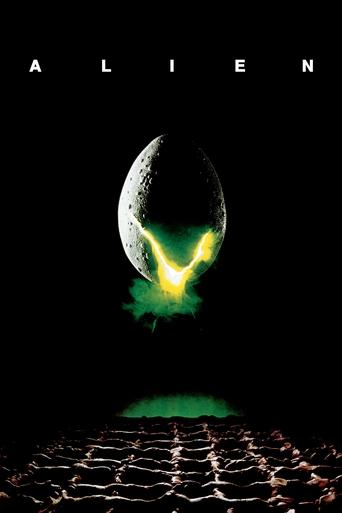
Alien (1979)
Scott's previous science-fiction film shows the lived-in future that Blade Runner pushes further, and it is a very different kind of tension.
See what influenced it
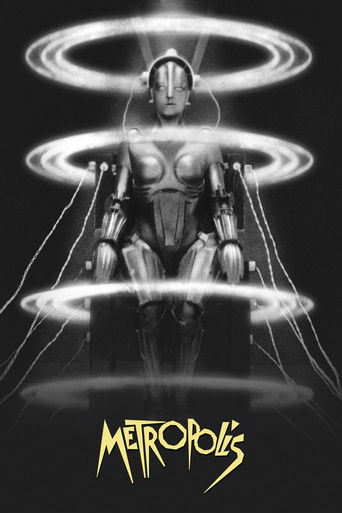
Metropolis (1927)
The silent-era source of the vertical future city and the artificial being, which Blade Runner redraws in rain and neon.
Compare another approach
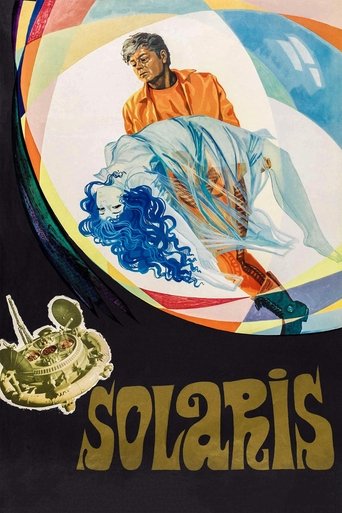
Solaris (1972)
Tarkovsky's slow, philosophical science fiction uses memory and the nature of the human as its subject, in a very different, more meditative form.
See its influence
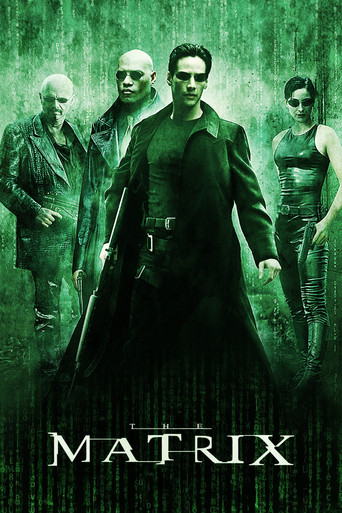
The Matrix (1999)
A blockbuster that takes Blade Runner's dark urban look and questions about reality into action cinema.

Follow the idea
Ex Machina (2015)
A small-scale modern film that returns to the question of testing artificial intelligence and asks what humans owe what they make.