Drama · Romance
Atonement
British
2007 · Directed by Joe Wright · 123 min


Drama · Romance
British
2007 · Directed by Joe Wright · 123 min









Meaning, unpacked
Central idea
The film is about the power and the limits of storytelling. It can be read as asking whether making a story out of a wrong can ever repair it, and whether art offers consolation or only a more elegant form of evasion.
What it means
A child misreads a moment between her sister and the housekeeper's son, and her accusation changes three lives. Years pass, a war arrives, and the older Briony tries to answer what she did. That is all the plot you need, because the film is really about something else: the power and the limits of storytelling. Can making a story out of a wrong ever repair it? And is art a real consolation, or only a more elegant way of looking away?
That question runs through every theme. Briony thinks in narratives, so she reads the adult world through them, and her imagination shapes her judgement with consequences that cannot be undone. Class sits underneath: Robbie depends on the Tallis family's goodwill, and you see how quickly it can vanish. Then the war crushes private romance, leaving Robbie and Cecilia's love alive mostly in letters and hope. The film's central device is that what an event means depends on who is watching. At the fountain, Briony sees a nearly wordless confrontation from a window, and the scene changes meaning through her eyes.
Why it mattered
Atonement took a novel built on narration and a late reframing of everything, and refused to explain it in voiceover. Screenwriter Christopher Hampton found cinematic equivalents instead, in sound, editing and viewpoint. Events are replayed from different positions, so what you understand keeps shifting. That is why calling it a simple, faithful romance adaptation misses the point: it keeps the novel's structure and translates a literary trick into film language.
Before anyone tells you what to think: what did you make of it?
Log in to rate it and leave commentsIt takes one click with Google or an email link. You come straight back here.
Rate it, keep your notes, and find the next film.
Free, no ads. Your journal, your lists, a Cine Guide that remembers you.
Create your free spaceThe craft is part of the meaning. At Dunkirk, a tracking shot of about five minutes with no visible cut moves through thousands of waiting soldiers, built with hundreds of extras and carefully choreographed set pieces. It puts Robbie inside a vast, indifferent history. Dario Marianelli turned the typewriter into percussion in his Oscar-winning score, so the clatter breaks into scenes like a narrator's voice. And the last scene, the older Briony's interview, reframes the whole film and explains that typing.
Its mix of heritage settings and showy technique helped define British period drama in the 2000s and 2010s, and its Dunkirk shot is often compared with later wartime set pieces. It confirmed Joe Wright's visual approach in Anna Karenina and Darkest Hour. The library scene and the plea to "come back" made Robbie and Cecilia a byword for doomed love, and "Briony" now stands for guilt and unreliable narration. Teachers screen the film beside McEwan's novel to talk about adaptation and point of view.
It opened the Venice Film Festival and was a major critical and commercial success, earning seven Oscar nominations, including Best Picture, and winning one, for the score. Critics praised its ambition, the score and the performances. Some found the style showy, and others felt the final section sat awkwardly in a film that otherwise invites you in. Today it is seen as one of the strongest British literary adaptations of its decade, and still a model for adapting a novel built on narrative trickery.
Keep the question it leaves you with: if a story can give the lost their happiness only on the page, is that a gift or a confession?
What happens
The elderly Briony, now a novelist, admits the lovers' reunion was her invention. Robbie actually died of septicaemia at Dunkirk, Cecilia was killed in the Balham bombing, and Lola married the real attacker, Paul Marshall.
The last image
The film closes on the reunion Briony invented, the lovers together at last, an ending the story itself denied them.
What it says
The ending asks whether a story can repair a wrong. Briony can only give Robbie and Cecilia happiness on the page, which comforts us but also confesses what she could never undo. Art consoles, yet it cannot pay the debt.
Or follow an idea from this film

Compare another approach
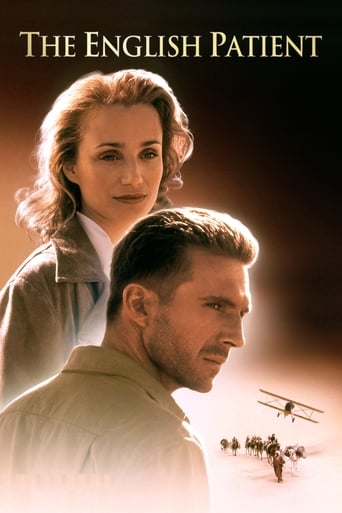
The English Patient (1996)
Another literary wartime romance about memory, love and loss, with a fractured structure that contrasts with Atonement's use of viewpoint.
Follow the idea
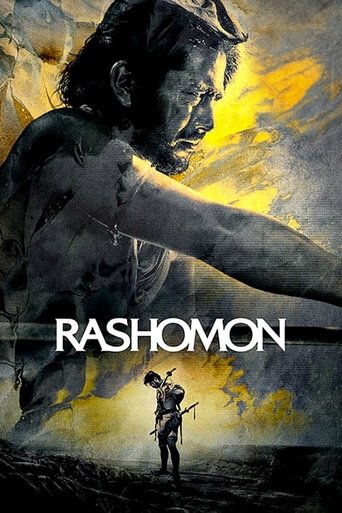
Rashomon (1950)
The classic film about conflicting accounts of one event, and a good companion for the question of whose version can be trusted.
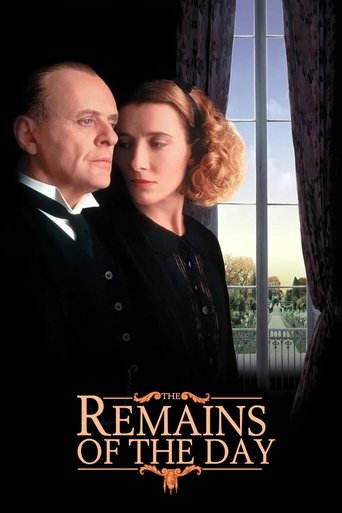
Explore the era or movement
The Remains of the Day (1993)
A refined portrait of English class, service and emotional repression in a country house, from the heritage tradition that Atonement reworks.
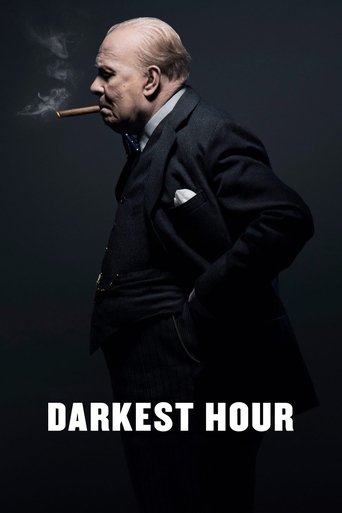
Continue the director
Darkest Hour (2017)
Joe Wright's later film about Britain at war, showing how his stylised approach developed.

Explore the era or movement
Gosford Park (2001)
A country-house ensemble that examines the class divide between family and servants in the 1930s.


