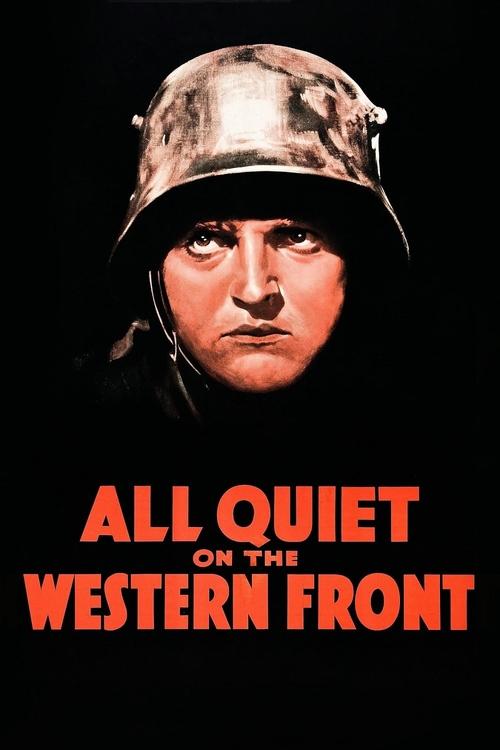
Drama · War
All Quiet on the Western Front
American
1930 · Directed by Lewis Milestone · 133 min


Drama · War
American
1930 · Directed by Lewis Milestone · 133 min

Meaning, unpacked
Central idea
The film shows how a generation is lured into war by words and ideals, then ground down by experience until it feels cut off from civilians and even from its own past. It can be read as an argument that war offers no winners.
What it means
The film opens in a schoolroom. A teacher gives a stirring speech about duty and glory, and a class of boys marches off to war. That opening is the whole argument in miniature: Paul and his friends are won over by words, and the front takes the rest from them. The gap between language and experience drives everything. Duty and glory give way to mud, hunger and shelling, and the men who preach hardest are often the ones who suffer least. Rank and petty discipline start to look arbitrary once you have seen what the trenches do. Read this way, the film argues that war has no winners.
It is also about what war does to a generation. When Paul goes home on leave, a familiar room should comfort him, but it only shows how far he has changed. He no longer fits the world that sent him, and surviving the front is not the same as coming home. Against that loneliness stands comradeship: small acts of loyalty and practical care make the film warm, and make every loss cut deeper. In the shell crater, trapped with an enemy soldier, Paul faces one man instead of an anonymous enemy. The film refuses to turn the other side into monsters. The final image answers a butterfly with sudden violence, then shows Paul's dead schoolmates looking back. One death becomes a generation's death.
Why it mattered
In 1930, stalking pictures were brand new, and many sound films were stiff and static because of the clumsy equipment. Here, cinematographer Arthur Edeson kept the camera moving, tracking along trenches and across no man's land, which gave the battles momentum. Sound was treated as an experience rather than a novelty: shelling, silence and voices in the dark. The mud, wire and craters were built outdoors on a huge scale, with many extras, so the combat had unusual physical credibility.
Before anyone tells you what to think: what did you make of it?
Log in to rate it and leave commentsIt takes one click with Google or an email link. You come straight back here.
Rate it, keep your notes, and find the next film.
Free, no ads. Your journal, your lists, a Cine Guide that remembers you.
Create your free spaceJust as striking was the stance. A Hollywood studio, Universal, made a large, uncompromising picture about war from the German soldiers' side, with no villains on either side. It proved that a war film could be a plea against war rather than an adventure. It was a major success, and it won two Academy Awards: Outstanding Production, now called Best Picture, and Best Director for Lewis Milestone. The source was Erich Maria Remarque's novel, a huge international bestseller from 1929.
The film established the idea that a war film could argue against war, and that shaped later works from Grand Illusion and Paths of Glory to Das Boot and Saving Private Ryan. Its fluid battlefield camerawork also became a model for staging combat. Its title passed into everyday English as an ironic phrase for calm, and you will still see it in headlines far from any battlefield. The butterfly image became one of the best-known pictures of war's waste.
It also became a political symbol. When it opened in Berlin in December 1930, Nazi supporters disrupted screenings, and it was soon restricted, then banned. Some censors elsewhere cut or restricted it too. The Nazis later burned Remarque's books, and the story came to stand for suppressed anti-war dissent. Today it remains a central film of the early sound era. Some of the acting and dialogue can seem dated, but the battle scenes and final images still hit hard. The story was retold for television in 1979, and again as a German film in 2022.
What happens
In the last days of the war, Paul sees a butterfly beyond the trench and reaches for it. A sniper shoots him. His death is small and sudden, and it reveals that his survival never meant anything to the war.
The last image
Paul's dead classmates march in ghostly ranks, turning to look back at the audience.
What it says
The ending turns one man's death into a generation's. Beauty is answered with violence, and the dead schoolmates look straight at you, so the cost of the teacher's speech about glory cannot be missed.
Or follow an idea from this film

Explore the era or movement
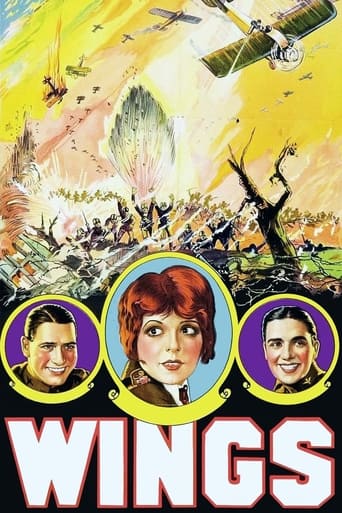
Wings (1927)
The silent-era counterpart, a spectacular air-war romance that makes a revealing contrast with this film's grim tone.
Compare another approach
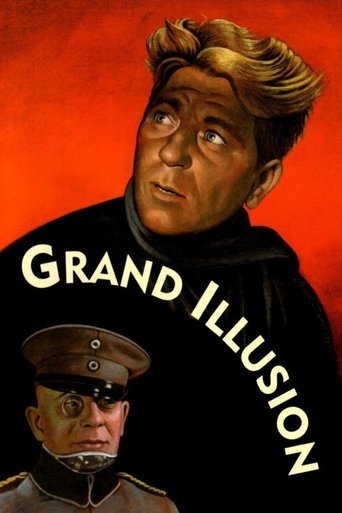
Grand Illusion (1937)
Another humane view of the First World War, concerned with class, honour and friendship across enemy lines rather than the trenches.
Follow the idea
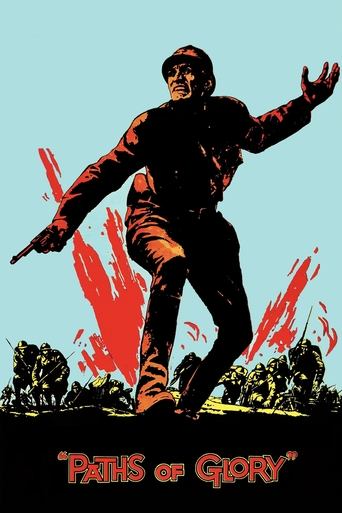
Paths of Glory (1957)
Pursues the idea of military authority sending men to pointless suffering, with sharper anger and tighter structure.
Jump forward
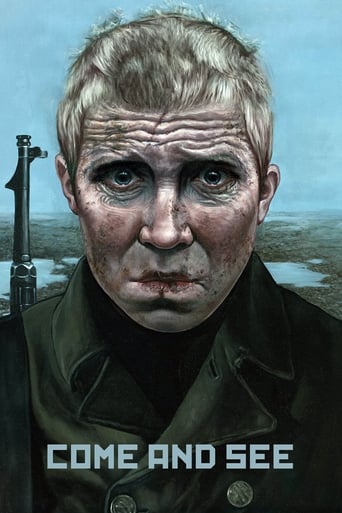
Come and See (1985)
A Soviet war film that carries the anti-war argument into nightmare, showing how a young recruit's innocence is destroyed.