Drama
Aftersun
British
2022 · Directed by Charlotte Wells · 101 min


Drama
British
2022 · Directed by Charlotte Wells · 101 min







Meaning, unpacked
Central idea
The film can be read as an exploration of how memory fills in a parent after the fact: what a child sees and cannot yet understand, and what an adult tries to recover from fragments of tape and recollection.
What it means
Aftersun is about a holiday, a father, a daughter, and a grown woman rewinding the tape. But it was never really about what happens. It is about what a memory leaves out. As a child, Sophie sees her father Calum clearly but cannot yet read him. Years later, the adult Sophie goes back through fragments of video and recollection. She knows more now, yet all she can do is guess at what she missed.
That is why the film comes in pieces, with gaps where understanding should be. Calum's warmth is real. So is his private pain, which he works to hide from his daughter. The film never explains it. The scenes of him alone at night, in rooms and by the water, reframe the cheerful holiday footage and show what Sophie could never have seen. Then the dance to Under Pressure becomes joy and sorrow at once. We never fully know the people we love, but we keep looking, and the looking is its own kind of love.
Why it mattered
Aftersun was Charlotte Wells's first feature after short films. It premiered in Critics' Week at Cannes in 2022, a section that showcases emerging directors, and quickly became one of the year's most discussed films. It is a rare debut that joins emotional restraint to formal daring.
What felt fresh was how it tells its story. The elliptical editing makes the film feel like a mind going back over something. The camcorder footage is more than a period touch: its low-resolution look is built into the design and becomes the physical form of memory itself. The big emotions play out in behaviour, not speeches, and in framing, with doorways, reflections and off-centre shots that let distance and privacy be seen.
Before anyone tells you what to think: what did you make of it?
Log in to rate it and leave commentsIt takes one click with Google or an email link. You come straight back here.
Rate it, keep your notes, and find the next film.
Free, no ads. Your journal, your lists, a Cine Guide that remembers you.
Create your free spaceCritics praised its restraint, its emotional precision and the lead performances. It landed on many best-of-year lists, and word of mouth carried it beyond arthouse audiences. Paul Mescal received an Oscar nomination for Best Actor. The film confirmed an appetite for quiet, memory-based dramas that trust implication over explanation, and it established Wells as a leading new director and Mescal as a major screen presence.
Today it is a touchstone of recent personal cinema. The Under Pressure finale became its best-known image, shared online as shorthand for joy and grief together. Many viewers describe returning to it as adults or parents, and use it to talk about fathers, memory and hidden depression. It also fed interest in nineties family footage and how home recordings shape what we remember. Many find it richer the second time, once you know where the gaps are.
What happens
After the final dance to Under Pressure, Calum puts Sophie on her flight and walks through a door, out of the camera's sight. The film never says what became of him, but it strongly suggests he did not stay in her life.
The last image
Calum passes through the airport door and away from the camera, leaving the adult Sophie with only the tapes.
What it says
The ending shows that Sophie can only ever guess at who her father was. He leaves the frame, and memory has to carry the loss. We keep looking at the people we love, even when we can't fully know them.
Or follow an idea from this film


See what influenced it
Distant Voices, Still Lives (1988)
A British film that handles memory through fragments and songs. It shows how a family past can be shaped through feeling rather than plot.

Compare another approach
The Tree of Life (2011)
Another memory-based film about a parent and childhood, far more expansive and cosmic, which makes Aftersun's intimacy stand out.
Follow the idea
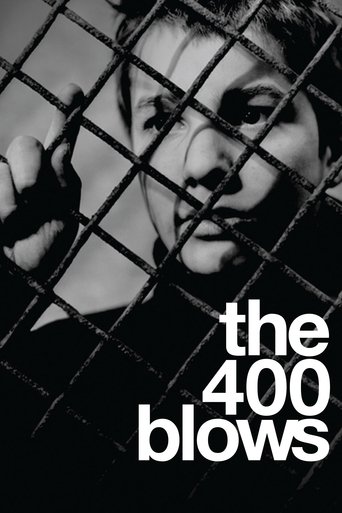
The 400 Blows (1959)
A landmark of the childhood-drawn-from-life tradition, with a young protagonist and an ending that lingers on a single look.

Explore the era or movement
Drive My Car (2021)
A contemporary, restrained drama about grief and unspoken pain, played at a similarly unhurried pace.