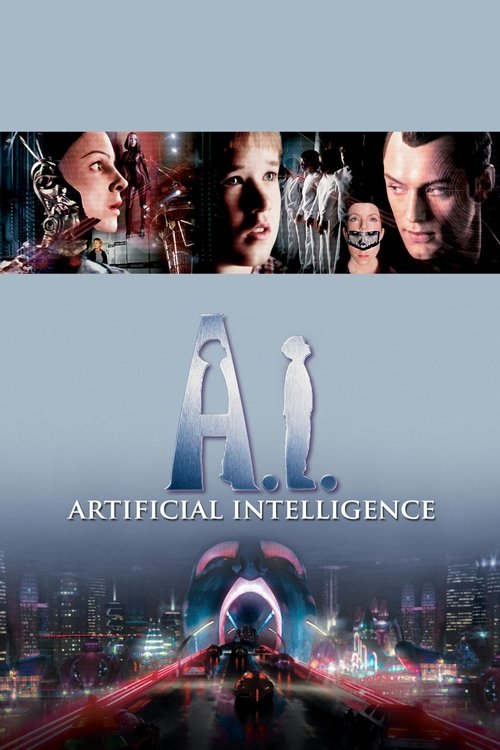
Drama · Science Fiction · Adventure
A.I. Artificial Intelligence
American
2001 · Directed by Steven Spielberg · 146 min


Drama · Science Fiction · Adventure
American
2001 · Directed by Steven Spielberg · 146 min






Meaning, unpacked
Central idea
The film explores whether love can be engineered, and what responsibility follows once it is. It can be read as a Pinocchio story in reverse: the wish to become real is aimed at a world that cannot easily love back.
What it means
David is a child robot programmed to love one woman, Monica. She abandons him, and he sets out to find the Blue Fairy, hoping she will make him real. That is all the plot you need. The film is about what lies underneath it: can love be engineered, and what responsibility follows once it has been? You could call it Pinocchio in reverse, a wish to become real aimed at a world that cannot easily love back.
The quiet imprinting scene, where spoken words fix David's love on Monica for good, makes the problem irreversible. Yet human feelings have causes too, so the film asks whether a feeling with a cause is any less sincere. The troubling side of the bargain belongs to the humans, who build beings to meet their needs, then discard them when they become inconvenient. Professor Hobby, calm and sure of his own kindness, chills you most. Then David's devotion hardens into endless waiting before the underwater Blue Fairy. It is moving and tragic, and the film won't let you choose.
Why it mattered
This was a Stanley Kubrick project for years. He acquired the rights to Brian Aldiss's short story "Supertoys Last All Summer Long" and eventually suggested Spielberg direct it. After Kubrick died in 1999, Spielberg wrote the screenplay himself, his first sole writing credit since Close Encounters of the Third Kind. The result joins two opposed sensibilities, cool irony and warmth, and that friction is part of the film's identity.
The craft kept it grounded. Haley Joel Osment gives a controlled, near-unblinking performance that avoids the robot cliché. Stan Winston's studio built animatronic robots, including Teddy, which sit beside Industrial Light & Magic's digital cityscapes and flooded Manhattan, so the fantasy stays tactile. Janusz Kamiński lit the family home in soft, overexposed brightness and Rouge City in saturated neon. At the time, critics were divided. Many admired its ambition, while others found the tonal shifts and the final section uncomfortable or too sentimental. It earned two Oscar nominations, for visual effects and for John Williams's score, and no wins.
Before anyone tells you what to think: what did you make of it?
Log in to rate it and leave commentsIt takes one click with Google or an email link. You come straight back here.
Rate it, keep your notes, and find the next film.
Free, no ads. Your journal, your lists, a Cine Guide that remembers you.
Create your free spaceThe film helped set the template for humane movies about artificial beings, which Ex Machina and Her later explored from different angles. Its promotional campaign, "The Beast," was an online puzzle game and a landmark of alternate reality games, and its Cloudmakers community became a model for collaborative online play.
Its reputation has risen steadily. Once seen as an awkward hybrid, it is now often counted among Spielberg's boldest and most emotionally troubling works. As real artificial intelligence enters everyday life, its question gets harder to set aside. The film ends with a dedication to Kubrick, and with that question left with you: what do we owe the things we teach to love us?
What happens
After two thousand years praying to a statue, David is found by advanced mechas who recreate Monica for one day. He gets the perfect day he wanted, then falls asleep beside her as she dies.
The last image
David lies down beside Monica and falls asleep next to her as she dies.
Two readings
What it says
The film asks how long a feeling can last, and answers with devotion that outlives its whole world. It ends quietly on a single day of love because that is all David ever wanted, and all it could give him.
Or follow an idea from this film
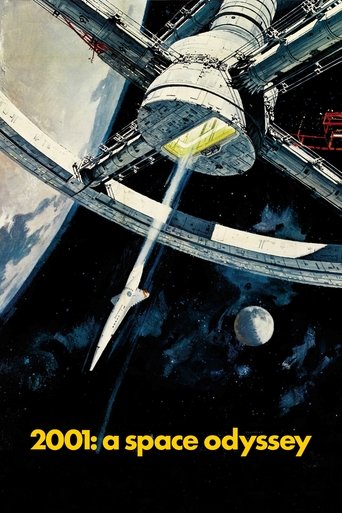

See what influenced it
2001: A Space Odyssey (1968)
The starting point for Kubrick's vision of artificial intelligence. Seen after A.I., it shows how differently the two directors treat machine minds and human feeling.
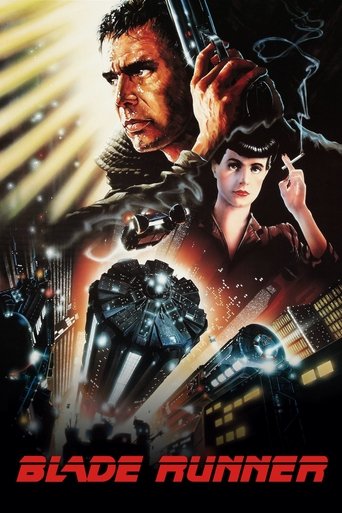
Compare another approach
Blade Runner (1982)
Another landmark about made beings who seem to feel, with a darker, more noir-like answer to the same questions.
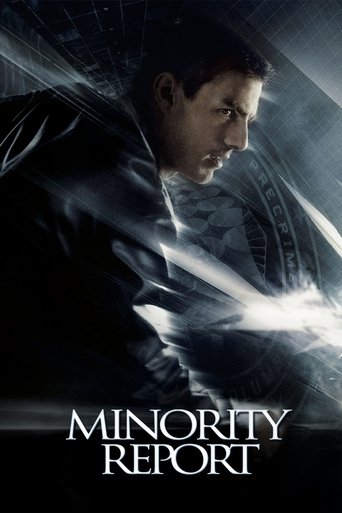
Continue the director
Minority Report (2002)
Spielberg's next science-fiction film is a faster thriller, and it shows his handling of a near future in a very different tone.
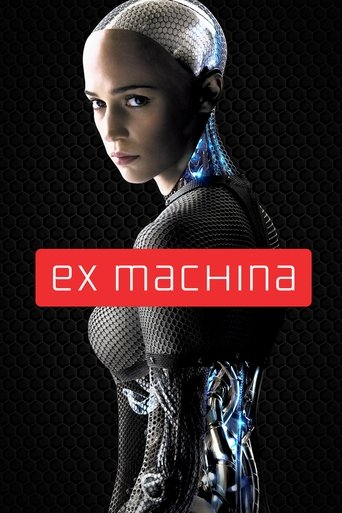
See its influence
Ex Machina (2015)
A concentrated modern descendant that puts the question of artificial consciousness in a tense chamber-piece.
Follow the idea
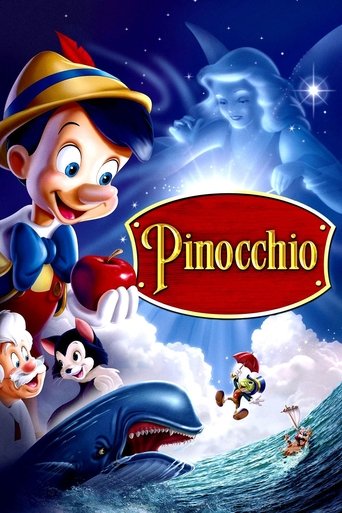
Pinocchio (1940)
Disney's version of the fable behind David's quest, useful for seeing what Spielberg borrows and inverts.