Crime · Drama · Romance
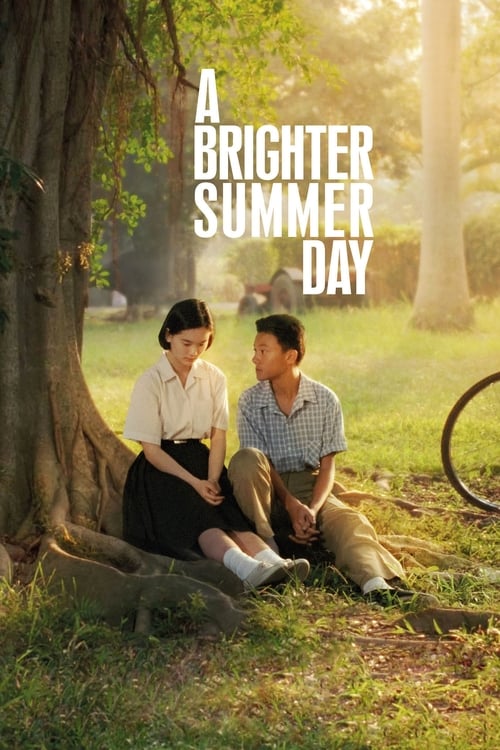
A Brighter Summer Day
Taiwanese (牯嶺街少年殺人事件)
1991 · Directed by Edward Yang · 237 min


Crime · Drama · Romance
Taiwanese (牯嶺街少年殺人事件)
1991 · Directed by Edward Yang · 237 min









Meaning, unpacked
Central idea
The film explores how a society built on fear and displacement shapes its children. It can be read as the story of a boy who tries to stay good and honest in a world that offers no secure ground to stand on.
What it means
You've just spent close to four hours in Taipei in the early 1960s, and the film's central idea is simple to say and hard to shake: a society built on fear and displacement shapes its children. Si'r, a quiet teenage boy pulled between family, school and the gang world, tries to stay good and honest in a world with no secure ground to stand on.
The insecurity starts at home. Families who fled the mainland live in temporary-feeling homes, wary of authority, and the scenes of Si'r's father facing security questioning show the political fear behind ordinary family life. The gangs offer loyalty, protection and rules, copying the only models adults provide. Teachers, parents, police and gang leaders all hold power, and none offers real safety. Against this stands Si'r's idealism: people are good, or they are false. His last conversation with Ming feels like the product of a whole society, not one bad decision.
Why it mattered
This is the most ambitious film of Taiwan New Cinema, the movement Edward Yang shared with Hou Hsiao-hsien. It brought Taiwan's postwar history, long unspoken under martial law, into art cinema, and it turned one boy's adolescence into a portrait of an entire society.
What was new was its patience. Yang holds wide shots with action in doorways, corridors and depth, so people are always part of rooms and crowds. A huge cast and many small episodes build up before the main story tightens, so the final events carry the pressure of the whole community. Low light and radios, songs and voices give the era its texture, and the music belongs to the characters' lives rather than commenting on them.
Before anyone tells you what to think: what did you make of it?
Log in to rate it and leave commentsIt takes one click with Google or an email link. You come straight back here.
Rate it, keep your notes, and find the next film.
Free, no ads. Your journal, your lists, a Cine Guide that remembers you.
Create your free spaceIts patient ensemble approach to youth and national history shaped later Asian art cinema, from Tsai Ming-liang's alienated young city dwellers to Jia Zhangke's social portraits. Yang carried the method into his own later family epic, Yi Yi, which is where to go next.
At first the film reached festivals and serious critics, but its length and the difficulty of seeing it kept its audience small. Its reputation grew steadily, especially after Yang's death in 2007. A restoration in 2016 let new viewers see the full film, and the Criterion Collection released it on home video in 2019. Today it is often called one of the great modern historical films.
What happens
Si'r confronts Ming and stabs her to death. He is convicted, and the film leaves his family to absorb the aftermath. It shows how his demand for purity, and his sense of betrayal, ended in violence.
The last image
The film closes on the family left behind, quietly absorbing what Si'r has done.
What it says
The ending treats the killing as the product of a whole society, not one bad decision. Fear, displacement and unreliable authority shaped a boy who wanted people to be either good or false, and the film leaves the question of cause open.
Or follow an idea from this film

Continue the director
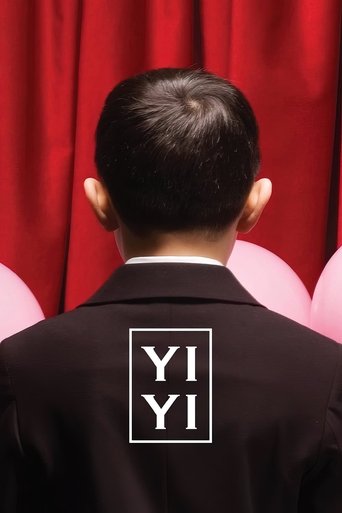
Yi Yi (2000)
Yang's final film is shorter and more serene, but it shares the family ensemble and keen social eye. It shows how his style matured.

See what influenced it
The 400 Blows (1959)
Truffaut's tale of a boy failed by school and family offers a compact, earlier version of the adolescent portrait.
Explore the era or movement
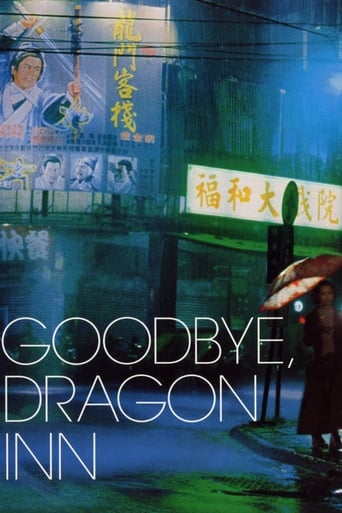
Goodbye, Dragon Inn (2003)
Tsai Ming-liang's quiet Taiwanese film about a closing cinema continues the national art cinema in a more minimal, contemplative mode.
Follow the idea
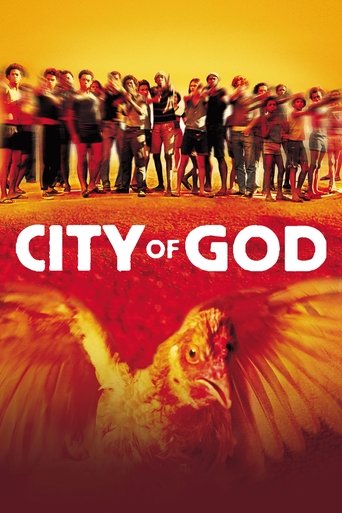
City of God (2002)
Another sprawling, multi-character look at how poverty and instability pull young people toward gangs, told in a much faster style.

Compare another approach
In the Mood for Love (2000)
Another film of 1960s Chinese diaspora life in a Hong Kong setting, using style and music to evoke the period and its restraint.