Drama
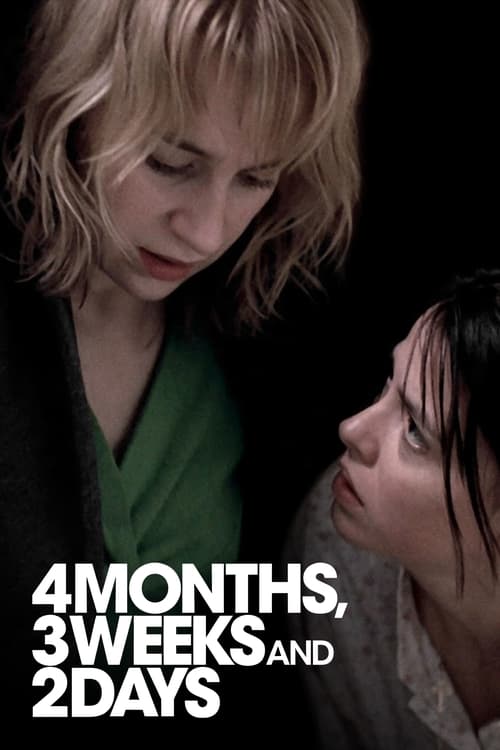
4 Months, 3 Weeks and 2 Days
Romanian (4 luni, 3 săptămâni și 2 zile)
2007 · Directed by Cristian Mungiu · 114 min


Drama
Romanian (4 luni, 3 săptămâni și 2 zile)
2007 · Directed by Cristian Mungiu · 114 min






Meaning, unpacked
Central idea
The film can be read as a study of how an oppressive system forces people into moral compromise, and of how female solidarity is tested when the cost of helping someone falls unevenly on the helper.
What it means
Bucharest, 1987. Over a single day, a young woman named Otilia helps her friend Gabita arrange an illegal abortion. That is all the plot you need. What matters is the idea underneath it: how an oppressive system pushes ordinary people into moral compromise, and what loyalty costs when the helper carries most of it. Otilia gives up her dignity, her safety and her trust for Gabita, and the film asks who is ever allowed to repay that.
The law sits behind everything. Decree 770 turned a private medical matter into a crime and pushed women toward people who exploit their desperation. In the hotel room, Mr. Bebe bargains coldly and sounds perfectly reasonable, and the camera does not cut away. The film also watches the people who look away, from the hotel clerk to the dinner guests, and quietly asks how everyday compliance keeps a repressive order going. It ends on a held look between two women: some things are too costly to say aloud, so the film leaves them in the frame.
Why it mattered
Mungiu and cinematographer Oleg Mutu build scenes in single shots, often with a fixed camera, so meaning comes from who enters, who leaves, who speaks and who stays silent. There is no score, no flashback and no explanation. Important events happen partly out of view, so you learn the situation as Otilia does and share her constrained position. Silence and ambient noise carry the tension, and the film will not tell you how to feel.
It won the Palme d'Or at Cannes in 2007, the first Romanian film to take the festival's top prize, and drew near-unanimous praise for its control, its performances and its restraint. It showed that austere realism and long takes could carry real political and moral weight, and it helped turn European art cinema's attention eastward.
Before anyone tells you what to think: what did you make of it?
Log in to rate it and leave commentsIt takes one click with Google or an email link. You come straight back here.
Rate it, keep your notes, and find the next film.
Free, no ads. Your journal, your lists, a Cine Guide that remembers you.
Create your free spaceIt made Mungiu a leading European director and sharpened international attention on Romanian filmmakers such as Cristi Puiu and Corneliu Porumboiu. Its formal rigor and long-take realism became a reference point for later social-realist filmmaking. It also brought Ceaușescu's ban on abortion and contraception to a wide international audience, and fed Romanian discussion of how people lived under communism.
Today it stands as a central work of the Romanian New Wave and of twenty-first-century European cinema. It is widely taught in film studies, East European history, ethics and gender courses, as a model of how formal discipline and moral urgency can reinforce each other. Writers and campaigners cite it in debates about reproductive rights, because it shows the risks and humiliations of criminalised abortion without lecturing.
What happens
After the abortion, Otilia leaves the foetus in the night and returns to Gabita. They share a meal, and Otilia asks her never to speak of what happened. The film ends on Otilia's fixed, wordless stare.
The last image
Otilia sits across from Gabita at the restaurant table, staring straight into the camera, silent and unreadable.
What it says
The film refuses a release because nothing here is resolved. Otilia has paid most of the cost, and that cost cannot be spoken aloud. Her silence is what the regime leaves behind, and the film leaves it in the frame.
Or follow an idea from this film

Continue the director
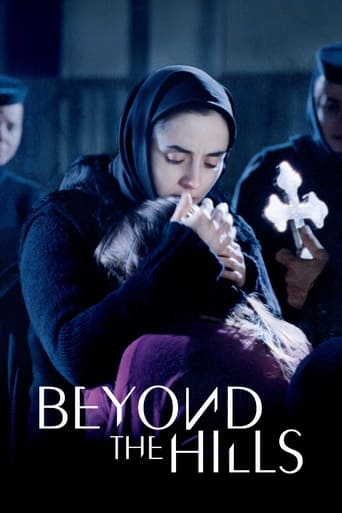
Beyond the Hills (2012)
Mungiu's next major film is another severe, long-take drama about women, institutions and the limits of help, set in a Romanian convent.
Compare another approach
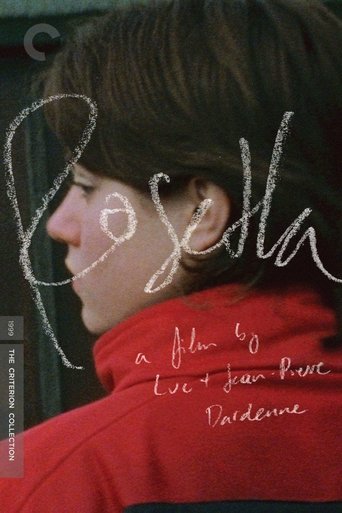
Rosetta (1999)
The Dardennes follow a young woman's struggle with similar intimacy, but with a restless handheld camera, a useful contrast to Mungiu's composed frames.
Follow the idea
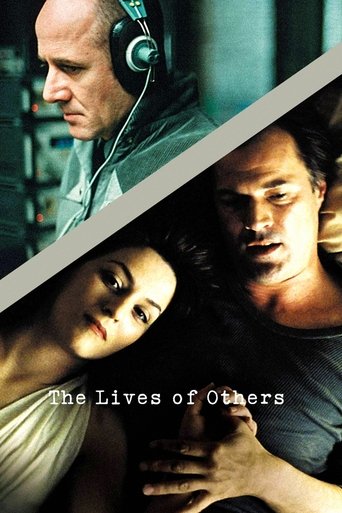
The Lives of Others (2006)
Another look at life under an Eastern Bloc regime, this time through surveillance and conscience, in a more conventionally dramatic form.
See what influenced it
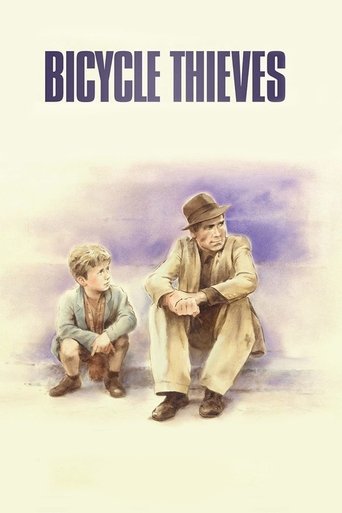
Bicycle Thieves (1948)
Italian neorealism's ordinary people, real locations and moral pressure are an ancestor of this film's approach to everyday desperation.

Explore the era or movement
Children of Men (2006)
Released a year earlier, it uses long takes in a very different, dystopian register, showing how the technique was being used across the period.