Drama
Under the Skin
Brazilian (Sob a Pele)
2013 · Directed by Pedro Sotero & Daniel Bandeira · 19 min


Drama
Brazilian (Sob a Pele)
2013 · Directed by Pedro Sotero & Daniel Bandeira · 19 min
Meaning, unpacked
Central idea
The film can be read as an exploration of the limits of language: when grief and desire are too large for speech, the body becomes the only honest means of communication between two people who once knew each other well.
What it means
First, a clearing of the air. This is not the Scarlett Johansson film. What you have just watched is Sob a Pele, a Brazilian short by Pedro Sotero and Daniel Bandeira, whose title translates literally as Under the Skin. Two people meet again after a long time apart, and they cannot speak.
That is the heart of it. Grief and desire are too large for words, so the body becomes the only honest way for these two people, who once knew each other well, to reach each other. A touch might be comfort, longing, or both at once, so no gesture means only one thing. The film also measures how much of a past relationship survives time apart. The failed attempt to speak matters most: it shows the silence is a limit the characters struggle against, not a style choice.
Why it mattered
This was a small independent production, so don't expect a story of box-office or headlines. It lived on the festival and short-film circuit rather than in wide release, and there is no major critical consensus about it.
What it offers is a way of working. At nineteen minutes, it concentrates on a single encounter, skips backstory and trusts you to infer the shared past. It leans on performance and framing rather than plot or a large cast. In a film with only two characters, how close the camera stays and how far apart the two are placed becomes a kind of sentence.
Before anyone tells you what to think: what did you make of it?
Log in to rate it and leave commentsIt takes one click with Google or an email link. You come straight back here.
Rate it, keep your notes, and find the next film.
Free, no ads. Your journal, your lists, a Cine Guide that remembers you.
Create your free spaceIts influence is modest. It is not known as a major influence, and it has not left famous images or phrases behind. It sits within a wider current of restrained, body-centred dramas about desire and loss, and it adds a compact Brazilian example.
Today it remains little known, and it is easily mixed up with Jonathan Glazer's film of the same year. Its value now is as a lesson in how a short can build a complete emotional situation from two performers and almost no speech. If that appeals, look for other shorts that trust faces and silence over dialogue.
What happens
The material doesn't record the film's final scene, so I won't invent it. What it makes clear is where the film arrives: the man and woman, unable to speak, reach each other through touch and closeness instead.
The last image
I can't describe the final shot with certainty, but the film closes on two people whose bodies have said what words could not.
What it says
The ending gives you feeling, not information. Grief and desire are too large for words, so the film resolves through the body. It trusts you to understand without being told, which is why it asks for nothing more than that.
Or follow an idea from this film


Follow the idea
Hiroshima Mon Amour (1959)
Pursues the same idea at feature length: two lovers, the body and memory, and the limits of what words can convey about pain.
Explore the era or movement
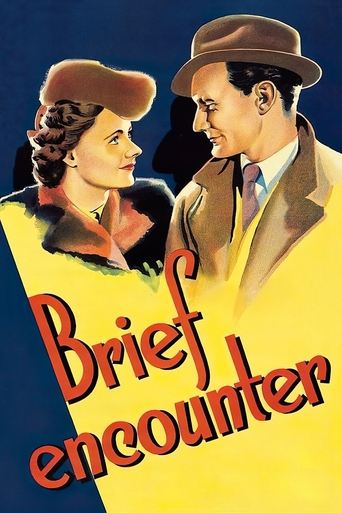
Brief Encounter (1946)
Shows the older tradition of unspoken desire, where restraint creates the emotional power this short also relies on.

Compare another approach
In the Mood for Love (2000)
A later model of longing expressed through gesture, distance and silence, useful for comparing how style carries feeling.

Jump forward
Portrait of a Lady on Fire (2019)
A recent drama where looks and small gestures replace dialogue, extending the idea of the body speaking.