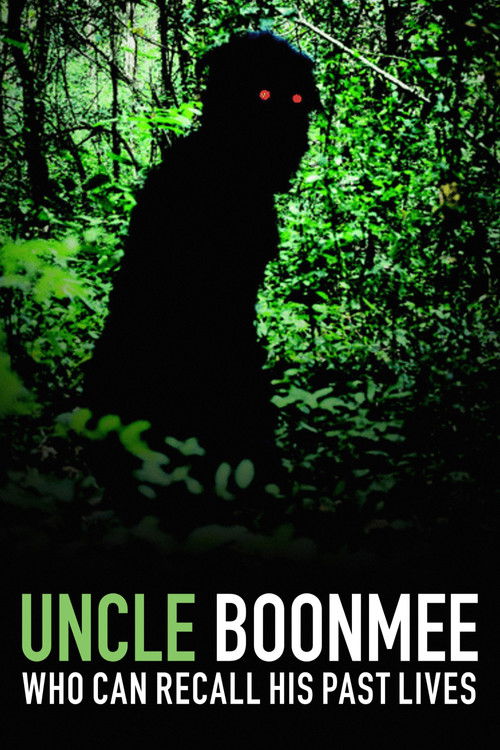
Drama · Fantasy
Uncle Boonmee Who Can Recall His Past Lives
Thai (ลุงบุญมีระลึกชาติ)
2010 · Directed by Apichatpong Weerasethakul · 114 min


Drama · Fantasy
Thai (ลุงบุญมีระลึกชาติ)
2010 · Directed by Apichatpong Weerasethakul · 114 min



Meaning, unpacked
Central idea
The film can be read as a meditation on the continuity of life and memory: a dying man sees his death as one more passage between forms, while the country around him carries unresolved violence from its past.
What it means
This is not really a film about what happens. A dying man sits down to dinner with his dead wife and his lost son, later walks up into a hillside cave, and the story ends in a hotel room where people seem to split into doubles. What matters is how it feels to be a link in a very long chain.
The central idea is continuity. Boonmee sees his death as one more passage between forms, not an ending, and selves slide between human, animal and spirit as if that were natural. Around him, the country carries violence it has never settled. On the cave journey, he connects his illness to past violence, and the film can be read as touching Thailand's suppressed anti-communist history in the north-east. The film holds the gentle and the troubled together and never lets either cancel the other. The supernatural is domestic: the returned dead join the table without fuss, and grief turns into conversation.
Why it mattered
In 2010, Tilda Swinton led the Cannes jury that gave it the Palme d'Or, the first Thai film to win it. Many observers were surprised. Critics praised its tenderness and strangeness, while some audiences found the pace and ambiguity hard going. In Thailand, a film about a farmer's death and political guilt was no conventional box-office entry, but the win brought it national attention, and drew fresh notice to the director's disputes with Thai film censorship.
What was new was its form. It is built in sections, like reels, moving from realist farm drama to a monster-movie homage to a legendary tale of a princess and a catfish. The suggestion is that cinema is another way of storing past lives. Dense insect-and-night sound does the work music would normally do, and long, often fixed frames let figures drift in and out. The red-eyed ghosts are shaggy costumes, not polished digital effects, a nod to the old Thai monster movies the director grew up with.
Before anyone tells you what to think: what did you make of it?
Log in to rate it and leave commentsIt takes one click with Google or an email link. You come straight back here.
Rate it, keep your notes, and find the next film.
Free, no ads. Your journal, your lists, a Cine Guide that remembers you.
Create your free spaceIt strengthened the international reach of slow, contemplative cinema and of Southeast Asian independent film. Apichatpong went on to make Cemetery of Splendour in 2015 and Memoria in 2021, and the film encouraged galleries and festivals to treat his work as cross-disciplinary art. It became the Thai film most widely seen on the international festival and arthouse circuit.
Its reputation has only grown. It is now seen as one of the defining art films of the 2010s and the high point of his career so far, and it is often taught as a model of how non-Western spiritual traditions can shape film form. Its red-eyed ghosts became its best-known image, eerie and gentle at once. Its quiet gift may be this: you leave believing that nothing is ever fully gone, only moved into another room.
What happens
Boonmee dies in the cave, his wife and son beside him. After the funeral, Tong leaves the monkhood and goes to a hotel with Jen. They split into two versions: ordinary selves watching television, doubles out at a karaoke show.
The last image
Jen and Tong sit side by side on a hotel bed watching television, while their doubles are somewhere else in the same night.
Three readings
What it says
Boonmee treated death as one more passage, so the film refuses a final full stop. It closes in the everyday, suggesting nothing is fully gone, only moved into another room, with the past living on beside the present.
Or follow an idea from this film
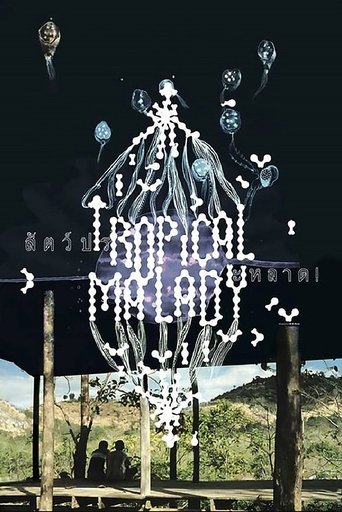

Continue the director
Tropical Malady (2004)
Apichatpong's earlier Cannes success, with a two-part structure that moves from gentle romance into a jungle spirit myth. It shows the roots of this film's approach.
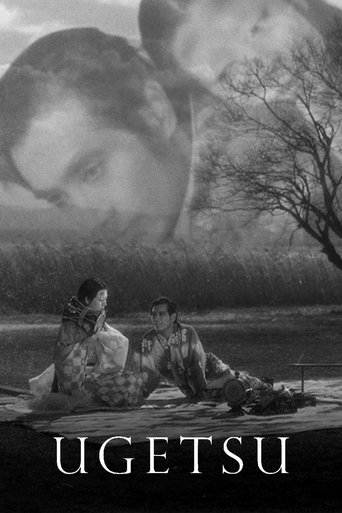
Follow the idea
Ugetsu (1953)
A classic of ghosts and the living sharing the same world, told with elegance. It shows an older tradition of treating the supernatural seriously and humanely.
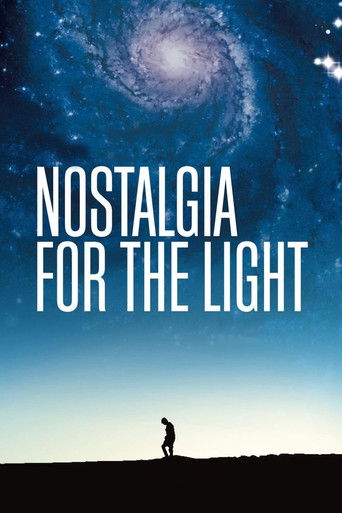
Explore the era or movement
Nostalgia for the Light (2010)
Released the same year, this documentary also links memory, the cosmos and the buried violence of a nation's past.
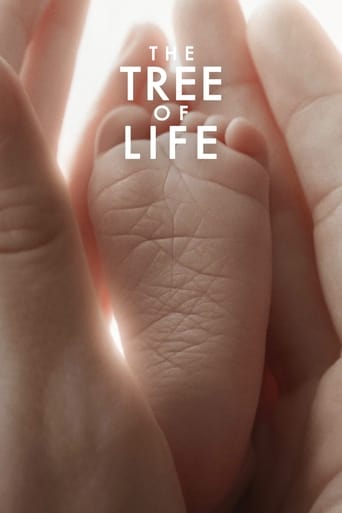
Compare another approach
The Tree of Life (2011)
The next year's Palme d'Or winner is another film that treats death, memory and cosmic time with non-linear, meditative imagery.
Follow the idea
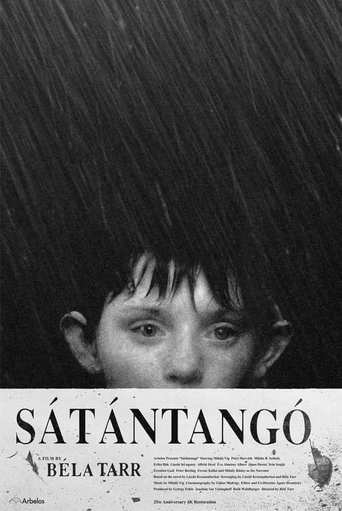
Satantango (1994)
A defining work of slow cinema with extreme long takes, useful for seeing how patience and duration can become a film's main subject.