Science Fiction · Thriller · Mystery
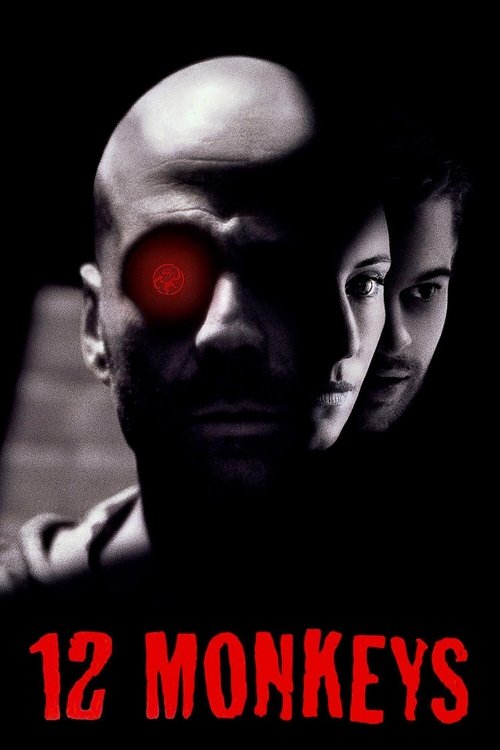
Twelve Monkeys
American
1995 · Directed by Terry Gilliam · 129 min


Science Fiction · Thriller · Mystery
American
1995 · Directed by Terry Gilliam · 129 min











Meaning, unpacked
Central idea
The film can be read as a story about the impossibility of changing, or even confirming, reality from inside it: Cole is told that his own experience is madness, and the film keeps both readings alive.
What it means
A man named Cole is sent back from a ruined future to learn how a virus wiped out most of humanity. In the past, nobody believes him, and he ends up treated as mad. The story closes at an airport, where the film's opening turns out to have been part of a loop.
That loop is the heart of it. The film asks whether you can change reality, or even confirm it, from inside it. It keeps both readings alive, which is why it still unsettles. Around that sit a few ideas: who gets to decide who is sane, whether the past is fixed, and how far you can trust your own memories, which are all Cole has. Under it runs a quieter point. Humans caused this catastrophe, and the warnings were ignored. Cole's warning was real, and nobody listened. That may be the saddest idea in the film.
Why it mattered
Twelve Monkeys came out in December 1995 and opened at number one at the US box office. It was Terry Gilliam's biggest commercial success. Critics praised its ambition, its design and Brad Pitt's performance, which brought a Golden Globe and an Oscar nomination. Some found the plot dense, but it was admired as an unusually bleak studio science fiction film.
It also showed time travel treated as a question of doubt and perception rather than gadgets. Gilliam did not write it. He took a finished script by David and Janet Peoples, inspired by Chris Marker's 1962 short La Jetée, and put his effort into style and tone. The look does much of the work: wide lenses, low angles and tilted frames make rooms and streets seem to lean on the characters. Both the cluttered future and the shabby 1990s look assembled from leftovers.
Before anyone tells you what to think: what did you make of it?
Log in to rate it and leave commentsIt takes one click with Google or an email link. You come straight back here.
Rate it, keep your notes, and find the next film.
Free, no ads. Your journal, your lists, a Cine Guide that remembers you.
Create your free spaceThe film helped make fatalistic, closed-loop time travel familiar in mainstream cinema, paving the way for puzzle-box films like Donnie Darko, Looper and Predestination. Its distressed, improvised future design also fed the look of later dystopian science fiction. In 2015 it was reworked as the Syfy series 12 Monkeys, which ran for four seasons.
Its reputation has grown as time-loop films have become common. Today it is seen as one of the strongest science fiction films of the 1990s and as Gilliam's most accessible work. In 2020, during the COVID pandemic, people rewatched it as eerily timely, a story of a man-made virus and a warning nobody heeded. If you want to go further, watch La Jetée, then Brazil.
What happens
Cole is shot dead at the airport trying to stop the virus's release, while a small boy watches. A scientist from the future calmly boards a plane beside the infected assistant, and the plague goes ahead.
The last image
The scientist sits on the plane beside the man carrying the virus, while Cole's death plays out below.
Two readings
What it says
The ending shows a world where nobody listens and the past cannot be changed. Cole's warning was real, and Railly understands it too late. The loop leaves you with tragedy, not escape.
Or follow an idea from this film
See what influenced it
La Jetée (1962)
At under thirty minutes, Marker's short is the source of the central idea. Seeing it shows how much Gilliam and the Peoples built from it, and what they changed.
Coming soon
Continue the director
Brazil (1985)
Gilliam's defining dystopian satire shows the visual and political instincts behind Twelve Monkeys in a freer, stranger form.
Coming soon

Compare another approach
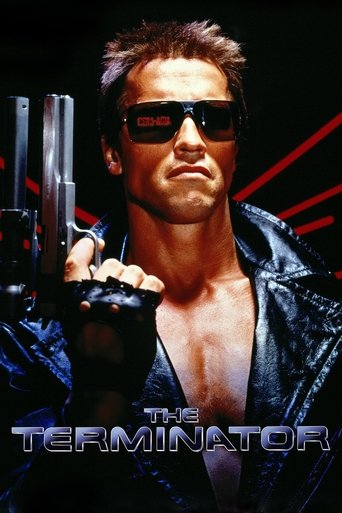
The Terminator (1984)
The same basic setup, a messenger sent back to prevent catastrophe, treated as action rather than as doubt. A useful contrast in tone and logic.
Follow the idea
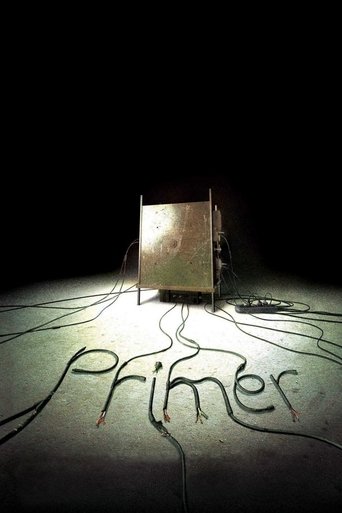
Primer (2004)
A low-budget time-travel film that pushes the puzzle element to the extreme, asking viewers to track causes and effects themselves.

Jump forward
Donnie Darko (2001)
A cult film in which time, madness and fate are entangled, showing how Twelve Monkeys' mood carried into the next generation of filmmakers.