Drama · Romance · Fantasy
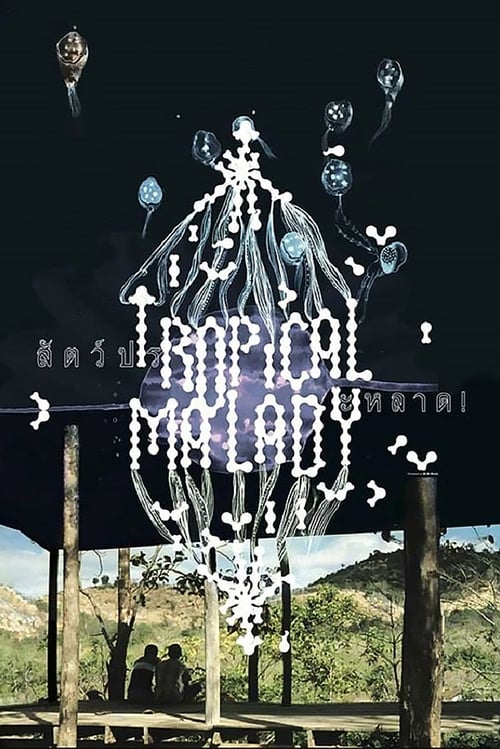
Tropical Malady
Thai (สัตว์ประหลาด)
2004 · Directed by Apichatpong Weerasethakul · 118 min


Drama · Romance · Fantasy
Thai (สัตว์ประหลาด)
2004 · Directed by Apichatpong Weerasethakul · 118 min




Meaning, unpacked
Central idea
The film can be read as an exploration of desire as something both tender and consuming, and of the line between human and animal, civilised and wild. It treats love as a force that transforms people and blurs the boundaries of the self.
What it means
Tropical Malady comes in two halves. First, a soldier and a country boy fall into an easy, tender courtship. Then the film cuts to black and begins again, with a soldier alone in the forest at night, close to a tiger spirit. That is all the story you need. The film is about what happens between those two halves.
Its central idea is that desire is both tender and consuming. Love transforms people, blurring the line between self and other, human and animal, civilised and wild. The film doesn't argue this. It lets you feel it, first as warmth, then as hunger. The small, ordinary first half makes the intimacy real, so the turn into the forest carries weight. Neither half is a prologue. They are mirrors, played by the same two actors, Banlop Lomnoi and Sakda Kaewbuadee, and the ending leaves it open whether the soldier is prey, lover, or both. Even the title plays along: the Thai one means roughly a strange creature, the English one suggests an illness like lovesickness.
Why it mattered
In 2004 it became the first Thai film in competition at Cannes, where it won the Jury Prize. It split the room. Some praised its boldness and its sensual, original handling of love and myth, while others found it baffling or frustrating. The prize brought wide attention, and the film reached art-house cinemas around the world.
It also showed how much cinema can do with atmosphere alone. In the forest, dialogue falls away. Torches and tiny lights sit in deep blackness, and what you can't see matters as much as what you can. There is almost no score, only insects, wind and engines. Scenes unfold in real time, in patient long takes, and it treats folk belief as a living way of seeing the world, not as superstition to explain away.
Before anyone tells you what to think: what did you make of it?
Log in to rate it and leave commentsIt takes one click with Google or an email link. You come straight back here.
Rate it, keep your notes, and find the next film.
Free, no ads. Your journal, your lists, a Cine Guide that remembers you.
Create your free spaceThe film helped make room on the festival circuit for spiritual, ambiguous, non-linear cinema from Southeast Asia. It established the sensibility Apichatpong developed in Uncle Boonmee and later films, and younger filmmakers have drawn on its mix of intimacy, landscape and folk belief. It is often cited in discussions of LGBTQ+ cinema in Asia, because the courtship is played without melodrama or a coming-out plot.
Today it is widely seen as one of the key films of 2000s world cinema and the breakthrough of its director. The early confusion has given way to admiration, and film courses use it as an example of slow cinema and non-Western narrative form. Its glowing tiger in the dark forest remains its best-known image. If you want to go further, try Uncle Boonmee next.
What happens
In the forest, the soldier finds the tiger-spirit wearing Tong's face. After a tense standoff in the dark, he offers himself to it. The film ends with the two facing each other, leaving open whether he is devoured, changed or joined.
The last image
The soldier and the tiger-spirit face each other in the dark forest, and the film stops there.
Three readings
What it says
The ending turns the first half's romance into surrender, hunger and merging. It refuses to explain because the film treats desire as both tender and consuming, a force that blurs self and other, and that cannot be settled.
Or follow an idea from this film


Continue the director
Uncle Boonmee Who Can Recall His Past Lives (2010)
The same director's Palme d'Or winner builds on the world of this film, with spirits and past lives woven into rural Thai life.
Explore the era or movement
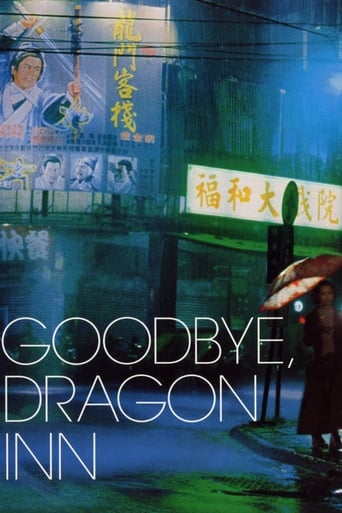
Goodbye, Dragon Inn (2003)
Tsai Ming-liang's near-wordless study of a closing cinema shares this film's long takes and its sense of attention as the main subject.

Compare another approach
In the Mood for Love (2000)
Another restrained, sensual story of desire told through glances, space and music, in a very different visual language.

Follow the idea
Beau Travail (1999)
Claire Denis likewise explores male bodies, military life and desire with little dialogue and a dreamlike, elliptical structure.

Jump forward
Under the Skin (2013)
A later film that likewise trades explanation for atmosphere and sound, exploring appetite and the boundary between human and other.