Drama · Thriller · Horror
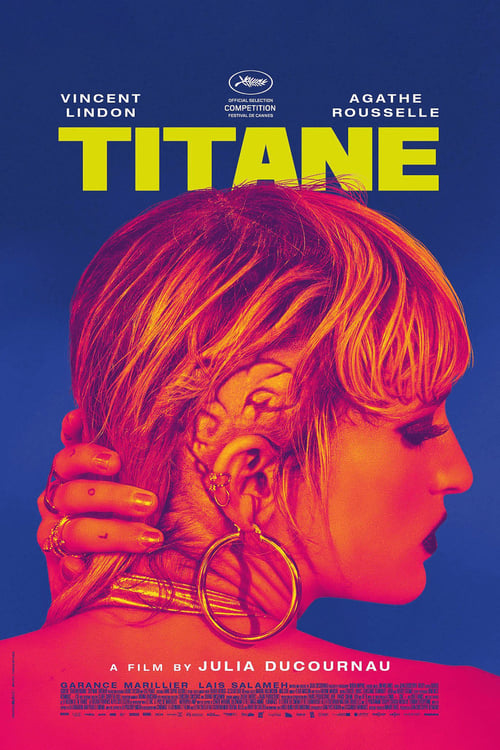
Titane
French
2021 · Directed by Julia Ducournau · 108 min


Drama · Thriller · Horror
French
2021 · Directed by Julia Ducournau · 108 min











Meaning, unpacked
Central idea
The film can be read as an exploration of what a body can become, and what it means to be loved or recognised when identity, gender and family are no longer fixed. Machine and flesh are the terms of its argument.
What it means
Titane asks a strange question: what can a body become? And if it keeps changing, who is left to be loved? The film thinks in terms of machine and flesh. The opening crash and surgery plant its central image, metal inside a body, and everything afterwards reads as consequence. The line between organic and mechanical keeps going porous, and the film treats that as both a threat and a possibility.
The tenderness is the heart of it. Alexia, a showroom dancer who leaves a trail of violence, hides as Adrien, a missing boy. Vincent, a grieving fire captain, takes her in as his son. Their bond rests on need and pretence, not biology. Does love need truth to be real? The film leaves you to answer. Gender appears as something worn, built and policed, and Vincent's refusal to accept his loss drives the second half. What remains is a human question: who will recognise you, and hold you, as you are becoming?
Why it mattered
When Titane won the Palme d'Or at Cannes in 2021, it did something rare. Body horror had long lived at the margins of festival culture, and here it took the highest prize in art cinema. It divided audiences first, then won, which surprised many observers. Julia Ducournau became only the second woman to win the award, after Jane Campion.
The film also showed how much a genre film can risk. Its structure is two halves: a violent, almost episodic horror, then a stranger, quieter domestic drama. The change is the point, not a flaw. Practical effects keep wounds and transformations tactile, and the film trusts the body on screen over digital spectacle. Genre here is unstable ground, so it is best met without a fixed idea of what it will become.
Before anyone tells you what to think: what did you make of it?
Log in to rate it and leave commentsIt takes one click with Google or an email link. You come straight back here.
Rate it, keep your notes, and find the next film.
Free, no ads. Your journal, your lists, a Cine Guide that remembers you.
Create your free spaceTitane helped open the way for body horror by women directors to be taken seriously at major festivals, most visibly Coralie Fargeat's The Substance in 2024. It also confirmed Ducournau as a leading figure in contemporary French cinema. Its premise, a woman who has sex with a car and becomes pregnant, became shorthand in press coverage and social media for provocative arthouse film, often invoked when people debate how far a film can go.
Many viewers read it through gender fluidity, nonbinary and trans identity, and chosen family, though its meaning stays open. Critics praised its audacity, its two lead performances and Ducournau's control of tone, while others found it excessive and hard to watch. Today its reputation has settled as a landmark of the genre. The shock has faded a little, leaving more attention on its tenderness and its unusual construction.
What happens
Alexia dies giving birth, after Vincent, who has known her secret and stayed, helps her through labour. The baby has a titanium spine, a child of metal and flesh. Vincent holds it, so he becomes a father again.
The last image
Vincent holds the newborn child, whose spine is made of titanium.
What it says
The film's question was who will recognise and hold you as you are becoming. Vincent answers it, loving what is strange and unfinished. Alexia's death passes her body's fusion of flesh and metal to the child, and a grieving man gets a child to care for.
Or follow an idea from this film


Continue the director
Raw (2016)
Ducournau's first feature is the clearest companion piece. It is more contained and more clearly horror, and it shows the themes she later expanded.
Compare another approach
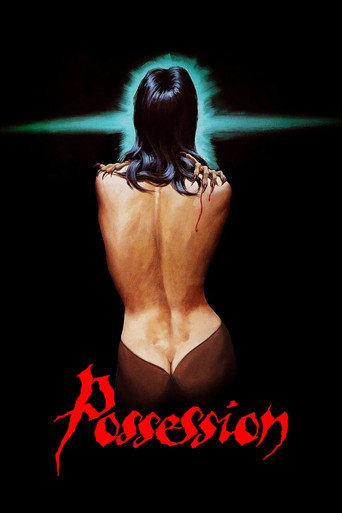
Possession (1981)
Another extreme, emotionally wrenching film in which a body transforms and relationships collapse, with a similarly uncompromising approach to genre.

Follow the idea
Rosemary's Baby (1968)
A classic that treats pregnancy as a source of fear and unease, letting the viewer explore how horror can grow from the body itself.
Jump forward
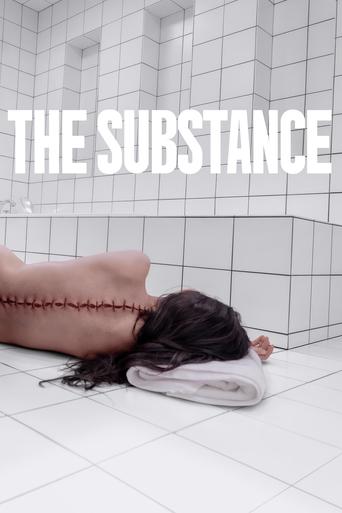
The Substance (2024)
A later body-horror film that carries the genre's festival success forward with a very different, more satirical tone.