Crime · Drama · Comedy
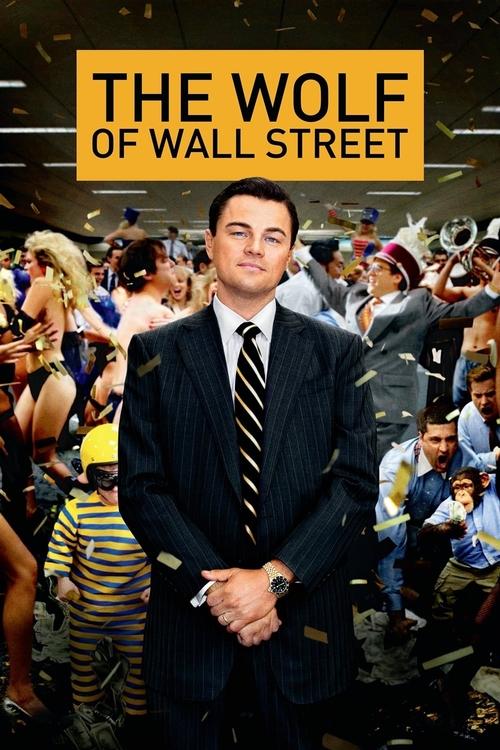
The Wolf of Wall Street
American
2013 · Directed by Martin Scorsese · 180 min


Crime · Drama · Comedy
American
2013 · Directed by Martin Scorsese · 180 min









Meaning, unpacked
Central idea
The film can be read as a demonstration of how persuasion works: Belfort sells stock, then sells himself, and finally sells the film's audience on the pleasure of his story. Scorsese lets us feel the appeal of greed before asking us to examine it.
What it means
The Wolf of Wall Street is a film about persuasion. Jordan Belfort sells stock. Then he sells himself. And finally, Scorsese suggests, he sells you the pleasure of his own story. The film lets you feel the appeal of greed before it asks you to look at it.
Money, drugs and sex become one appetite that keeps growing. Satisfaction never arrives, so every excess has to top the last. The firm's product barely matters, because what the brokers really sell is confidence, and they come to believe their own pitch. Belfort's narration explains everything and never judges, so you must supply the judgment yourself. If you laughed at the Quaalude crawl, that is the point: it is comedy and addiction at once. The final seminar turns the camera on the audience and asks who is still buying.
Why it mattered
Scorsese took the voiceover-driven, direct-address crime story he perfected in GoodFellas and moved it from the mob to a brokerage floor. Here money itself becomes the drug and the family. Usually a voiceover guides our morals. Here it does the reverse, and that was the bold part: a charming narrator who never judges, leaving the audience to do the work.
It was also a surprise coming from Scorsese at seventy-one, one of his fastest, funniest and most physical films. Thelma Schoonmaker's cutting, with freeze-frames and jump cuts, makes scenes feel like a pitch gathering speed, and Rodrigo Prieto's roaming camera turns the trading floor into a party. At three hours, with extreme profanity and sexual content, it drew controversy and some walkouts, yet it was a financial success and won five Oscar nominations, though no wins.
Before anyone tells you what to think: what did you make of it?
Log in to rate it and leave commentsIt takes one click with Google or an email link. You come straight back here.
Rate it, keep your notes, and find the next film.
Free, no ads. Your journal, your lists, a Cine Guide that remembers you.
Create your free spaceIt helped set the template for the modern comic portrait of financial excess, with charming, unreliable narrators, a style you can see in later finance satires and in the wider fashion for stories about charismatic fraudsters. Its images spread far beyond the cinema. The chest-thump and the crawl became reaction clips, often cut loose from the film's critical edge, and the "sell me this pen" exercise entered sales training and job interviews. Belfort himself built a speaking and coaching career, and the film's fame fed it.
Its reputation is still argued over. Reviews were strong but sharply divided: many praised the energy, comic daring and DiCaprio, while others, including some who lived through the events, said it glamorised fraud and neglected the investors who lost money. Today it is widely seen as deliberate satire and as one of Scorsese's most formally daring late works. US authorities also alleged that money diverted from Malaysia's 1MDB fund helped finance its production company, which later settled with the Justice Department.
What happens
Belfort, after wearing a wire and serving a short, comfortable sentence, now works as a motivational speaker. At his seminar he asks the audience to sell him a pen, and the camera lingers on their eager faces.
The last image
The camera turns from Belfort to the audience, a room of hopeful faces looking up at him.
What it says
The ending shows that Belfort's sales culture outlived his crimes, and that the system barely punished him. By turning the camera on the crowd, the film asks who is still buying, and whether you, having enjoyed his story, are one of them.
Or follow an idea from this film


Continue the director
GoodFellas (1990)
The clearest companion piece. Compare how Scorsese uses narration, tracking shots and music to make a criminal life attractive, then look at what each film does with that attraction.
Follow the idea
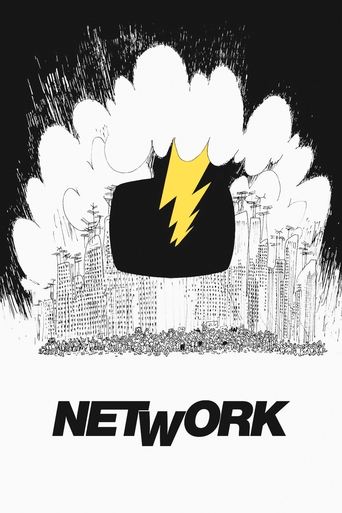
Network (1976)
A satire of corporate greed and media in which charisma and rage become commodities, a good older partner for the film's tone.
Compare another approach
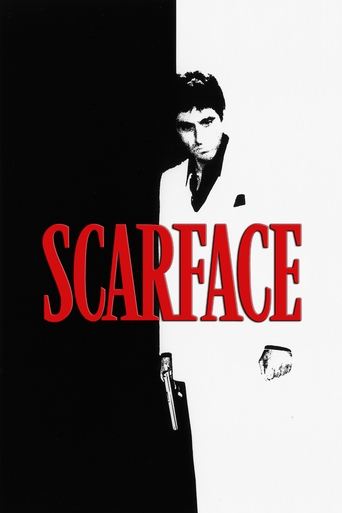
Scarface (1983)
Another study of appetite and ambition with an operatic lead performance. Compare how each film frames its antihero.

Jump forward
Triangle of Sadness (2022)
A modern satire of wealth that shows how the comic study of privilege has developed since Scorsese's film.