Drama · War
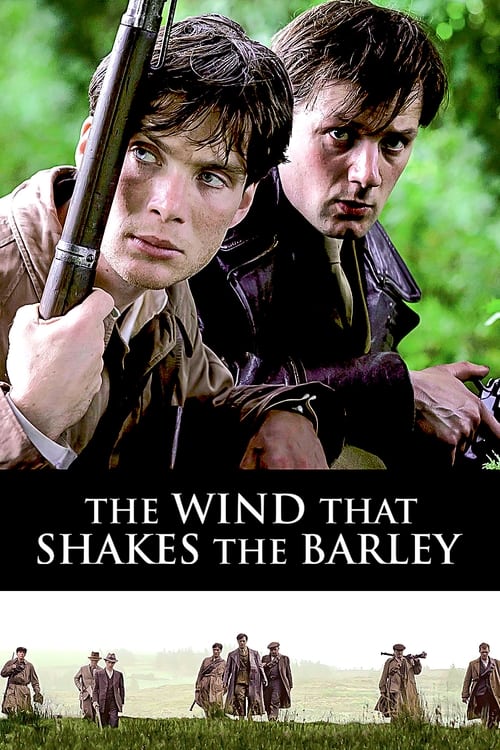
The Wind That Shakes the Barley
British
2006 · Directed by Ken Loach · 127 min


Drama · War
British
2006 · Directed by Ken Loach · 127 min






Meaning, unpacked
Central idea
The film explores how a struggle for freedom can fracture the people who share it. It can be read as an argument that national liberation and social justice are not the same thing, and that principle becomes costly once it must be defended in practice.
What it means
The Wind That Shakes the Barley follows two brothers in the Irish revolution. They fight side by side against British rule. Then the Treaty arrives, and the cause that united them pulls them apart. The film's central idea is that a struggle for freedom can fracture the people who share it. Everyone in the story wants British rule gone. The trouble starts when they must say what comes next.
That is where the film makes its sharpest argument: national liberation and social justice are not the same thing. Again and again it asks who benefits from independence, tying the question to land, wages and power. Some characters want a new flag. Others want a new order, especially for the poor. It also shows that principle is easy to hold in the abstract and costly once you must defend it, and it never lets violence be clean. Freedom is not one thing, and the people who win it together may still have to decide, painfully, what it was for.
Why it mattered
The film won the Palme d'Or at Cannes in 2006, the festival's highest prize. Critics praised its seriousness, its performances and its plain style, and it was a major success in Ireland for an arthouse drama. It took a history often treated as a local matter and put it in front of international audiences.
What felt fresh was the human scale. Paul Laverty's script gives political positions to specific, believable people, and the Treaty debate becomes a long argument among comrades where nobody is a fool. Ken Loach shoots in story order where possible, and the cast received script information gradually, so the actors respond to events as their characters would. Chris Menges photographs rural Ireland in natural light, and George Fenton's score is sparing. The film refuses the polish of a war epic.
Before anyone tells you what to think: what did you make of it?
Log in to rate it and leave commentsIt takes one click with Google or an email link. You come straight back here.
Rate it, keep your notes, and find the next film.
Free, no ads. Your journal, your lists, a Cine Guide that remembers you.
Create your free spaceThe film showed that a politically committed, low-key historical drama could reach a wide international audience. It strengthened the model of European co-produced, social-realist cinema carrying national history abroad. It also brought the title ballad, Robert Dwyer Joyce's nineteenth-century song, to a far wider audience and tied it more firmly to the struggle of the 1920s.
It pushed a painful, long-avoided division into mainstream conversation, and it is often cited when people discuss how the War of Independence and the Civil War are remembered. Teachers use it in history and film courses to prompt talk about guerrilla warfare, colonial rule and how history gets dramatised. Some British commentators attacked its portrayal of British forces as one-sided, while others defended it as historically grounded. Today it is regarded as one of Loach's strongest late works and a key modern film about the Irish revolution.
What happens
Damien is captured by Free State troops, men who once fought beside him. Teddy offers to save him if he reveals where the arms are hidden. Damien refuses, Teddy lets the execution happen, and he then has to break the news to Sinéad.
The last image
Sinéad receives the news of Damien's death from Teddy, and grief settles on her and on what is left of the family.
What it says
The ending shows a cause consuming the family it was meant to defend. Teddy chooses the new state over his brother, and Damien chooses principle over his life. The film leaves no victory, only the cost.
Or follow an idea from this film


Continue the director
I, Daniel Blake (2016)
Loach's second Palme d'Or winner moves to present-day Britain, showing the same anger at institutions and the same patient focus on ordinary people.
See what influenced it
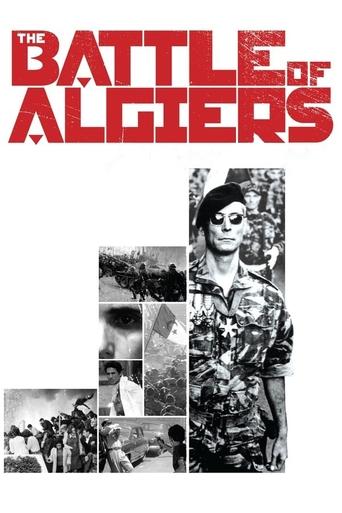
The Battle of Algiers (1966)
A landmark of political filmmaking about anti-colonial struggle, shot with a documentary look that Loach's film also values.
Compare another approach
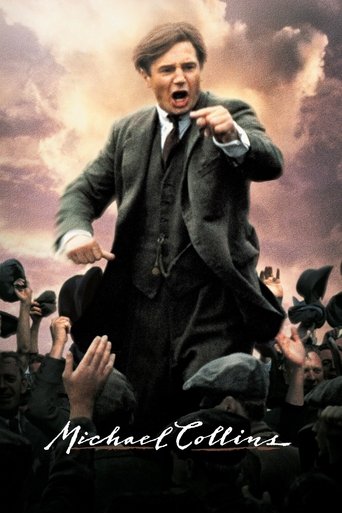
Michael Collins (1996)
Neil Jordan's film covers the same historical period on a larger, more conventional scale, which makes the contrast of approach instructive.
Follow the idea
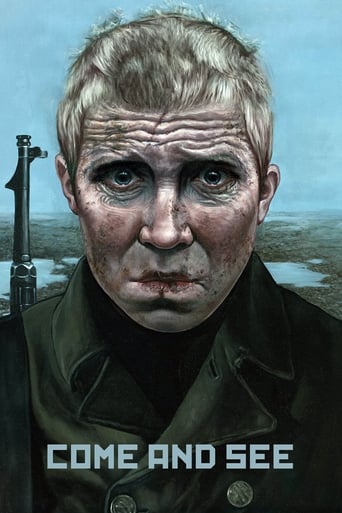
Come and See (1985)
Another war film that refuses spectacle and shows the human cost of conflict through immediate, subjective experience.