Drama · Mystery
The White Ribbon
German (Das weiße Band - Eine deutsche Kindergeschichte)
2009 · Directed by Michael Haneke · 144 min


Drama · Mystery
German (Das weiße Band - Eine deutsche Kindergeschichte)
2009 · Directed by Michael Haneke · 144 min






Meaning, unpacked
Central idea
The film can be read as an inquiry into how a society of strict morality, hierarchy and repression produces fear, cruelty and silence. Haneke has framed it as a study of ideological rigidity in general, not merely a prehistory of Nazism, though the setting invites that reading.
What it means
A wire is stretched across a road, cruel incidents follow, and no one is ever named as the culprit. Underneath that outline, The White Ribbon is an inquiry into how a society built on strict morality, rank and repression produces fear, cruelty and silence. The fathers, the pastor, the doctor, the Baron and the steward all rule through rank, ritual and discipline, and the film asks what that power teaches the people beneath it.
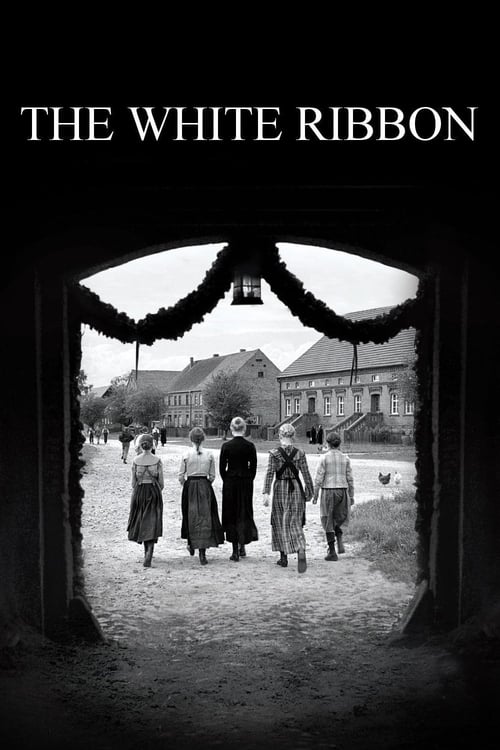
The title scene says it best. The pastor punishes his children, then ties the white ribbon on them as a sign of purity, so that instruction and humiliation become one act. It is innocence imposed from above, and across the village the language of virtue covers private behaviour that contradicts it. Then there is silence. When the teacher confronts the pastor, his evidence is thin and the pastor's rank outweighs it. Refusing to name what everyone sees may be the film's real subject. And because the old narrator admits the limits of what he knows, you are always watching a story assembled from partial evidence. The film never tells you who did it. The more disturbing question is what a whole community taught its children, and what it chose not to say.
Why it mattered
The setting invites you to think of Nazism, but Michael Haneke has said the film is about ideological rigidity in general, including religious extremism. It draws no straight causal line to Germany's later history. Instead it asks you to notice obedience, resentment and humiliation passing from one generation to the next, which is why the full German title is A German Children's Story. He had the idea decades earlier, first as a television project, and that long gestation helps explain the film's precision.
Before anyone tells you what to think: what did you make of it?
Log in to rate it and leave commentsIt takes one click with Google or an email link. You come straight back here.
Rate it, keep your notes, and find the next film.
Free, no ads. Your journal, your lists, a Cine Guide that remembers you.
Create your free spaceThe filmmaking carries the ideas. Christian Berger's black-and-white images are deep, sharp and carefully lit, like old photographs, both beautiful and chilling. Haneke often keeps the camera outside rooms, behind doors or far away, so key events are heard, implied or reported rather than shown. You must imagine them, which implicates your own imagination. There is no composed score, only hymns, chores and silence, so nothing tells you how to feel. The children are directed toward blankness and composure, which unsettles more than open menace would. The film premiered at Cannes in 2009 and won the Palme d'Or.
The film also earned two Oscar nominations, for Best Foreign Language Film for Germany and for Best Cinematography, though it won neither. Critics praised its imagery, control and moral seriousness. Some found it schematic or chilly, and its refusal to solve the crimes divided viewers. It also did well with art-house audiences abroad, and its success reinforced an appetite for rigorous, ambiguous, formally strict historical dramas.
Its afterlife has been rich. Its portrait of shame-based discipline is discussed alongside German debates on punitive child-rearing, sometimes called black pedagogy. Its blond, dutiful children became shorthand for innocence turned menacing, often set beside Village of the Damned. Because it withholds a solution, it is widely taught as cinema that refuses to console. Today it counts among Haneke's major works and a leading example of twenty-first-century European art cinema. Attention has moved from the whodunit to obedience, repression and the limits of testimony, and its monochrome austerity and distanced look at ordinary evil echo in later films such as Ida and The Zone of Interest.
What happens
The war arrives, the teacher fights, returns and marries Eva. The doctor and midwife have left the village. No one was ever proven guilty. The narrator offers his account as only a possibility.
The last image
The village congregation stands together in church as news of Sarajevo is announced, and the film ends on that quiet gathering.
Two readings
What it says
The film withholds a culprit because the culprit is not the point. It cares about what a community of strict authority taught its children, and what it chose not to say. The war's arrival widens that unease into history without explaining it.
Or follow an idea from this film
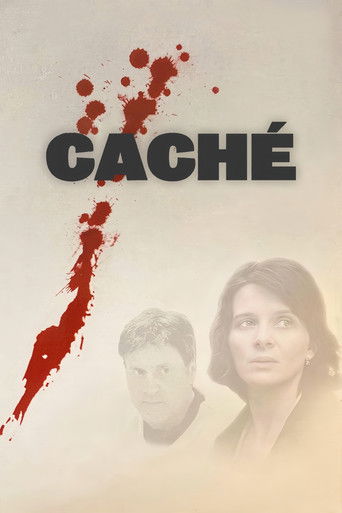

Continue the director
Caché (2005)
Haneke's earlier thriller also withholds answers and questions what we see and who is watching. It makes an ideal companion study of his method.
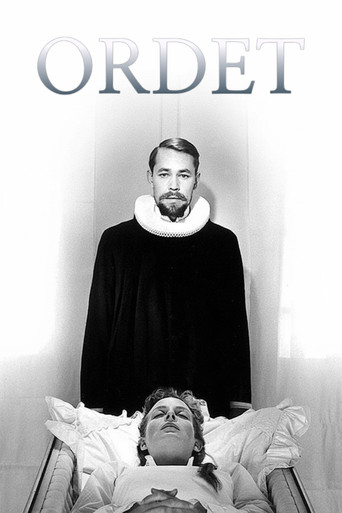
Follow the idea
Ordet (1955)
Dreyer's drama of faith in a rural community shares the stillness, long takes and moral intensity that shape Haneke's film.
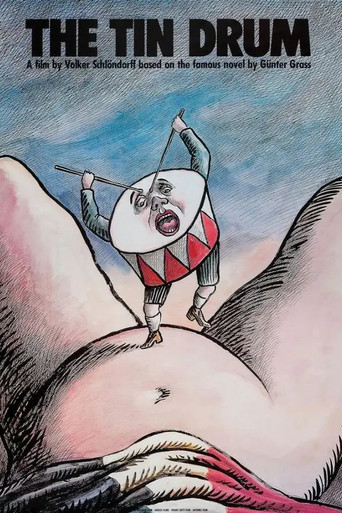
Explore the era or movement
The Tin Drum (1979)
This New German Cinema film looks at German society before and during the Nazi period through a child's perspective, in a very different, more fantastical register.
Jump forward
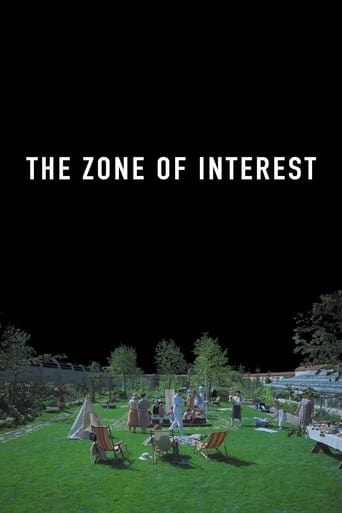
The Zone of Interest (2023)
A later film that shows how distance, sound design and the absence of conventional drama can make historical evil more disturbing.
Compare another approach
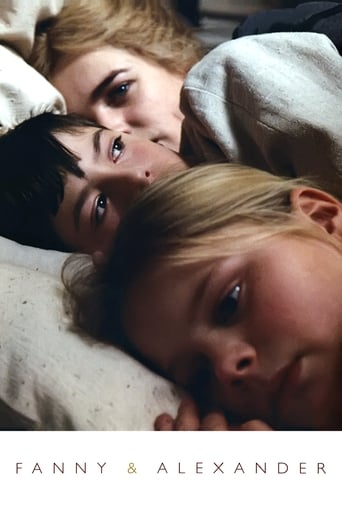
Fanny and Alexander (1982)
Bergman's pastor-ruled household offers a more emotional view of authoritarian religion and childhood, useful for comparing coolness and warmth.