Drama · History
The Post
American
2017 · Directed by Steven Spielberg · 116 min


Drama · History
American
2017 · Directed by Steven Spielberg · 116 min
















Meaning, unpacked
Central idea
The film can be read as a study of institutional courage: how a free press depends on individuals willing to risk position, friendships and property, and how Kay Graham's own struggle for authority is bound up with the paper's.
What it means
The Post asks a simple question: who does a newspaper answer to? The film's reply is that it answers to the governed, not to the government. It can be read as a study of institutional courage. A free press, it argues, depends on individuals willing to risk their position, their friendships and their property.
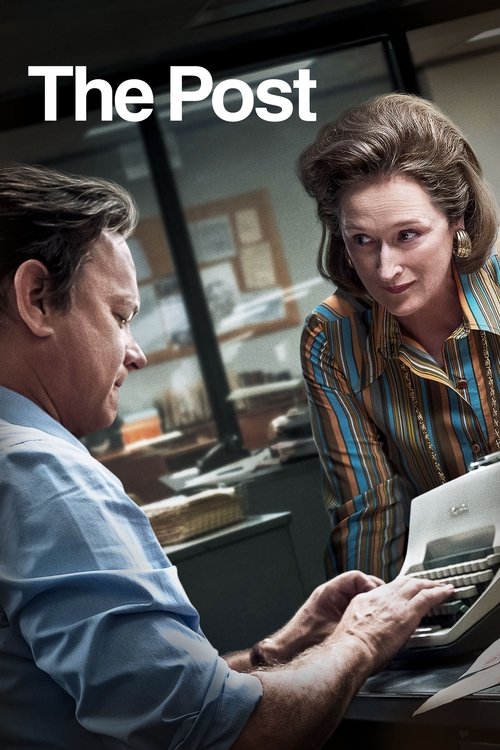
Kay Graham, played by Meryl Streep, owns the Washington Post. Her editor, Ben Bradlee, played by Tom Hanks, wants to publish secret Vietnam documents that show officials knowing more than they admitted. Her own story runs alongside the news story: she inherits power in a world that expects her to defer, and her hesitation slowly becomes resolve. Under both sits the question of when loyalty to powerful friends becomes complicity, and what courage costs when investors and lawyers are watching.
Why it mattered
This was a studio drama about the Pentagon Papers, a pivotal moment in American press history, and it put a woman's rise to authority at the centre, a story older films rarely told. Spielberg, better known for spectacle, built suspense from boardrooms, phone calls and printing presses. Janusz Kamiński's camera tracks and circles conversations so talk feels like action, while crisp cross-cutting builds tension around deadlines.
It also mattered for its speed and its timing. Spielberg took it up in 2017 while Ready Player One was still being finished, and it reached cinemas by the end of that year, an unusually short turnaround for a studio drama. It was widely read as a response to President Trump's attacks on the press and his talk of fake news. Released amid MeToo and Time's Up, it also brought Graham to a wide audience.
Before anyone tells you what to think: what did you make of it?
Log in to rate it and leave commentsIt takes one click with Google or an email link. You come straight back here.
Rate it, keep your notes, and find the next film.
Free, no ads. Your journal, your lists, a Cine Guide that remembers you.
Create your free spaceThe Post helped keep the journalism drama alive in mainstream cinema alongside Spotlight, and its focus on Graham encouraged later films about women challenging powerful institutions, including newsroom dramas such as She Said. It also renewed interest in her memoir, Personal History, and its dramatisation of the Pentagon Papers decision is used in teaching journalism and media ethics. Its closing Watergate scene leads straight into All the President's Men.
Critics were largely warm, praising the performances, the pace and Spielberg's craft, though a few found it earnest, even self-congratulatory. It earned two Oscar nominations, for Best Picture and for Streep, with no wins. Today it is seen as a skilful, topical Spielberg drama rather than one of his defining works, and its handling of Graham is often called its strongest element.
What happens
The Supreme Court rules for the newspapers, and Kay Graham leaves the courthouse past a crowd of women watching her. A coda then shows the Watergate break-in beginning, so you see this victory is not the end of the story.
The last image
The Watergate break-in begins in the dark, with a flashlight, a taped door latch and a security guard noticing something wrong.
What it says
Graham's decision to say yes is the film's real climax, and the court ruling just confirms it. The women's gaze shows what her courage means beyond one story. The Watergate coda says a free press is never finished: the next fight is already starting.
Or follow an idea from this film
See what influenced it
All the President's Men (1976)
The most direct companion: Redford and Hoffman as Post reporters pursuing Watergate, picking up where The Post's final scene leaves off.
Coming soon

Compare another approach
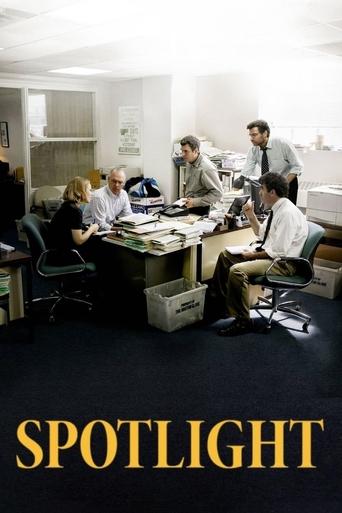
Spotlight (2015)
A quieter, more procedural look at newsroom teamwork and institutional pressure, useful for comparing Spielberg's showmanship with a plainer approach.

Continue the director
Lincoln (2012)
Spielberg's earlier political drama, built on negotiation and talk, shows the same technique of turning argument into suspense.
Explore the era or movement
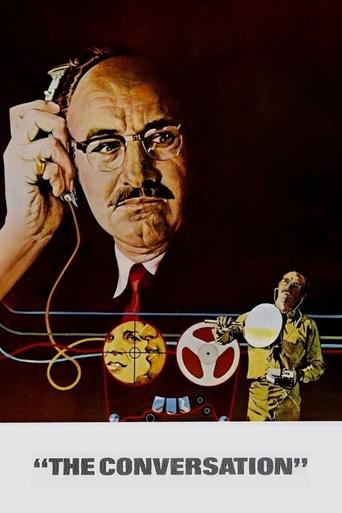
The Conversation (1974)
A Watergate-era thriller about surveillance and moral responsibility, showing the paranoia and distrust of government that The Post's story helped feed.
Follow the idea
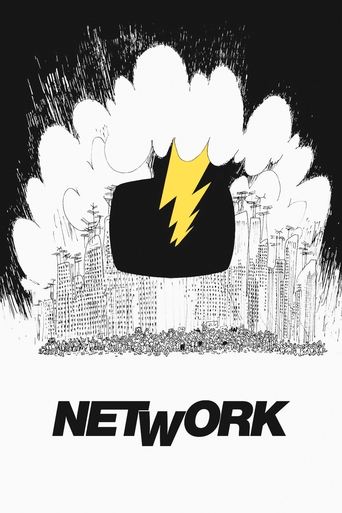
Network (1976)
A satirical 1970s look at the news business, offering a darker view of media power and its relationship to profit.