Drama · History
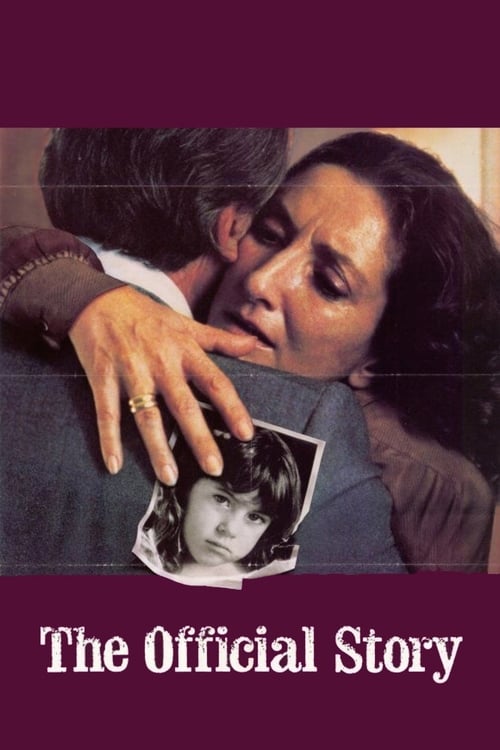
The Official Story
Argentine (La historia oficial)
1985 · Directed by Luis Puenzo · 112 min


Drama · History
Argentine (La historia oficial)
1985 · Directed by Luis Puenzo · 112 min



Meaning, unpacked
Central idea
The film explores how a nation's official version of the past survives through comfort and silence, and what happens when one person starts to examine it. It can be read as a story of private awakening standing in for a country's.
What it means
The Official Story follows Alicia, a history teacher with a comfortable life, a successful husband and an adopted daughter. When doubts about where that child came from begin to surface, her whole world starts to come apart. But the real subject is a country. The film's central idea is simple and unsettling: an official version of the past survives because people find it comfortable, and it survives through silence. Alicia's private awakening stands in for a nation's.
The title works twice. The official story is the textbook Alicia teaches, and it is also the story she tells herself. Her friend Ana returns from exile and brings the unspeakable into a polite setting, and Alicia's searches lead her to the Mothers of the Plaza de Mayo, where fiction meets real protest. The film's quiet irony is that the teacher becomes the learner. It also shows that not knowing can be a choice, sustained for years, and that private love and political guilt cannot be pulled apart. The characters are invented, but the history is real.
Why it mattered
When the film was made and released, Argentina had returned to democracy only about two years earlier, and the junta leaders were on trial. Argentine audiences watched it as present history, not as a look back. It was among the first major Argentine films to confront the dictatorship openly, and it did so through a household, a classroom and the everyday habit of not asking.
Before anyone tells you what to think: what did you make of it?
Log in to rate it and leave commentsIt takes one click with Google or an email link. You come straight back here.
Rate it, keep your notes, and find the next film.
Free, no ads. Your journal, your lists, a Cine Guide that remembers you.
Create your free spaceLuis Puenzo kept the style classical and accessible, trusting clear storytelling and strong acting to carry a charged subject to a broad audience. The screenplay, written with Aída Bortnik, works like a detective story in which the investigator is also the subject. Norma Aleandro won Best Actress at Cannes in 1985, the film was nominated for the Palme d'Or, and in 1986 it won the Oscar for Best Foreign Language Film, a first for Argentina.
The Oscar win drew wide attention to the story of the disappeared, and to Latin American cinema generally. The film brought the appropriation of children born to the disappeared to a wide audience, and it is often linked with the work of the Abuelas de Plaza de Mayo. It opened a path for later Argentine and Latin American films on state violence, memory and identity, and showed that a domestic drama could carry political weight abroad. The phrase "la historia oficial" stayed in public use, especially in debates over memory and denial, and teachers still use the film to show how complicity and ignorance worked.
Today it is generally seen as the foundational Argentine film about the dictatorship's aftermath. Some critics found its domestic framing safe, compared with more radical political cinema. Yet that clarity explains its reach. Later films, documentaries and the ongoing work of the Grandmothers have deepened the context in which it is watched. Perhaps its last lesson is the hardest: the official story never needed everyone to believe it. It only needed enough people not to ask.
What happens
After a violent break with Roberto, Alicia is left alone with Gaby. Everything she believed about her marriage, her daughter's adoption and her country has collapsed, and she cannot tell what comes next.
The last image
Alicia sits with Gaby, who sings the children's song "En el país de Nomeolvides", while Alicia's certainty gives way to uncertainty.
What it says
Alicia has stopped teaching the official story and begun learning the real one. The film refuses a tidy resolution because a country's reckoning with its past is only starting, and it leaves you, like her, facing what you now know.
Or follow an idea from this film


Compare another approach
Missing (1982)
A different view of the same Latin American era, seen from an outsider's perspective, with a family confronting a regime's silence.
See what influenced it
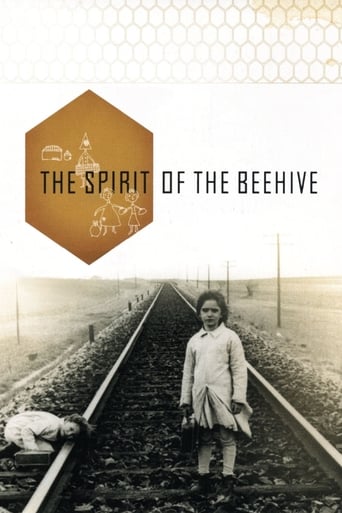
The Spirit of the Beehive (1973)
A quieter, more poetic treatment of political silence seen through a child's eyes, made under Franco's Spain.

Follow the idea
Nostalgia for the Light (2010)
A documentary on Chile's disappeared that extends the film's themes of memory and the search for lost people.

Jump forward
The Secret in Their Eyes (2009)
Argentina's later Oscar winner shows how the country's cinema kept revisiting the dictatorship through genre storytelling.

Explore the era or movement
The Lives of Others (2006)
A drama of private lives inside a surveillance state, similarly built on how ordinary people live with complicity.