Documentary
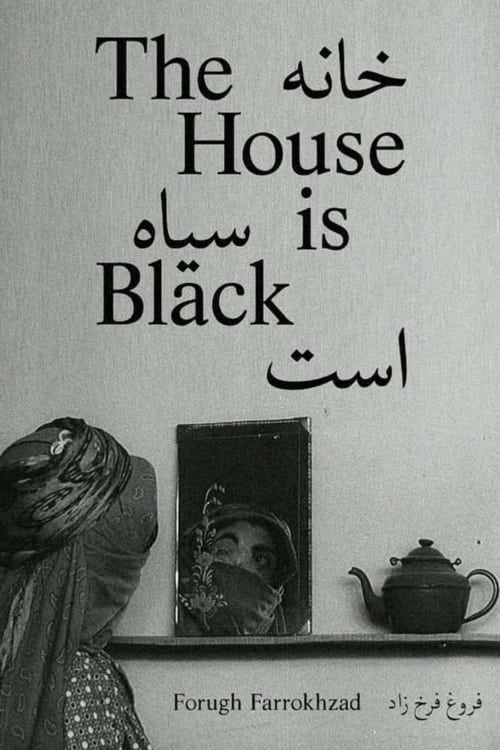
The House Is Black
Iranian (خانه سیاه است)
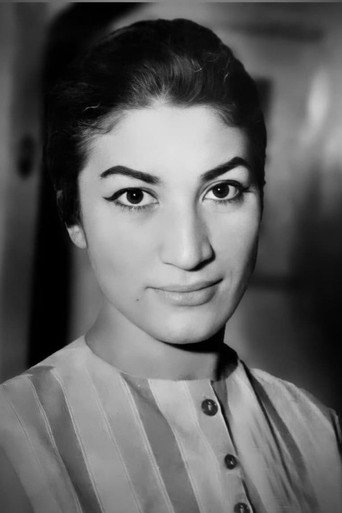
1963 · Directed by Forugh Farrokhzad · 21 min


Documentary
Iranian (خانه سیاه است)
1963 · Directed by Forugh Farrokhzad · 21 min
Meaning, unpacked
Central idea
The film can be read as an argument that attention is itself a moral act. It sets the pain of the colony against praise, ritual and ordinary joy, and invites the viewer to see beauty and ugliness as human judgements rather than facts.
What it means
The House Is Black is a short film about a leprosy colony in Tabriz. It opens with a voice telling you that ugliness and pain are everywhere in the world, then spends the rest of its time questioning that word, and who gets to use it. Its central idea is that attention is itself a moral act, and that beauty and ugliness are human judgements, not facts.
The film sets the colony's pain against praise, ritual and ordinary joy. Children recite a lesson in class, and learning becomes a quiet resistance. People look after their appearance, and gather to play and dance, so the community is more than a ward of patients. Faith sits beside suffering as both consolation and hard question. People keep looking back at the camera, so you are never a safe observer. Its last lesson is simple: what we call ugly may only be what we have refused to look at for long enough.
Why it mattered
It is sometimes taken for a straightforward public-health documentary. It began as a commissioned short connected to a charitable and medical project, but Farrokhzad turned it into something personal and poetic. Its subject is seeing and compassion more than medicine, and it showed how far a non-fiction film can go beyond reportage.
Its methods were new. Her own poetry is woven with religious and other texts, so the soundtrack becomes a second layer of argument, sometimes agreeing with the image and sometimes pressing against it. The editing follows gesture, rhythm and sound instead of plot, and repetition gives it the pulse of a litany. Close, held shots give faces time, and strong black-and-white contrasts make the images almost sculptural. It is a founding work of Iranian art cinema, made a few years before the Iranian New Wave broke through.
Before anyone tells you what to think: what did you make of it?
Log in to rate it and leave commentsIt takes one click with Google or an email link. You come straight back here.
Rate it, keep your notes, and find the next film.
Free, no ads. Your journal, your lists, a Cine Guide that remembers you.
Create your free spaceThe film won the grand prize for documentary at the Oberhausen short film festival in West Germany in 1964, which brought early international attention. At home it was seen by a small public, and writers and filmmakers admired it more than the mainstream market did. Its reputation grew slowly through festival and archive screenings.
Today it is widely considered one of the most important Iranian films and a key precursor of the New Wave. Its mix of observation, poetry and reflection influenced filmmakers who blurred fiction and documentary, notably Abbas Kiarostami and Mohsen Makhmalbaf. Farrokhzad died young, in 1967, and that has added to its aura. She is widely treated as an emblem of women's artistic and personal freedom. Her work faced restrictions in Iran after 1979, yet her verse stayed widely read. The film is taught in courses on documentary and world cinema, and in discussions of how illness and disability are shown with dignity.
What happens
The film doesn't resolve or offer a cure. After play, music and the colony's children, it returns to the residents' faces and ends on the declaration that the house is black. What it reveals is the place itself, seen fully.
The last image
The film closes on the residents' faces, with the voice declaring that the house is black.
What it says
The ending refuses consolation because the film's argument is about attention, not cure. By returning to the faces, it hands the judgement back to you: what we call ugly may only be what we have refused to look at for long enough.
Or follow an idea from this film

Follow the idea
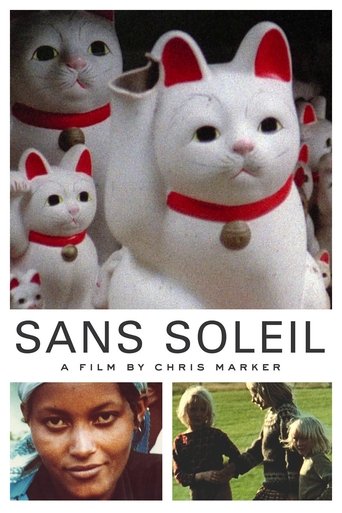
Sans Soleil (1983)
Another poetic essay film in which a narrator's voice and images interact, extending the idea of non-fiction as reflection and memory.
Compare another approach
Night and Fog (1956)
A short documentary that also pairs poetic narration with images of suffering, though with a historical and accusatory purpose rather than a devotional one.
See its influence
Close-Up (1990)
Kiarostami's blend of documentary and fiction shows how Iranian cinema later made looking and truth into open questions.
Explore the era or movement
Land Without Bread (1933)
An earlier documentary about an impoverished community, useful for contrasting a detached, ironic gaze with this film's closeness and tenderness.
Follow the idea
Where Is The Friend's House? (1987)
An Iranian film of simple, humane attention, showing how the country's cinema grew toward poetic observation of ordinary life.