Drama · Romance
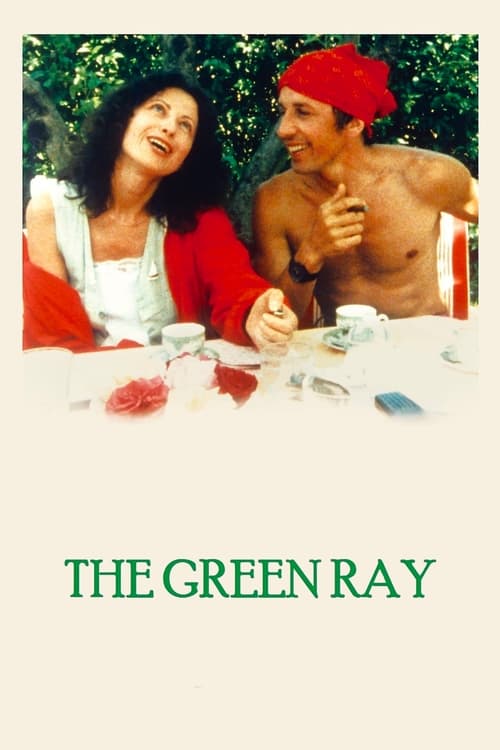
The Green Ray
French (Le Rayon vert)
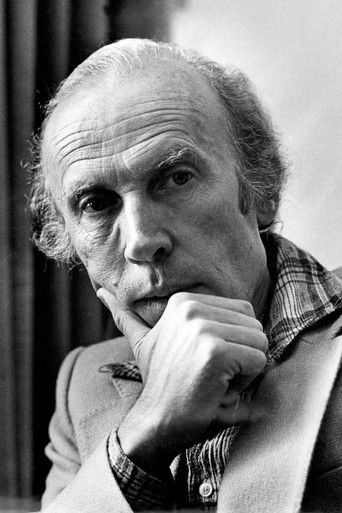
1986 · Directed by Éric Rohmer · 99 min


Drama · Romance
French (Le Rayon vert)
1986 · Directed by Éric Rohmer · 99 min







Meaning, unpacked
Central idea
The film can be read as an exploration of how a person can be open, honest and difficult all at once, and of how a sense of belonging, or a sign that things will be alright, cannot be forced. Delphine waits for a signal that life will meet her halfway.
What it means
Delphine wants a summer holiday, and she cannot make one work. She drifts from place to place, surrounded by kind people, and still feels shut out. The film's central idea is that a person can be open, honest and difficult all at once. Delphine says what she feels, which makes others uncomfortable, and the film neither mocks her for it nor puts her on a pedestal.
Summer here is a duty: you are meant to be happy, tanned and coupled. The gap between that ideal and Delphine's reality drives both the comedy and the pain. She is rarely short of company, only of company that fits. The title comes from an overheard legend of a green flash at sunset, a sign that lets you see clearly into your own feelings. Her superstition is a little absurd, and also a way of keeping hope alive. The lesson is a gentle one: you cannot hurry a sign. You can only keep looking at the horizon, and stay honest enough to recognise it when it comes.
Why it mattered
Rohmer shot in the summer of 1985 on 16mm with a minimal crew, travelling to real locations and filming among actual holiday crowds. He worked from an outline and shaped the dialogue with his actors, so the speech has the hesitations and overlaps of real talk while the drama stays precisely built. Marie Rivière, who had worked with him before, helped shape Delphine's moods and phrasing, which is why the performance feels so personal.
There is almost no score, so beaches, streets and conversation carry the film, and music stands out when it comes. It is the fifth of Rohmer's six Comedies and Proverbs, and it won the Golden Lion at Venice in 1986. A quiet, low-budget film suddenly had wide international attention.
Before anyone tells you what to think: what did you make of it?
Log in to rate it and leave commentsIt takes one click with Google or an email link. You come straight back here.
Rate it, keep your notes, and find the next film.
Free, no ads. Your journal, your lists, a Cine Guide that remembers you.
Create your free spaceIts blend of natural-sounding talk, location shooting and small emotional stakes can be traced in later intimate cinema, from Hong Sang-soo's conversational comedies to American mumblecore. It showed that a tiny production could be formally exact and emotionally large. Its working method is still cited whenever people discuss improvisation-based filmmaking and actor-director collaboration.
Its reputation has grown steadily. It is now seen as a central Rohmer film and a model of low-budget realism. Delphine, once thought difficult by some, is now often read as one of cinema's most honest portraits of solitude. She became a reference point for solo travellers and anyone uneasy with forced holiday cheer.
What happens
Delphine waits with a man she has just met at the water's edge as the sun sets. The green ray appears, for her and for you. It reveals that she is finally ready to trust someone, on her own terms.
The last image
The sun sinks into the sea, and the green flash appears at the horizon as Delphine watches.
What it says
The film has argued that a sign cannot be hurried and belonging cannot be forced. So the ending gives Delphine no speech or promise, only light, waiting and a quiet release that her superstition has earned.
Or follow an idea from this film

Continue the director
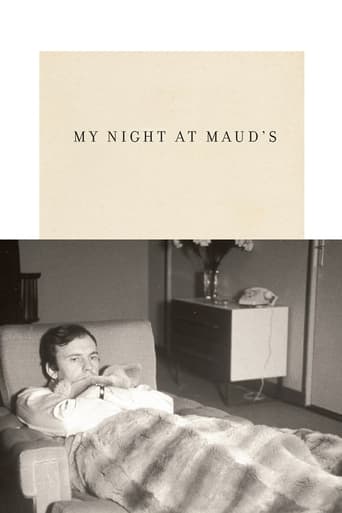
My Night at Maud's (1969)
One of Rohmer's most celebrated films, a talkative, moral story that shows the method behind The Green Ray at an earlier stage.
Compare another approach
Cléo from 5 to 7 (1962)
Another portrait of a Parisian woman facing her anxieties, told in real time with a New Wave sensibility.
Explore the era or movement
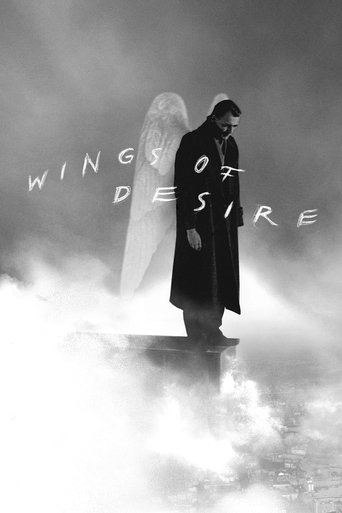
Wings of Desire (1987)
A European art film from the same decade that also treats loneliness and longing, in a far more poetic and fantastical style.
Jump forward
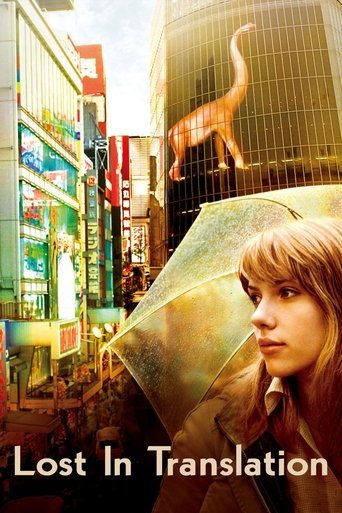
Lost in Translation (2003)
A later film about a drifting, isolated person in an unfamiliar place, finding fragile connection through quiet encounters.