Action · Thriller · Crime
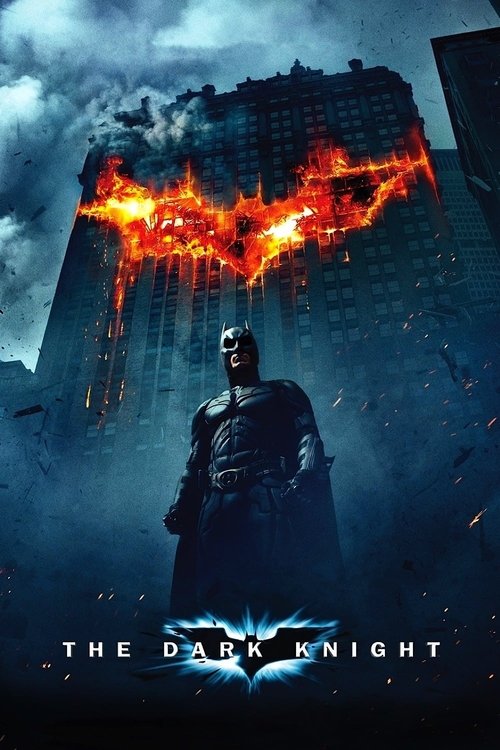
The Dark Knight
American
2008 · Directed by Christopher Nolan · 152 min


Action · Thriller · Crime
American
2008 · Directed by Christopher Nolan · 152 min



Meaning, unpacked
Central idea
The film tests whether order, justice and heroism can survive contact with someone who wants to prove they are only conventions. It can be read as an argument about what a society needs to believe about itself.
What it means
The Dark Knight is built on one question: can order, justice and heroism survive someone who wants to prove they are only conventions? The Joker treats the city's rules as a thin layer over panic. Batman, Gordon and Dent each defend order in a different way, and he pushes on all three. His real trick is to build situations that force ordinary people into impossible choices, just to see what they are made of. The two ferries are his social experiment, and the film answers it with its most hopeful moment.
The film also asks where principle ends and self-justification begins. Batman refuses to kill, yet his methods bend other lines, including his mass surveillance, which many viewers link to post-9/11 arguments about liberty and safety. Then Harvey Dent falls, and Batman takes the blame so Gotham can keep believing in its hero. Victory becomes sacrifice, and the ending reads as a bleak argument for protective myth: what a city believes about its heroes can matter as much as what is true.
Why it mattered
The film moved the superhero story toward the tone and structure of urban crime cinema. Nolan treated Batman as a city-wide drama about institutions, policing and fear, which reset what a comic-book blockbuster could attempt. Its plot runs parallel threads and reversals, with a villain whose plans stay opaque, so you are always one step behind.
It was also a technical first. It was the first major dramatic feature to shoot key sequences, about half an hour in all, on IMAX cameras, which gave the cityscapes a vertical grandeur. Nolan paired that with practical effects and real Chicago locations: a real truck was flipped and a derelict building demolished on camera. And Heath Ledger's restless Joker, scored with rising strings instead of a melody, feels like pressure rather than a character with a theme tune.
Before anyone tells you what to think: what did you make of it?
Log in to rate it and leave commentsIt takes one click with Google or an email link. You come straight back here.
Rate it, keep your notes, and find the next film.
Free, no ads. Your journal, your lists, a Cine Guide that remembers you.
Create your free spaceIt encouraged a wave of grim, grounded superhero and franchise films, and pushed studios toward IMAX-filmed events. Its Joker shaped how screen villains were written, and its crime-saga approach led straight to The Batman from 2022. "Why so serious?" became everyday shorthand, the pencil trick and smeared makeup became Halloween staples, and the ferries are still an ethics-class example.
Reviews were strongly positive. It broke opening-weekend records in the United States and earned more than a billion dollars worldwide, which was rare then. Some critics found it overlong or humourless, and its absence from the Best Picture nominations was widely criticised. The Academy expanded that category to ten nominees the next year. It won two of its eight Oscars, including Ledger's posthumous award, and today it is widely seen as one of the best superhero films and a benchmark for blockbuster ambition.
What happens
Harvey Dent, broken by Rachel's death, becomes Two-Face and falls to his death while threatening Gordon's family. Batman takes the blame for Dent's crimes so Gotham keeps believing in him, and he vanishes, hunted.
The last image
Batman disappears into the night while Gordon destroys the Bat-Signal, and the city he saved sets out to hunt him.
What it says
Gotham needs a hero it can believe in more than it needs the truth. Batman accepts being hated so Dent's image stays clean, which makes his victory a sacrifice and the ending a bleak argument for protective myth.
Or follow an idea from this film

See what influenced it
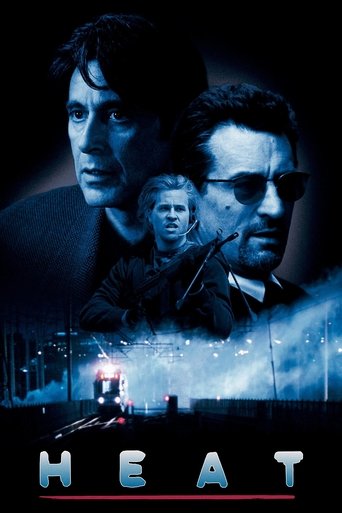
Heat (1995)
Michael Mann's cops-and-robbers epic shows the urban crime template Nolan drew on, including the staging of a large-scale city heist.
Continue the director
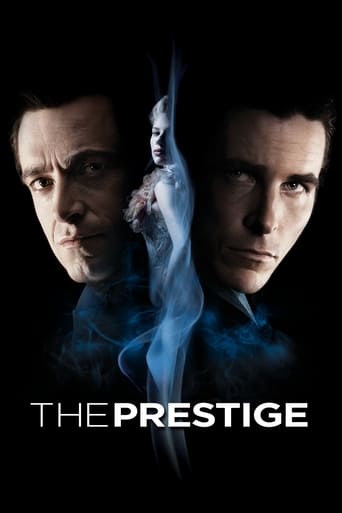
The Prestige (2006)
Another Nolan film built on rivalry, obsession and layered structure, with Christian Bale and Michael Caine, though in a very different world.
Compare another approach
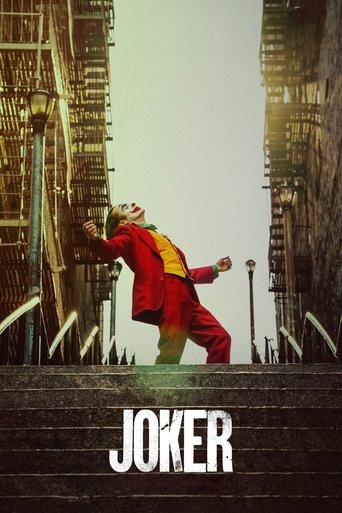
Joker (2019)
Two different readings of the same character, one as an unknowable force and the other as a social-realist character study.
Follow the idea
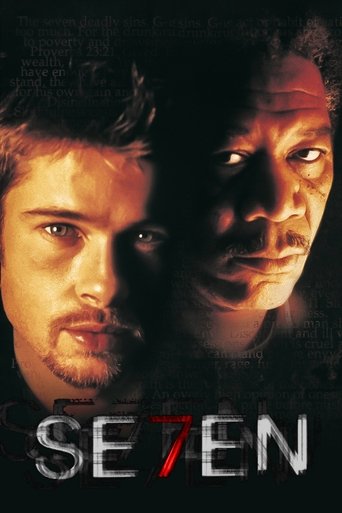
Se7en (1995)
A rain-soaked city and a criminal who designs moral tests for the people hunting him make a useful companion to the film's villain.
Compare another approach
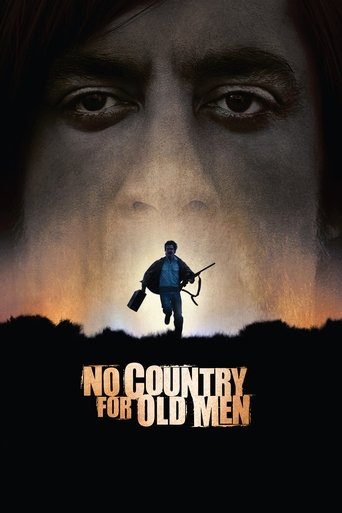
No Country for Old Men (2007)
Released a year earlier, it also centres on an antagonist who seems beyond reason, and on a lawman struggling to understand him.